Furisode vs Traditional Kimono
How to Choose for Your Tokyo Rental
5 min read · Updated May 2026
The simplest way to understand kimono is by sleeve length. Furisode has long, flowing sleeves and creates a dramatic, formal look — traditionally worn by unmarried women at ceremonies. Traditional kimono has short sleeves and a calmer, more versatile silhouette suitable for everyone. At Kimono Rental Ann in Asakusa, we focus on these two main styles to make selection clear for international guests.
Quick Comparison
| Furisode | Traditional Kimono | |
|---|---|---|
| Sleeves | Long (80–114 cm) | Short |
| Mood | Dramatic, formal, vibrant | Calm, elegant, versatile |
| Best for | Standout photos, ceremonies | Cultural walks, everyday wear |
| Visual impact | High | Refined |
| At Kimono Rental Ann from | ¥10,000 (cash) | ¥7,000 (cash) |
What Is a Furisode?
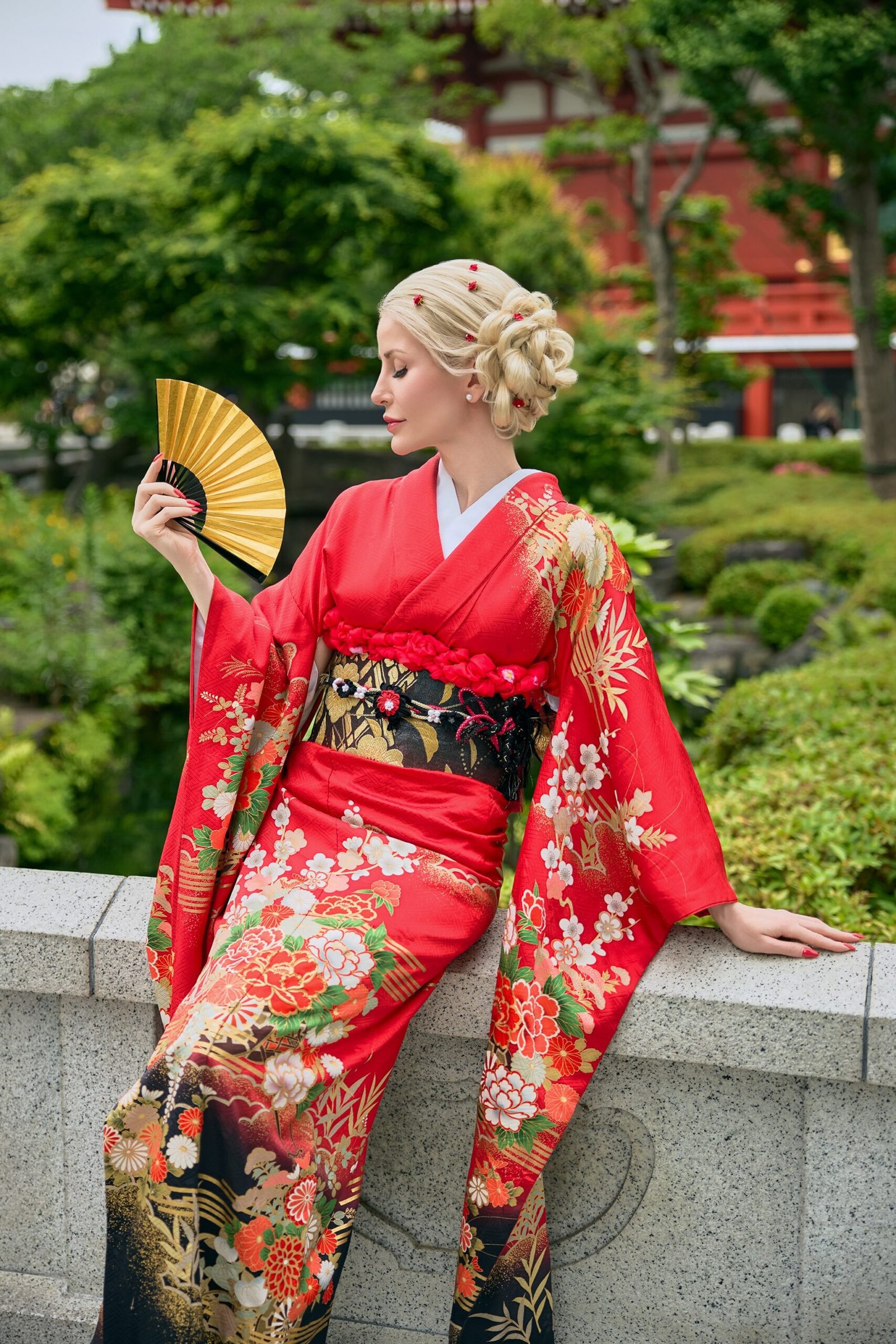
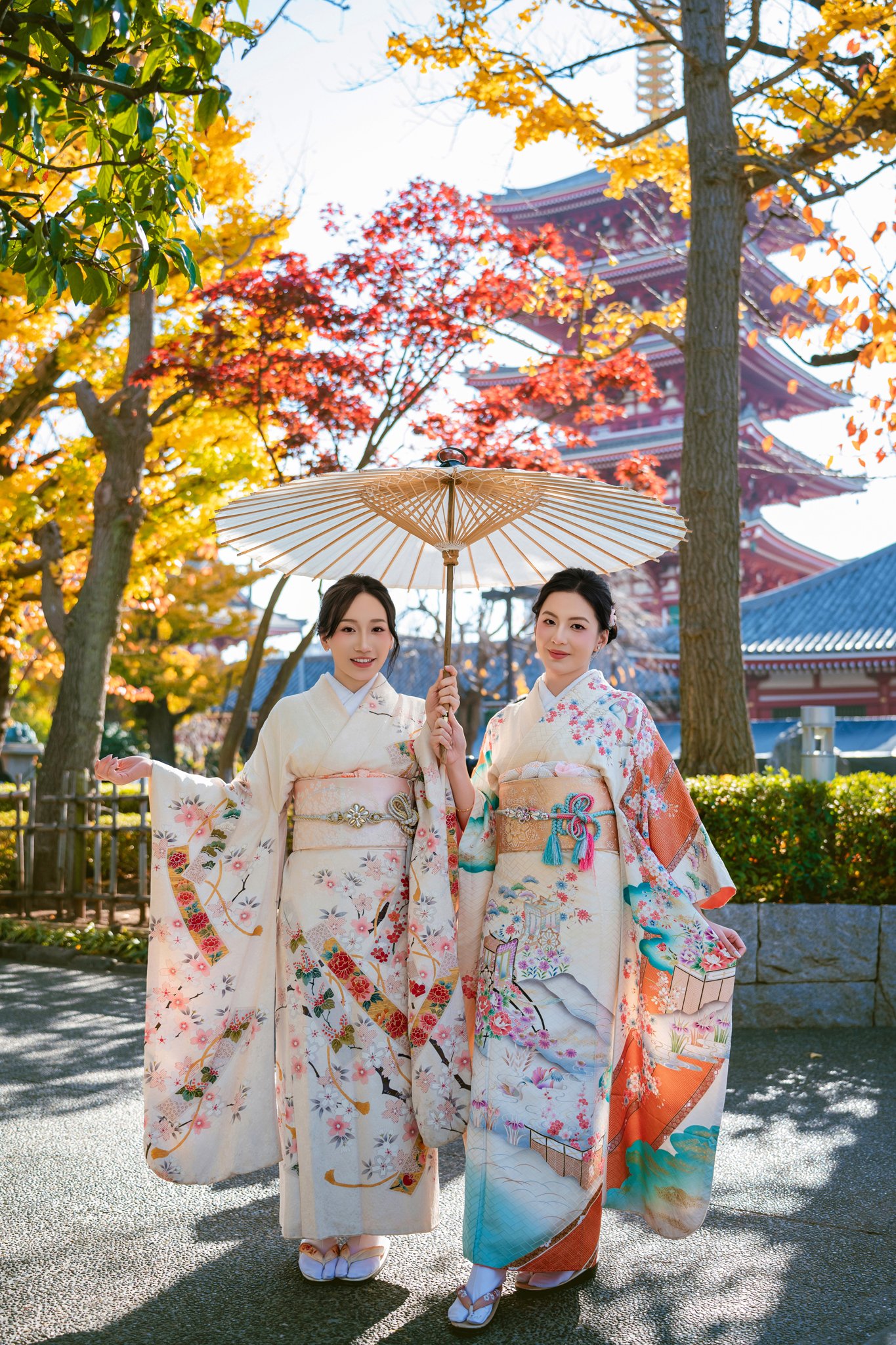
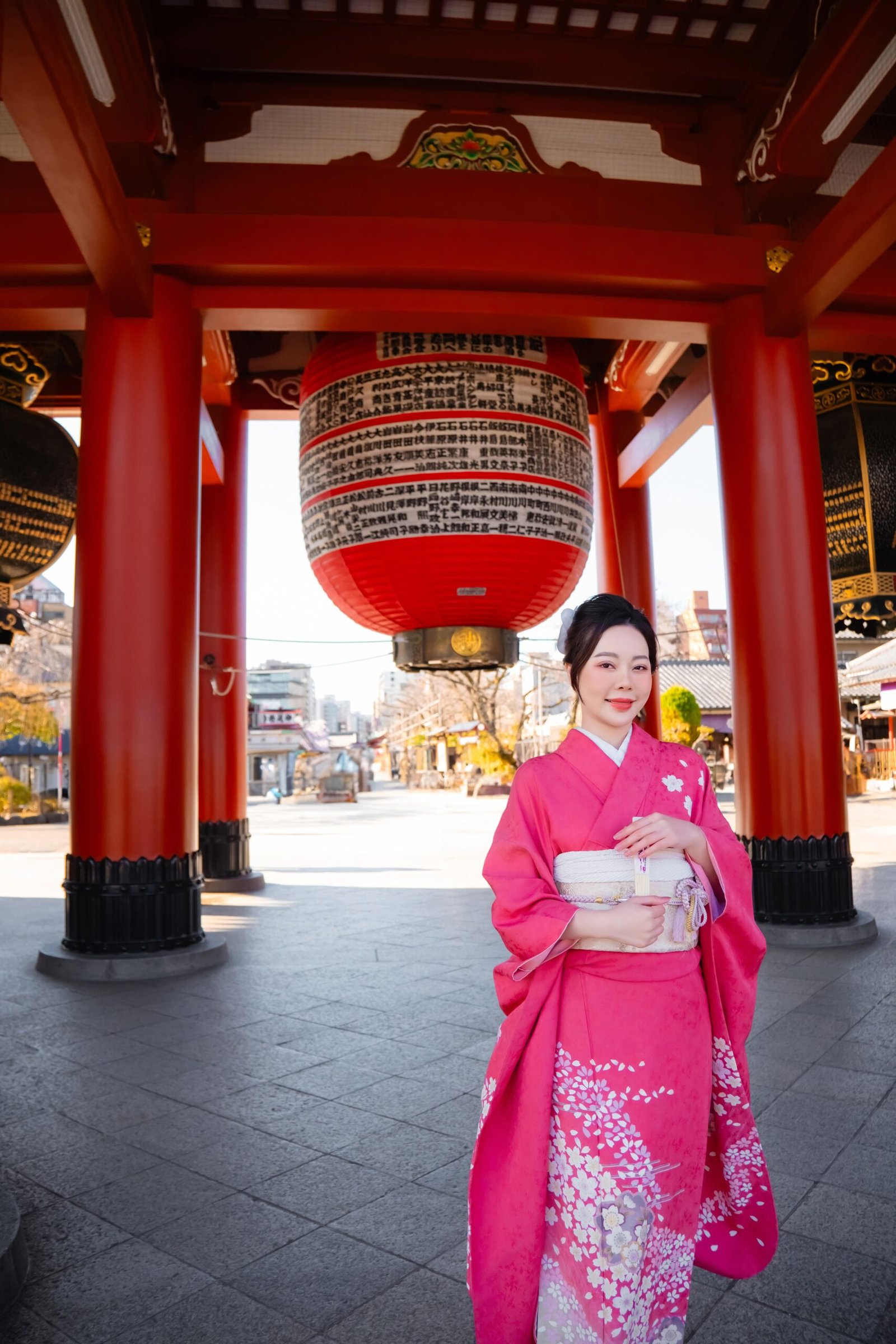
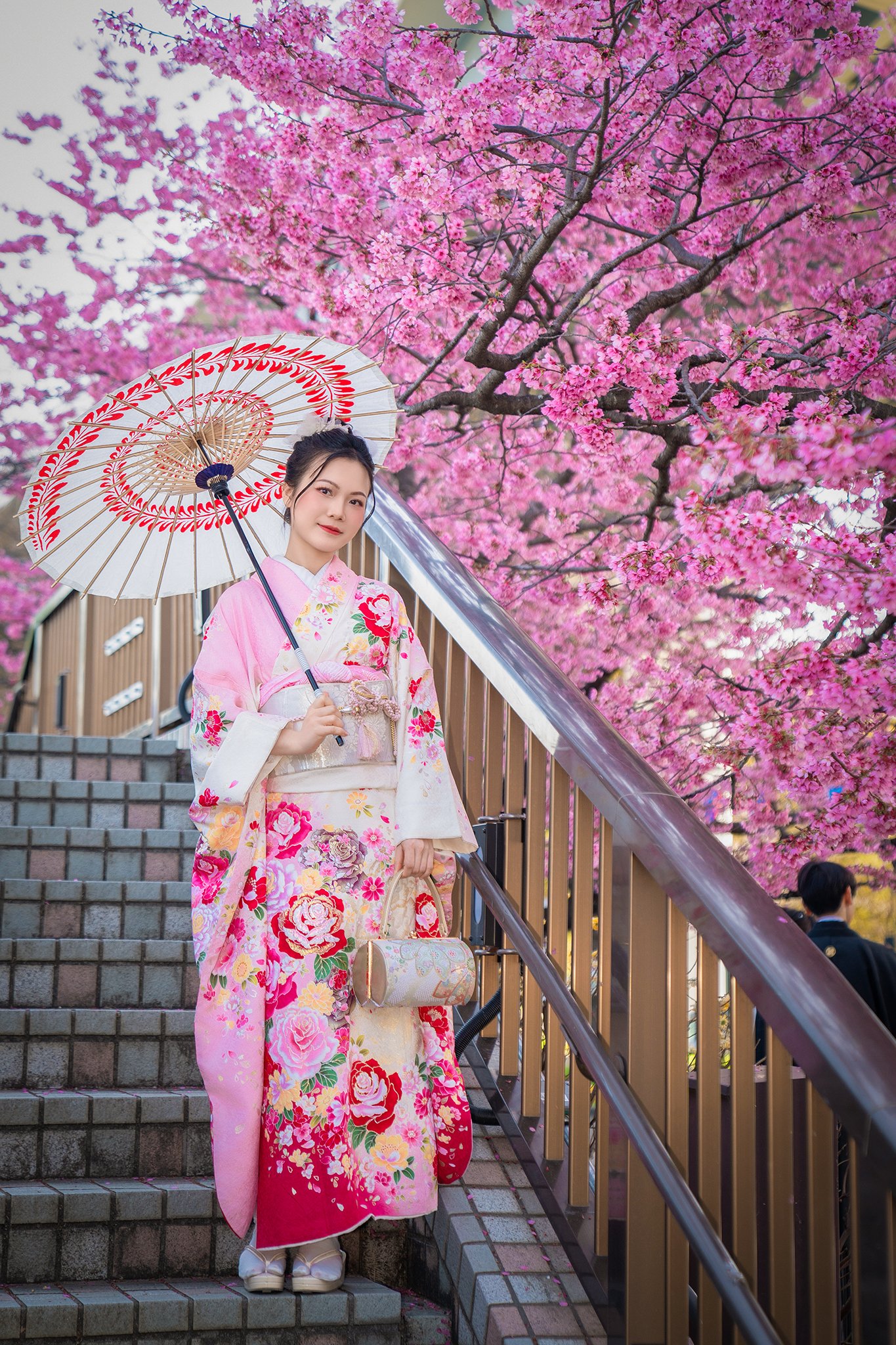
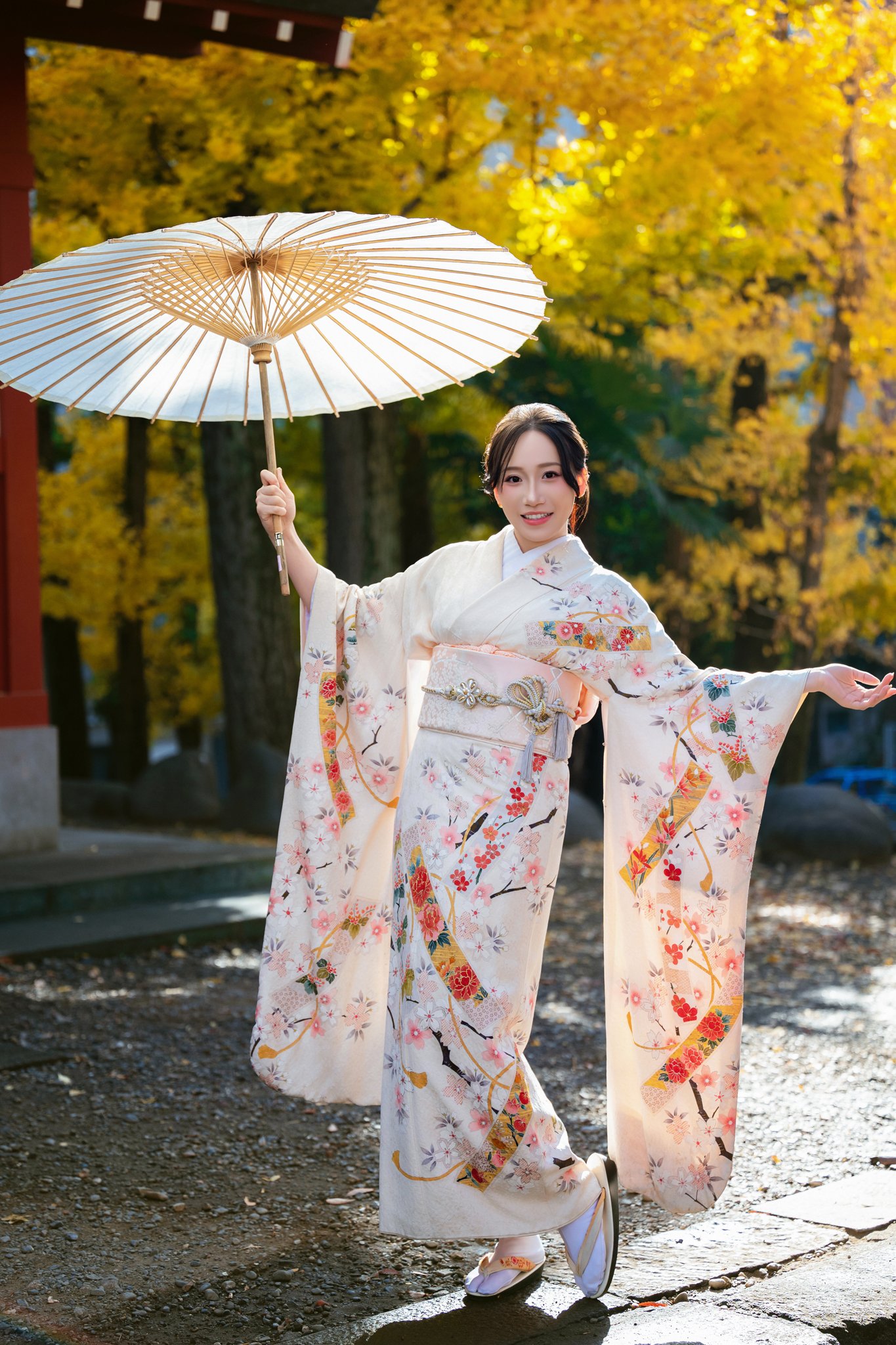
Furisode (振袖) literally means “swinging sleeves.” It is the most formal kimono style for unmarried women in Japan, traditionally worn at coming-of-age ceremonies, weddings, and graduation events. The defining feature is the sleeve length — between 80 and 114 cm — which creates flowing movement when the wearer walks or poses. Patterns are typically vibrant and detailed, with bold colors, floral motifs, and sometimes gold embroidery.
Why guests choose furisode
- Strong visual presence in photos
- Cinematic feel near Sensoji Temple
- Ideal for special trips and once-in-a-lifetime memories
- The long sleeves photograph beautifully in motion
Furisode tiers at Kimono Rental Ann
We offer three furisode tiers to match different aesthetics and budgets:
— Furisode (¥10,000 cash) — colorful, photogenic, energetic
— Premium Furisode (¥18,000 cash) — refined patterns, balanced elegance
— Grand Premium Furisode (¥25,000 cash) — luxury statement, royal presence
What Is a Traditional Kimono?
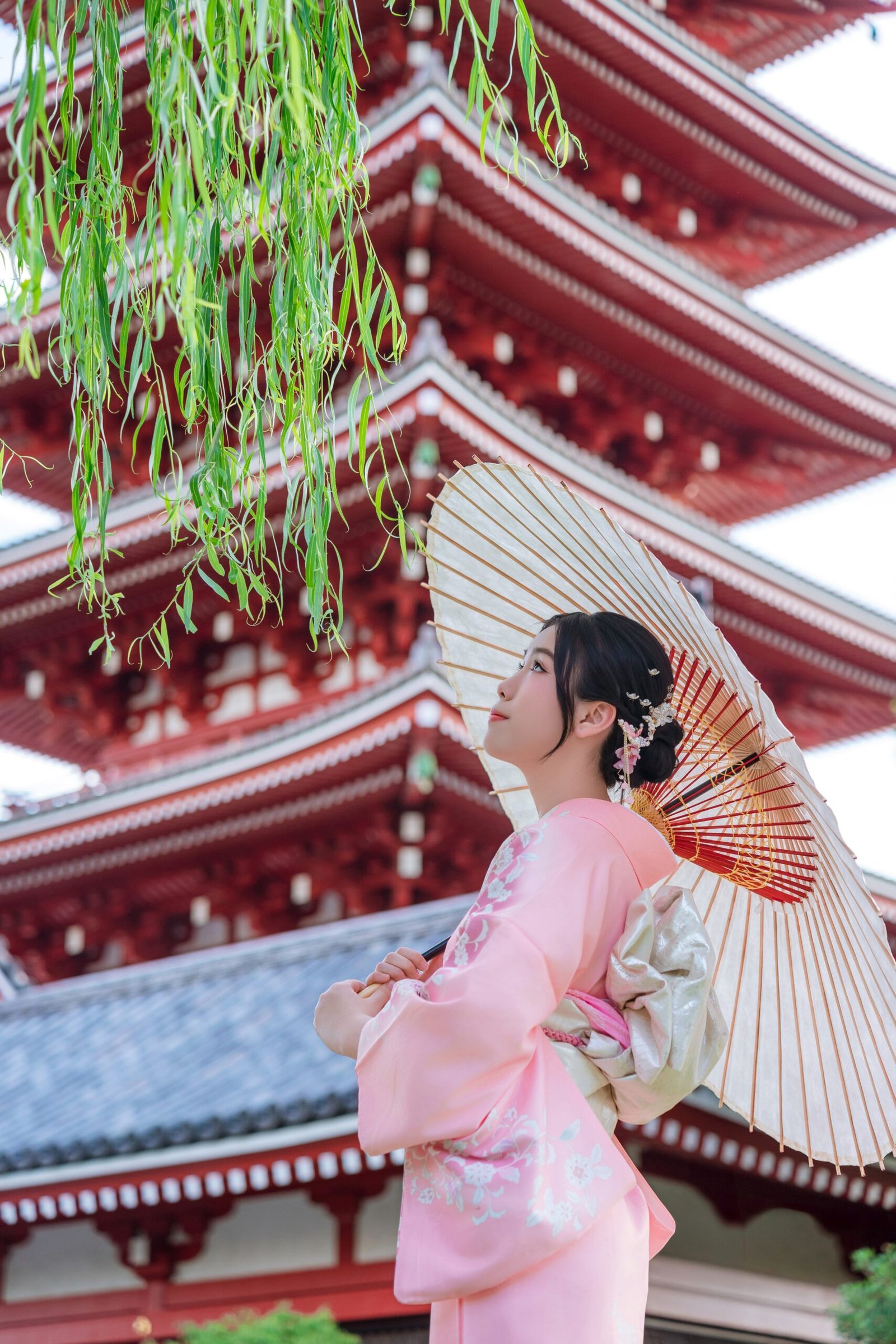
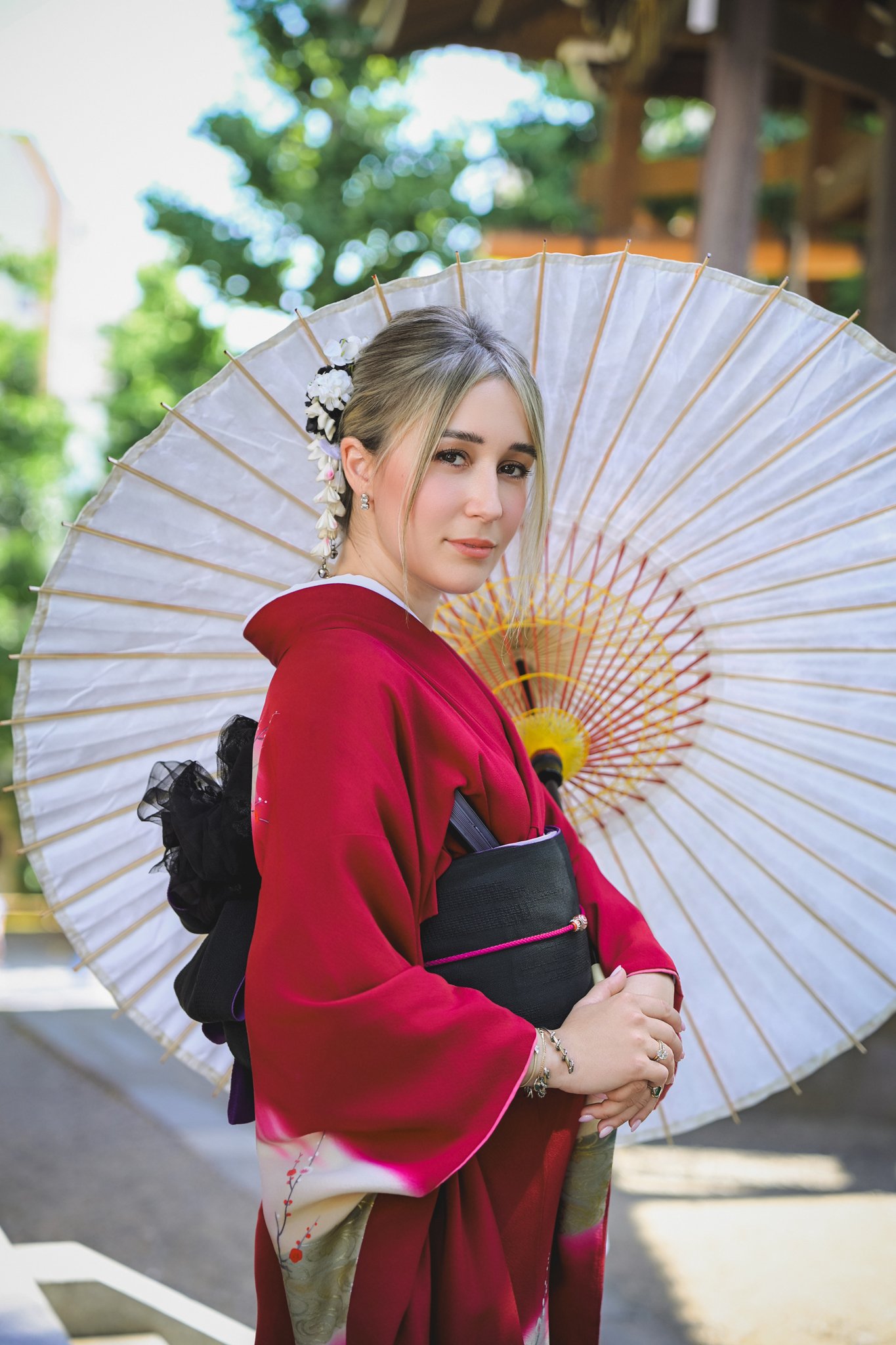
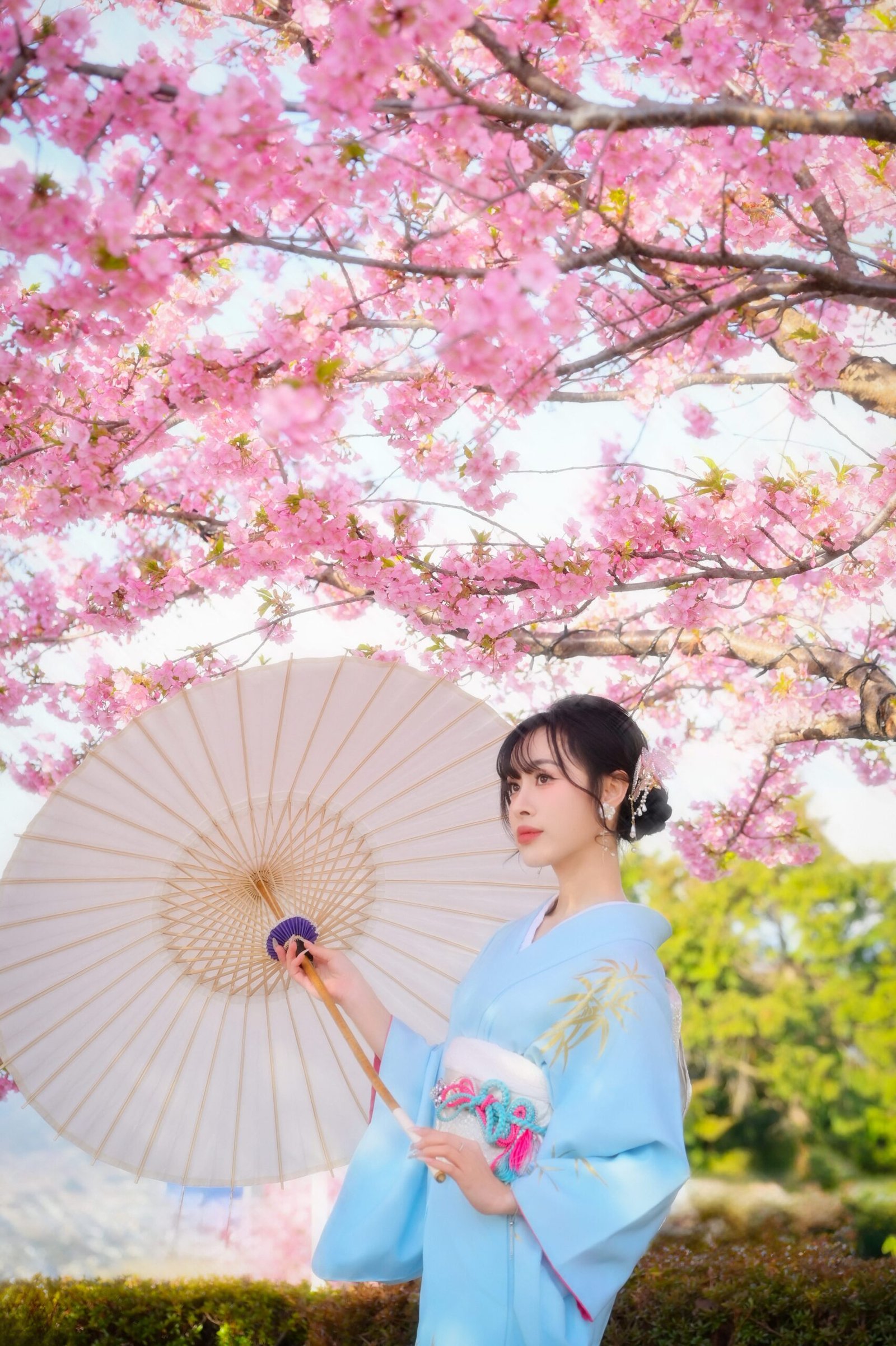
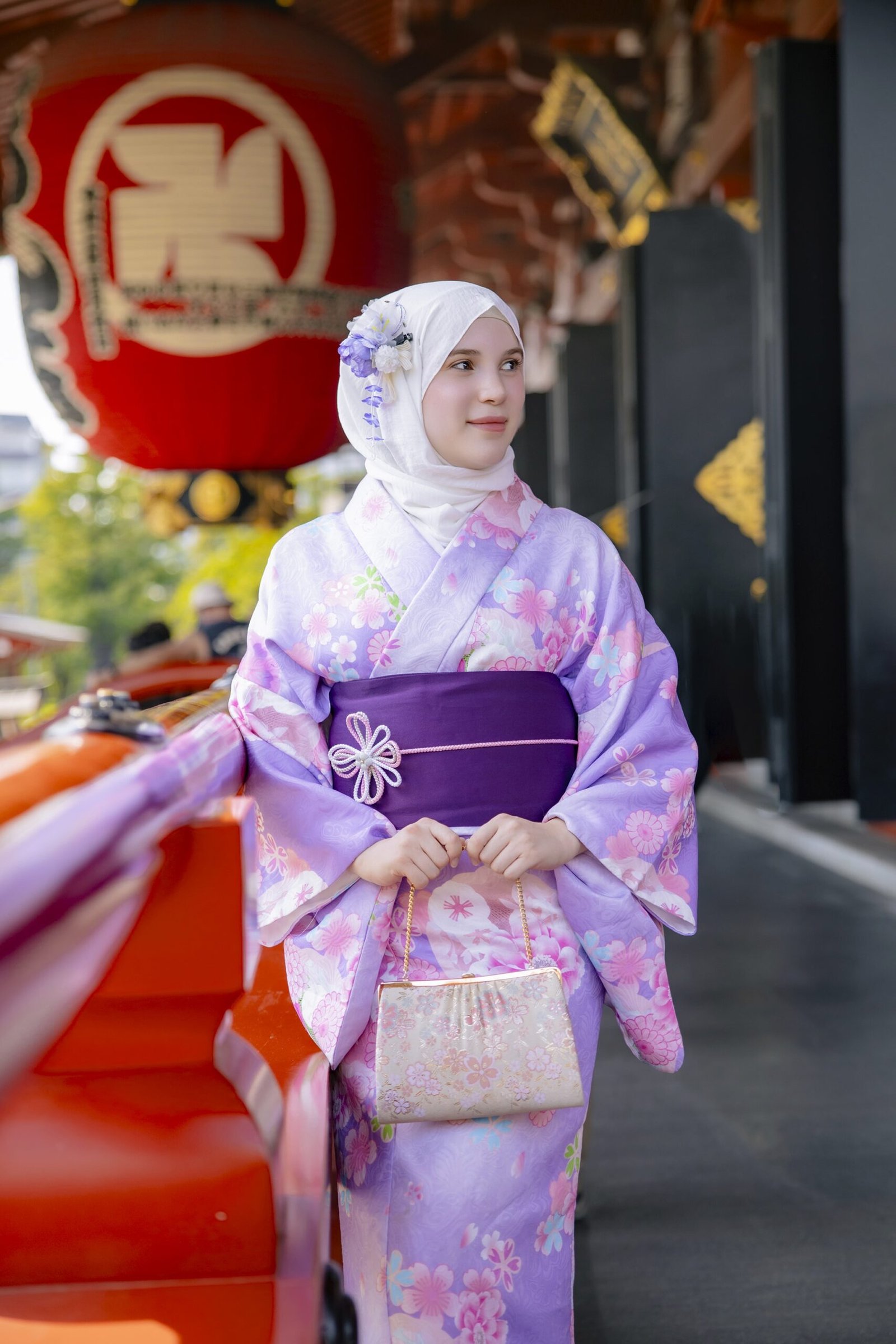
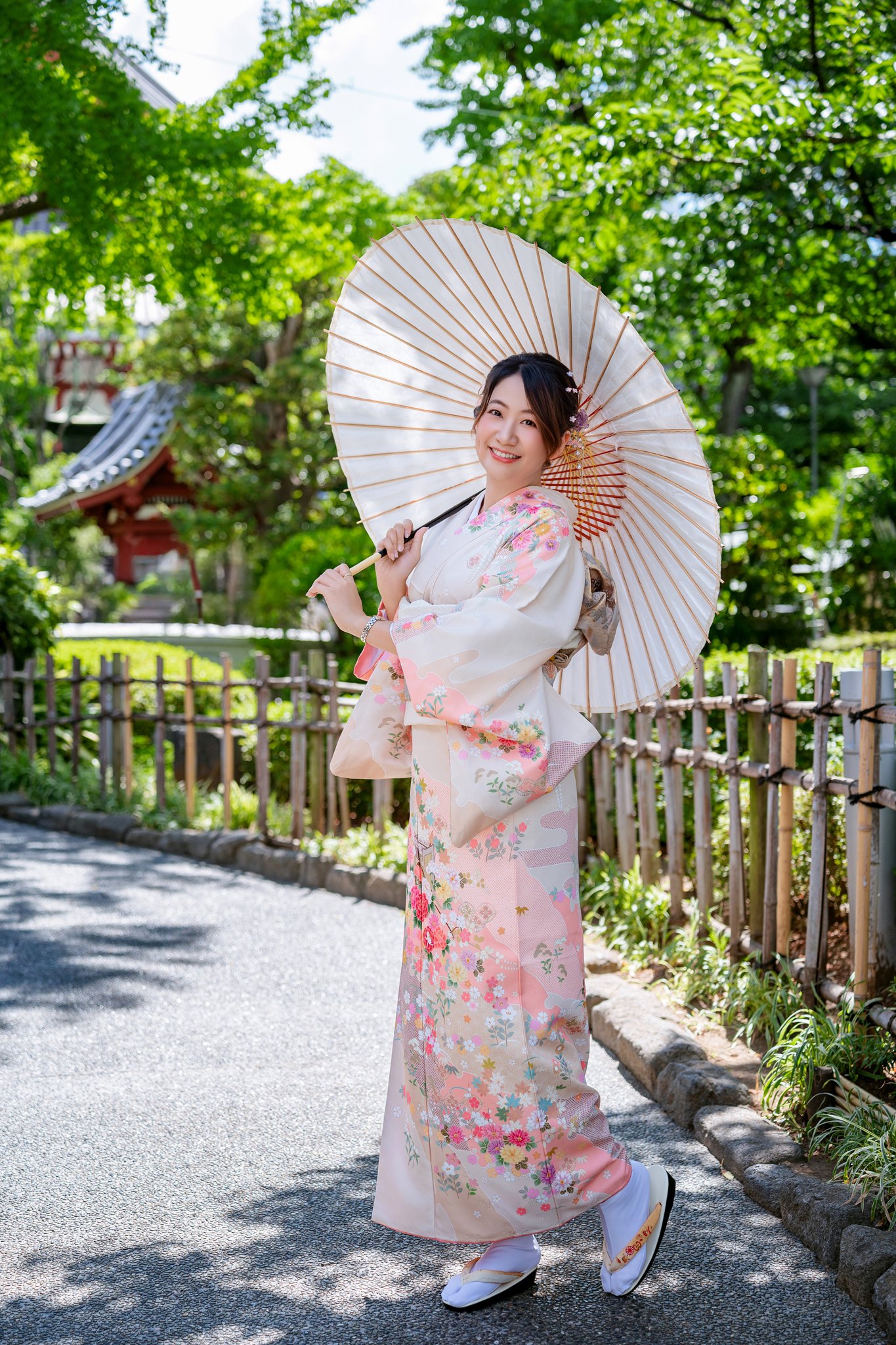
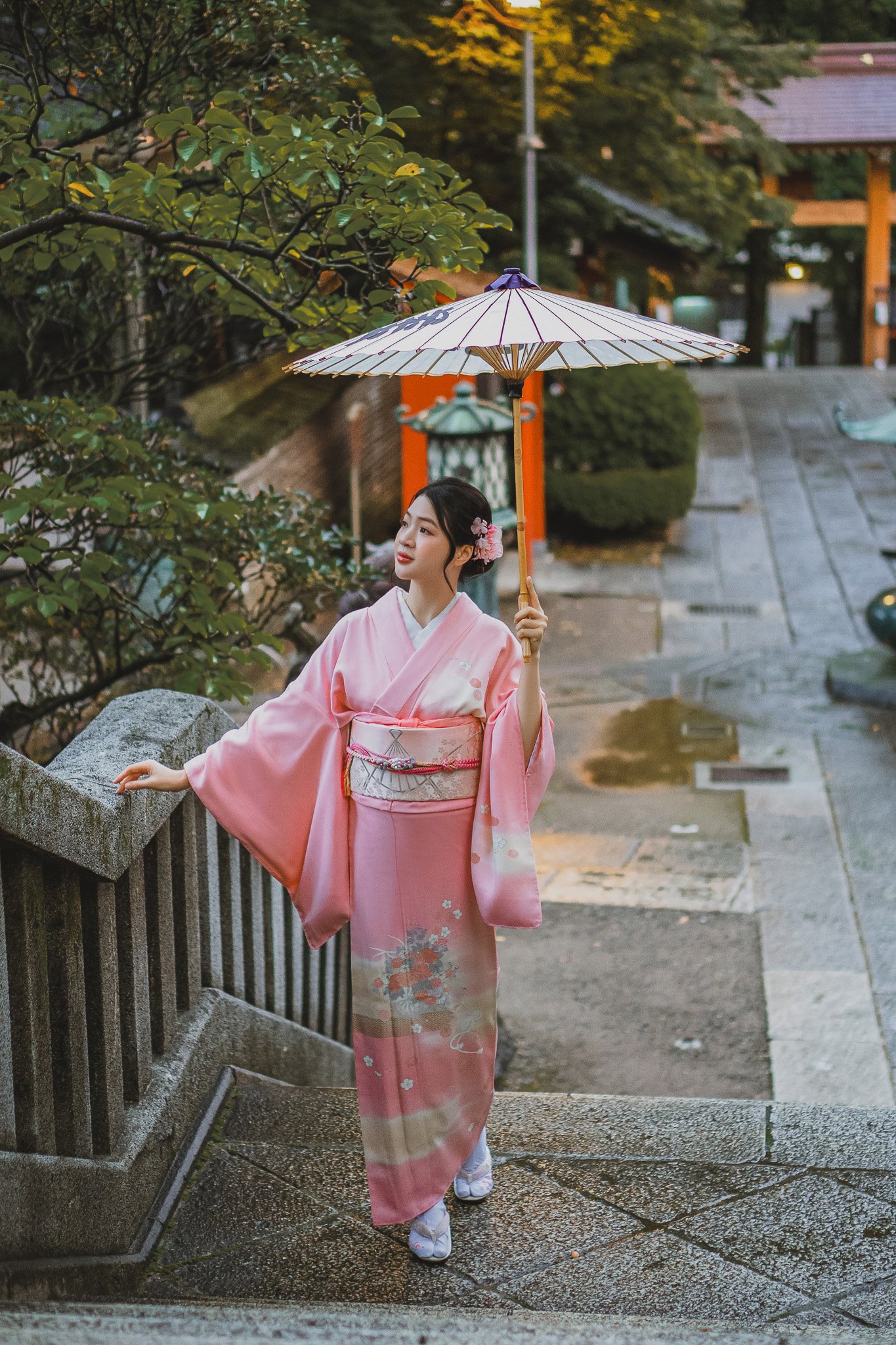
At Kimono Rental Ann, “Traditional Kimono” refers to short-sleeved kimono — the everyday counterpart to the dramatic furisode. This category includes the styles you’ll see most often on the streets of Asakusa: calm patterns, balanced colors, and a timeless silhouette. In Japan, short-sleeved kimono are traditionally categorized into several formal levels (komon, homongi, tomesage, tsukesage). We’ve simplified this into one accessible category so international guests can choose by feel rather than terminology.
Why guests choose traditional kimono
- More comfortable for long walks and sightseeing
- Versatile — works for couples, families, solo travelers
- Calmer aesthetic that blends with historic streets
- Easier to move in for spontaneous photos
Traditional kimono at Kimono Rental Ann
— Traditional Kimono (¥7,000 cash) — classic Japanese elegance
— Basic Kimono (¥5,000 cash) — simple cultural experience
Sleeve Length — The Real Difference
Sleeve length is more than aesthetic. In Japanese tradition, long sleeves signal that a woman is unmarried and signal a ceremonial occasion. Short sleeves indicate everyday wear or married status. For international guests visiting Asakusa, this distinction matters less culturally — but it dramatically affects how the kimono looks in photos and how comfortable it feels during a long day of walking.
| Feature | Long sleeves (Furisode) | Short sleeves (Traditional) |
|---|---|---|
| Length | 80–114 cm | Around 50 cm |
| Movement | Flowing, dramatic | Compact, practical |
| Photo impact | High drama | Quiet elegance |
| Walking comfort | Requires care | Easy |
| Cultural context | Formal, unmarried women | Versatile, everyone |
Which One Should You Rent?
Choose Furisode if you want…
- Show-stopping photos at Sensoji Temple
- A once-in-a-lifetime experience
- Bold, vibrant colors
- The full ceremonial Japanese aesthetic
Choose Traditional Kimono if you want…
- A relaxed day exploring Asakusa
- Comfortable photos as a couple or family
- Calm, refined elegance
- A gentler price point
There is no wrong choice. Many guests pick furisode for the photo experience and traditional kimono for sightseeing comfort — and some return to try both.
Other Kimono Types You Might Hear About
You may come across these terms when researching kimono. At Kimono Rental Ann, all short-sleeve formal styles fall under our “Traditional Kimono” category to keep selection simple.
| Type | Sleeves | Formality | Worn by |
|---|---|---|---|
| Furisode | Long (80–114 cm) | Very formal | Unmarried women |
| Tomesode | Short | Very formal | Married women |
| Homongi | Short | Formal–semi-formal | Any woman |
| Tsukesage | Short | Semi-formal | Any woman |
| Komon | Short | Casual | Any woman |
| Yukata | Short | Very casual | Anyone (summer) |
Frequently Asked Questions
What's the main difference between furisode and traditional kimono?
Sleeve length. Furisode has long sleeves (80–114 cm) and is the most formal style for unmarried women. Traditional kimono has short sleeves and is suitable for any woman, any occasion.
Can foreigners wear furisode in Japan?
Yes. There are no restrictions. Many international visitors choose furisode for the dramatic visual impact in Asakusa photos.
Is furisode more expensive than traditional kimono?
Yes. At Kimono Rental Ann, furisode starts at ¥10,000 cash while traditional kimono starts at ¥7,000 cash. Furisode garments are more elaborate, which reflects in the price.
Which is more comfortable for walking around Asakusa?
Traditional kimono. The shorter sleeves make movement easier during a full day of sightseeing. Furisode is comfortable for photoshoots and shorter outings.
Can men wear furisode?
No. Furisode is exclusively a women’s style. Men typically wear hakama, which we offer separately at Kimono Rental Ann.
Do I need to know which style I want before booking?
No. Our staff helps you choose on arrival based on your preferences, the day’s plans, and the look you want for photos.