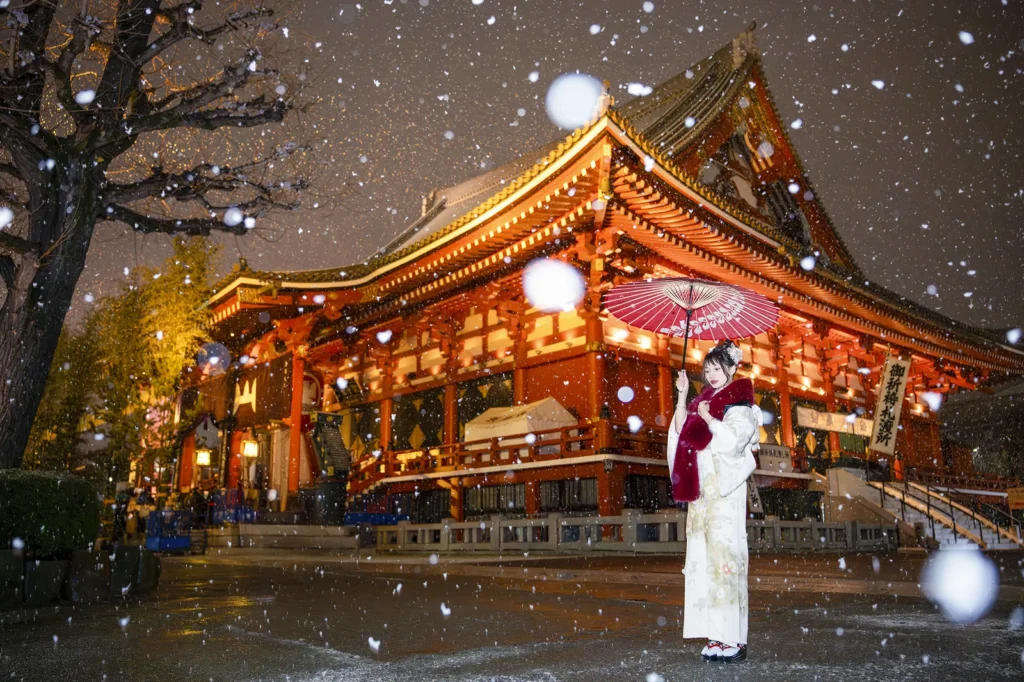
Yes, you can wear Heattech or other thin thermal layers under a kimono. Choose a low or wide-neck thermal top and thermal leggings, and keep the back of your neck uncovered. Add stick-on heat packs (kairo), gloves and a winter shawl, and a kimono in Tokyo in winter is comfortable for a 2–3 hour walk.
We dress travellers in kimono every day in Asakusa, including through December, January and February. This guide is what we tell our own guests before a winter visit: what to wear underneath, what to leave at home, and how to plan your day so you stay warm and still get beautiful photos at Sensoji.
Is a kimono warm enough in winter?
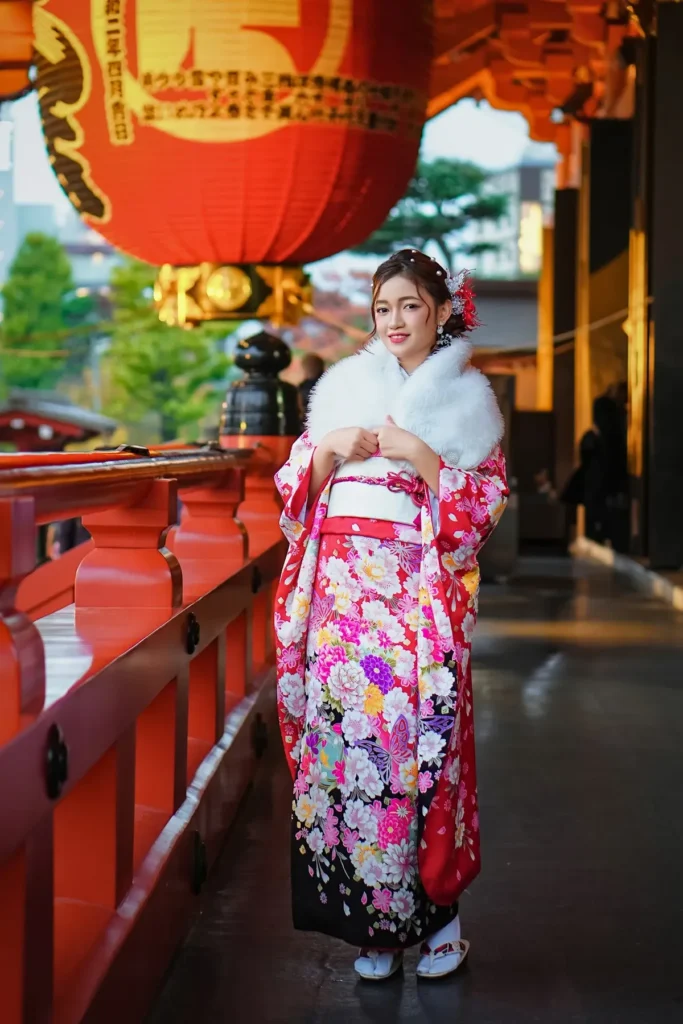
On its own, not quite. A rental kimono is several layers of fabric wrapped around your body, so your torso stays surprisingly warm. Your neck, wrists and ankles are the parts that get cold.
Tokyo winters are cold but rarely brutal. Most days sit around 4–6°C, and on the coldest mornings it drops close to 0°C.
| Month | Average high | Average low | Rain | Sunset |
|---|---|---|---|---|
| December | 12.0°C | 3.8°C | 58 mm | around 4:30 pm |
| January | 9.8°C | 1.2°C | 60 mm | around 4:50 pm |
| February | 10.9°C | 2.1°C | 57 mm | around 5:20 pm |
The good news: winter is Tokyo’s driest, sunniest season. Rain is rare, skies are often clear blue, and it is one of the most reliable times of year to plan an outdoor kimono day.
Sources: Japan Meteorological Agency 1991–2020 climate normals for Tokyo; sunset times for central Tokyo.
What to wear under your kimono
Think thin and close-fitting. Bulky layers make the kimono look puffy and are hard to wrap neatly, while thin thermal wear keeps you warm without changing the shape.
On top
- A thin thermal top such as Uniqlo Heattech, with a low or wide neckline (U-neck or wide V-neck).
- Short sleeves or three-quarter sleeves both work well, so nothing shows at the kimono sleeve opening.
On the bottom
- Thermal leggings or tights, for example Heattech leggings.
- Any thin, close-fitting warm trousers that end above the ankle work too.
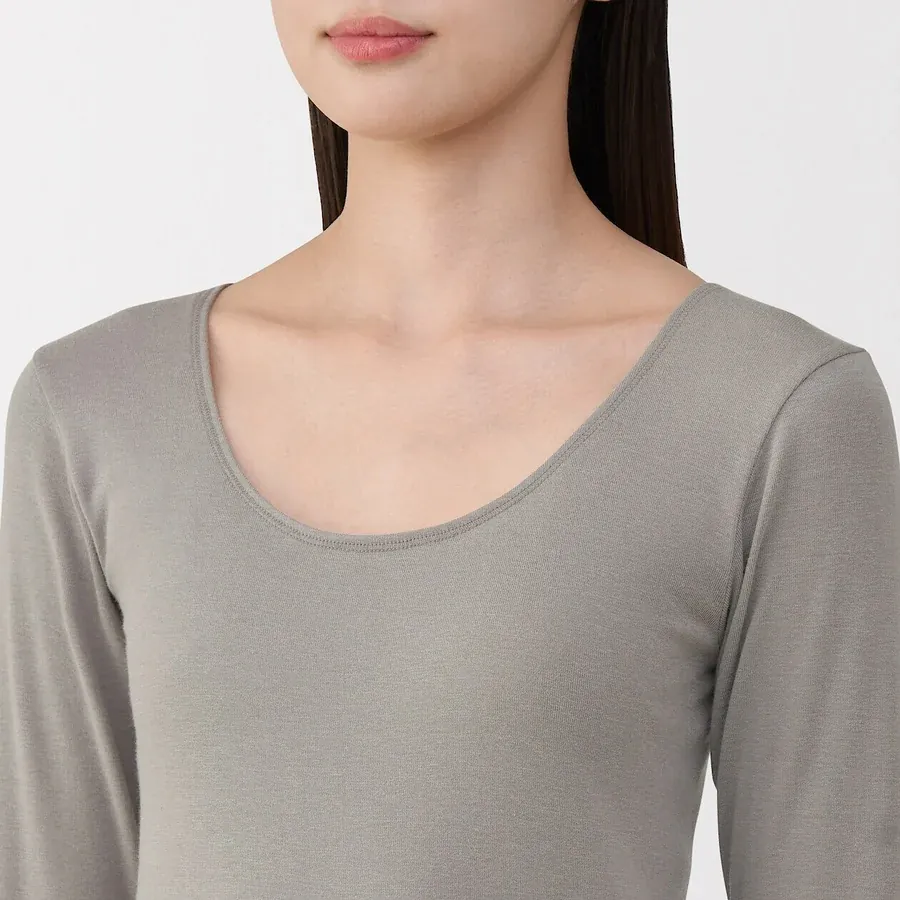
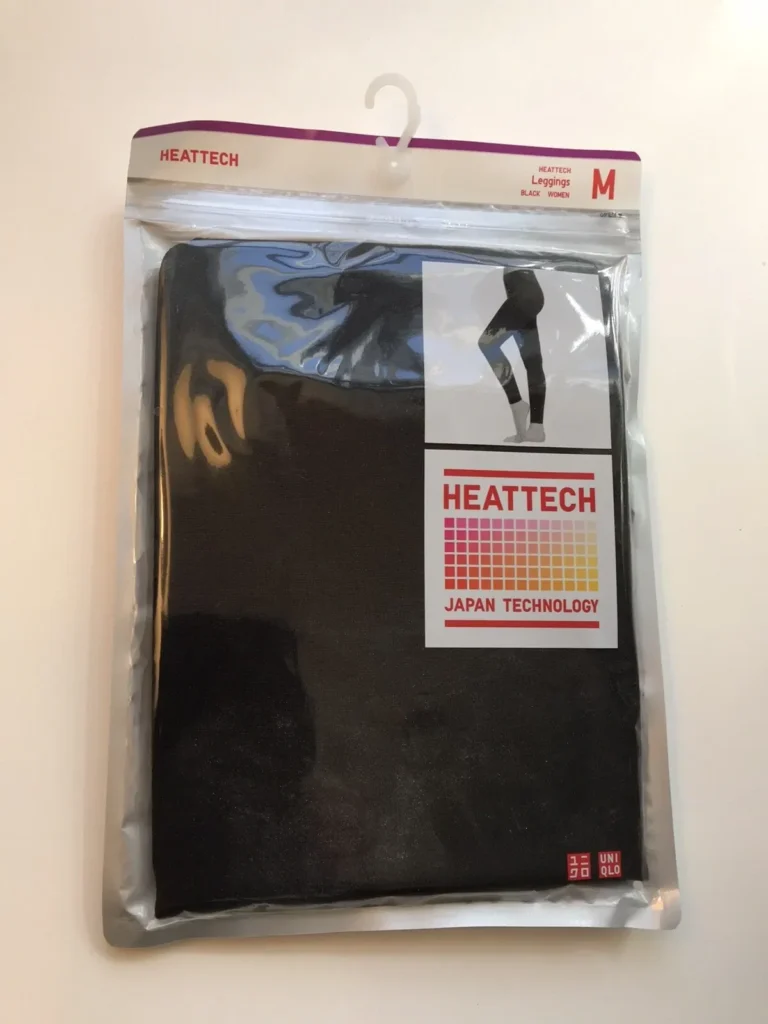
If you do not own thermal wear, Uniqlo has several stores in Tokyo and the basics cost little. Put them on at your hotel, then come to the shop as you are.
What not to wear: keep the back of your neck open
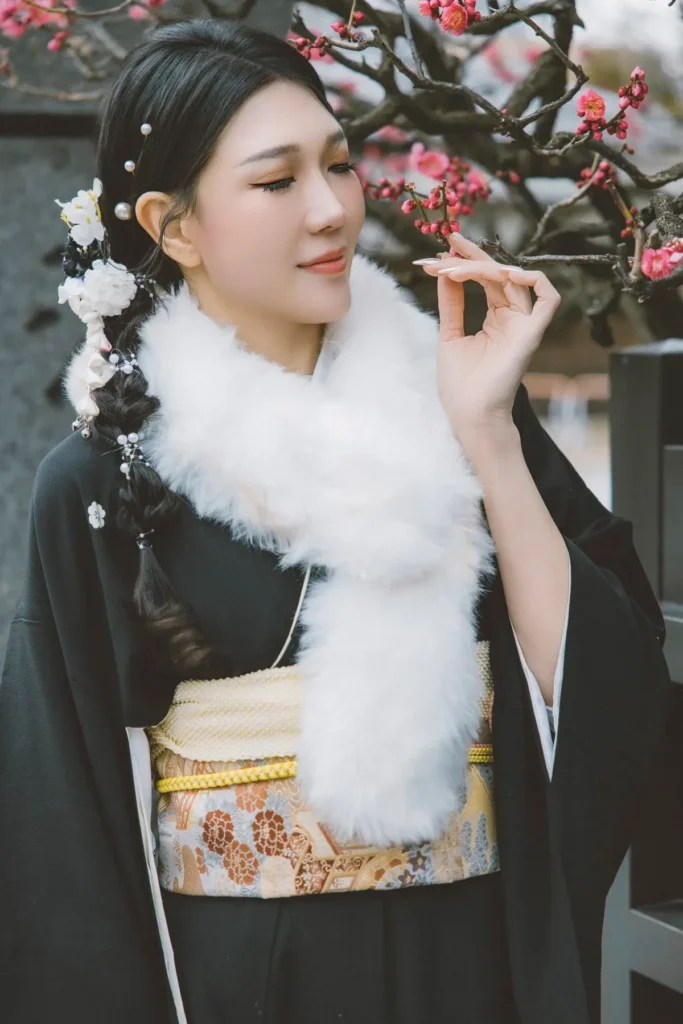
The one rule we ask every winter guest to follow: no turtlenecks, high necks or anything that covers the nape of your neck.
In Japanese dressing, the collar of a kimono is pulled slightly away from the back of the neck so the nape shows. This line, called nuki-emon, is what makes a kimono look elegant and correctly worn. A high-neck top underneath fills that gap and the whole outfit looks wrong in photos.
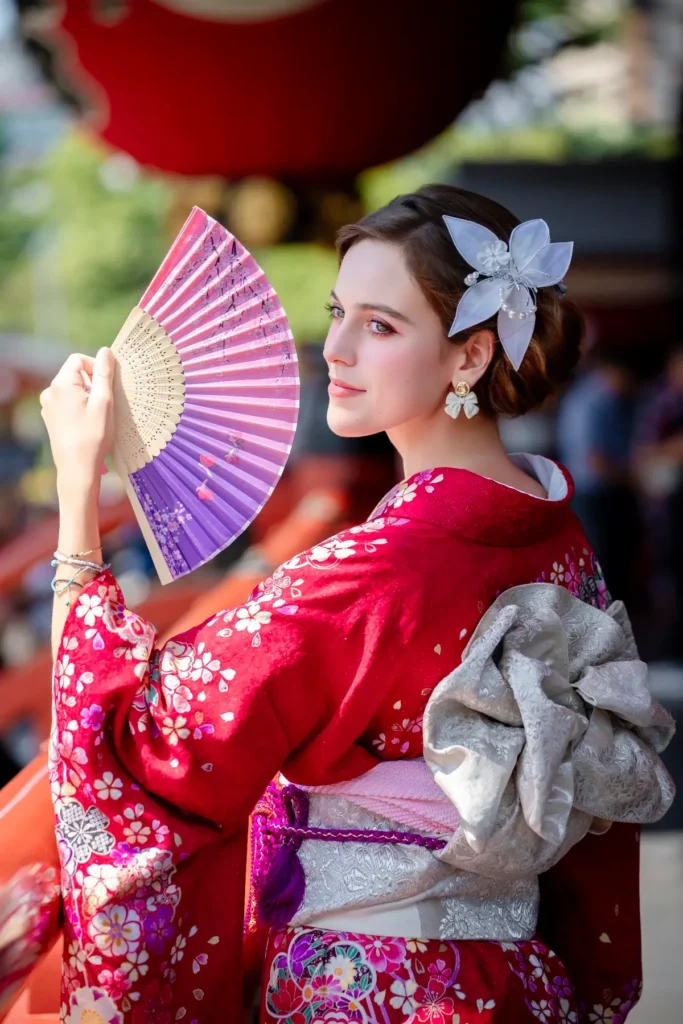
Also leave these at your hotel or in your bag:
- Thick sweaters, hoodies or fleece. They add bulk and cannot fit under the kimono.
- Long-sleeved tops that reach past the wrist, which can peek out of the sleeve.
- Wide or long trousers that show below the kimono hem.
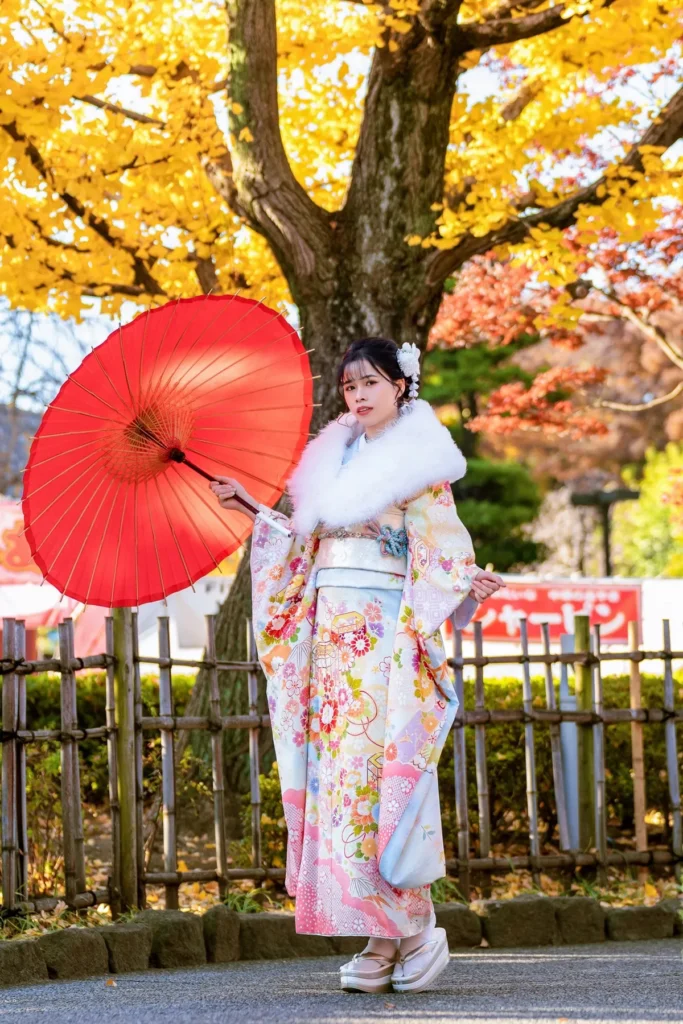
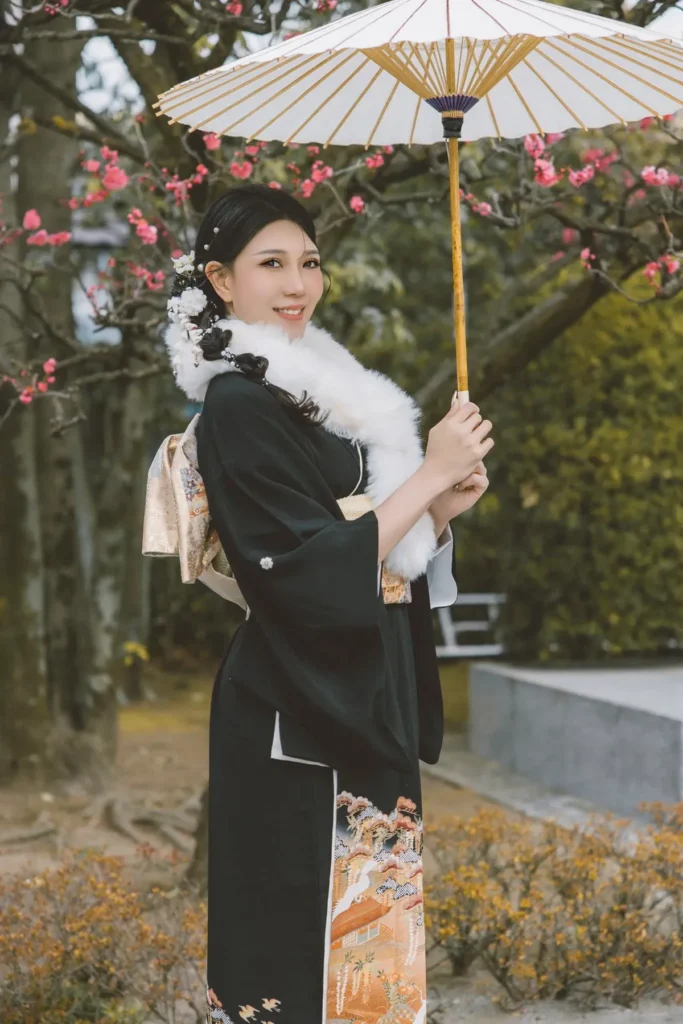
To keep your neck warm, use a winter shawl over the kimono instead. It sits on top of the kimono, keeps you warm while you walk, and comes off in seconds when you want a photo that shows the nape. We lend them for free (see below).
Kairo, gloves and hand warmers
Kairo are disposable heat packs sold at every Japanese drugstore and convenience store, and they are the secret to a warm winter kimono day.
- Stick-on kairo (貼るカイロ): attach them to your thermal top, on your lower back or stomach, before you get dressed. They stay warm for hours under the kimono.
- Hand-held kairo or a hand warmer: keep one in your bag or sleeve for cold fingers.
- Gloves: please bring your own, as the shop does not provide them. Thin gloves in a plain colour look fine with a kimono and come off easily for photos.
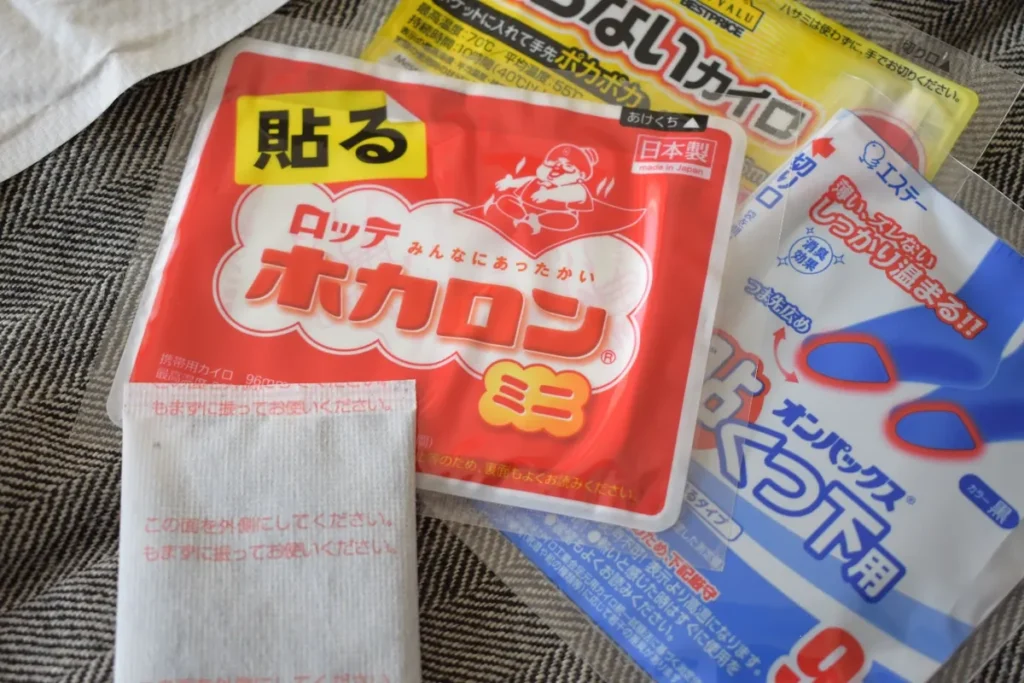
One safety note: never stick kairo directly on your skin, and do not sleep with them. Always put them on a layer of clothing to avoid low-temperature burns.
Can you wear boots with a kimono?
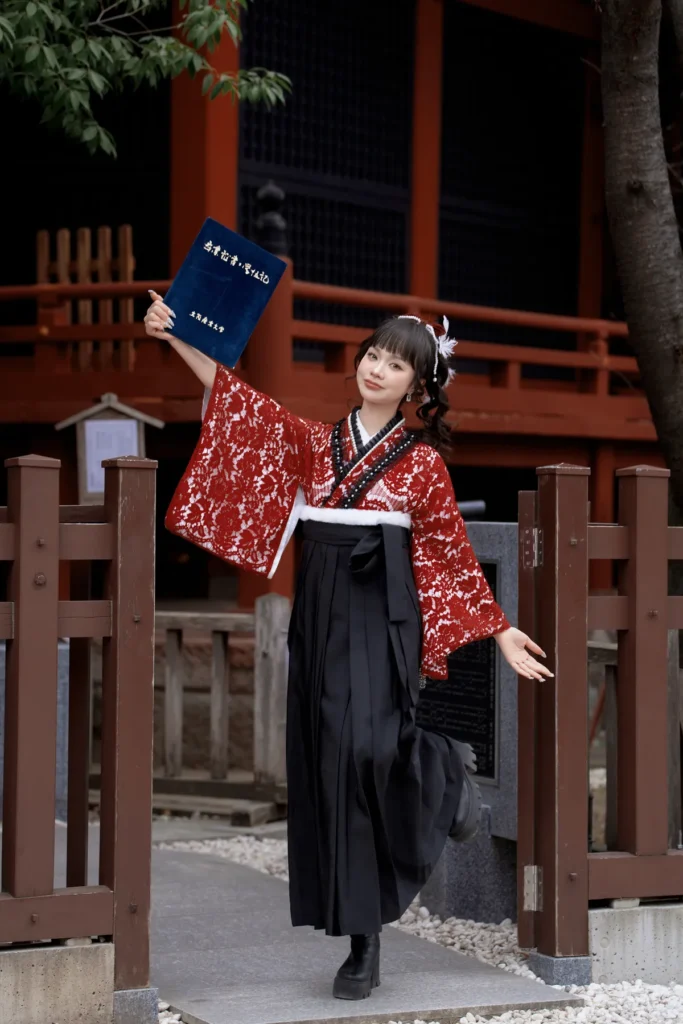
Yes. Boots are warm, comfortable and look great with a kimono. Short black or brown boots give your outfit a stylish, individual twist, and kimono or hakama with boots has been a popular look in Japan for over a hundred years.
On a cold day with a lot of walking, boots are also the practical choice. Wear warm socks inside and keep the boots simple, so the kimono stays the star of your photos.
What Kimono Rental Ann prepares for you in winter
You do not need to bring a lot. Here is what is waiting for you at our shop, 1 minute from Sensoji Temple.
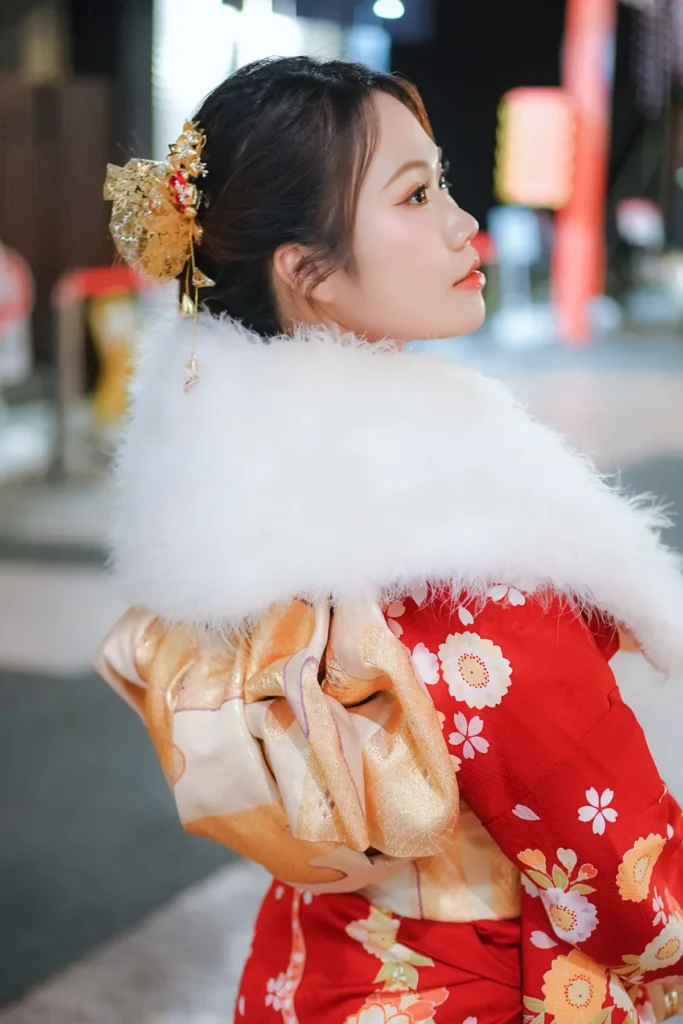
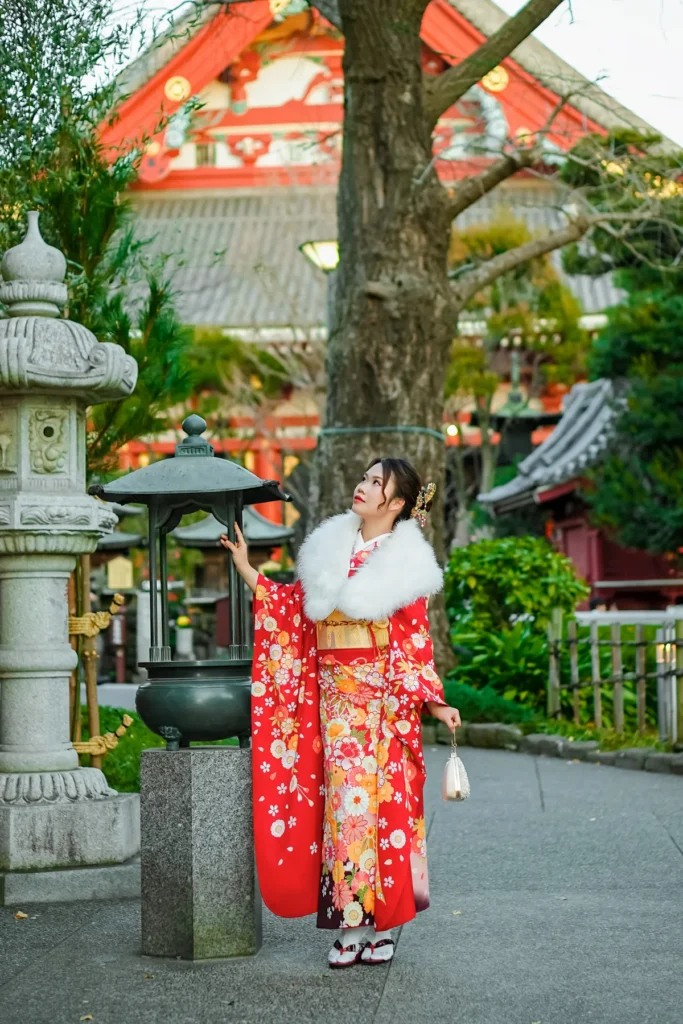
- Free winter shawls to borrow. Soft winter shawls designed to go with kimono, at no extra charge. They keep your neck and shoulders warm and look lovely in photos.
- A few kairo heat packs. We keep some ready to stick on before you go out. If you feel the cold easily or plan a long day, bring extra of your own.
- A large changing and storage room. Come dressed as warmly as you like, in your coat, jumper and boots. There is plenty of space to leave everything safely while you are out in kimono.
Please bring yourself: your thermal top and leggings (worn under your clothes when you arrive), gloves, and a hand warmer.
Plan your winter kimono day
Go out around midday and plan for 2–3 hours outdoors. That is the sweet spot for a warm, relaxed winter visit.
- Midday is warmest. Late morning to early afternoon is when the sun is strongest. A 10–11 am dressing time lets you walk Asakusa in the best light and warmth.
- Afternoons get cold fast. From around 3 pm the temperature drops and a cold wind often picks up.
- It gets dark early. In December the sun sets around 4:30 pm. If you want daylight photos, finish your outdoor shots before then.
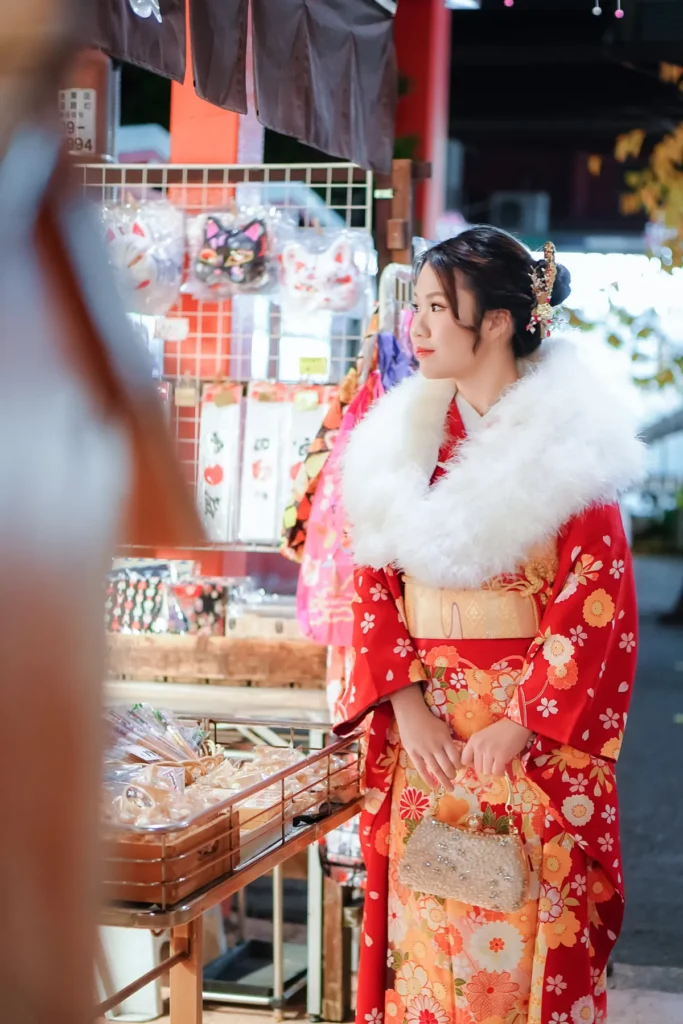
Short on time in the cold? Book a photographer. Finding photo spots on your own means standing around outside working out angles. With our photoshoot service, our photographer takes you straight to the best spots around Sensoji, helps you pose, and gets the shots done quickly. Afterwards you can explore Asakusa at your own pace, knowing your beautiful photos are already taken.
Too cold to go out? Use our indoor studio. If you feel the cold easily or would rather not walk around much, come down to our photo studio on the 3rd floor of the same building. You get beautiful kimono portraits in a warm room, with no wind and no rush. Studio photoshoots start from ¥5,000 per person.
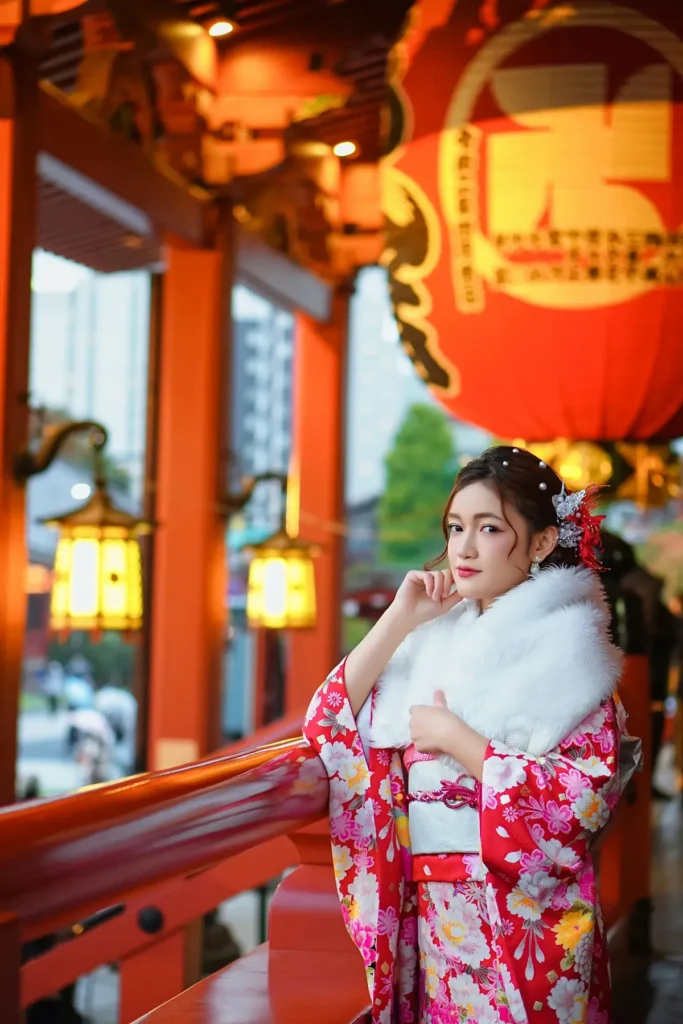
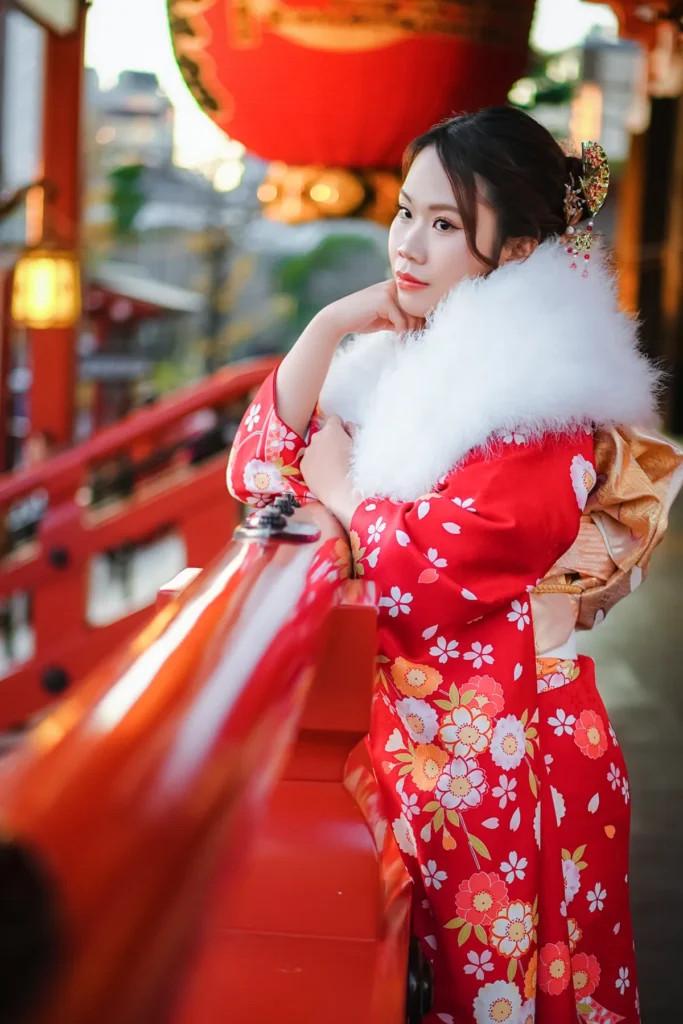
Snow at Sensoji: a rare winter gift
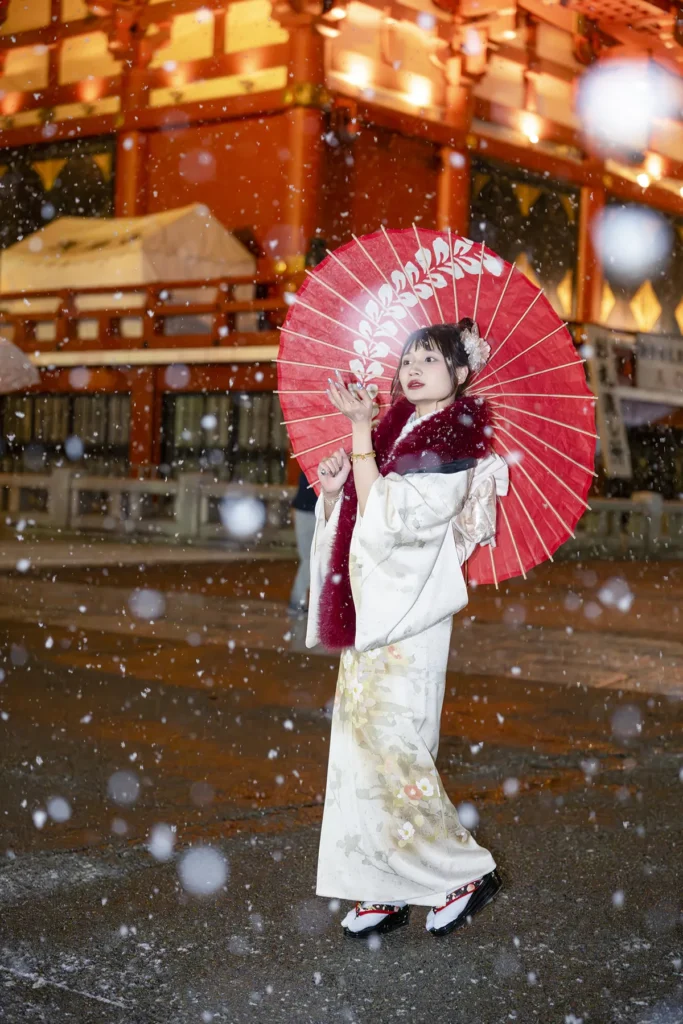
Snow in central Tokyo only falls on a handful of days a year, mostly in January and February. When it does, Sensoji Temple turns white and it is one of the most beautiful sights in Tokyo.
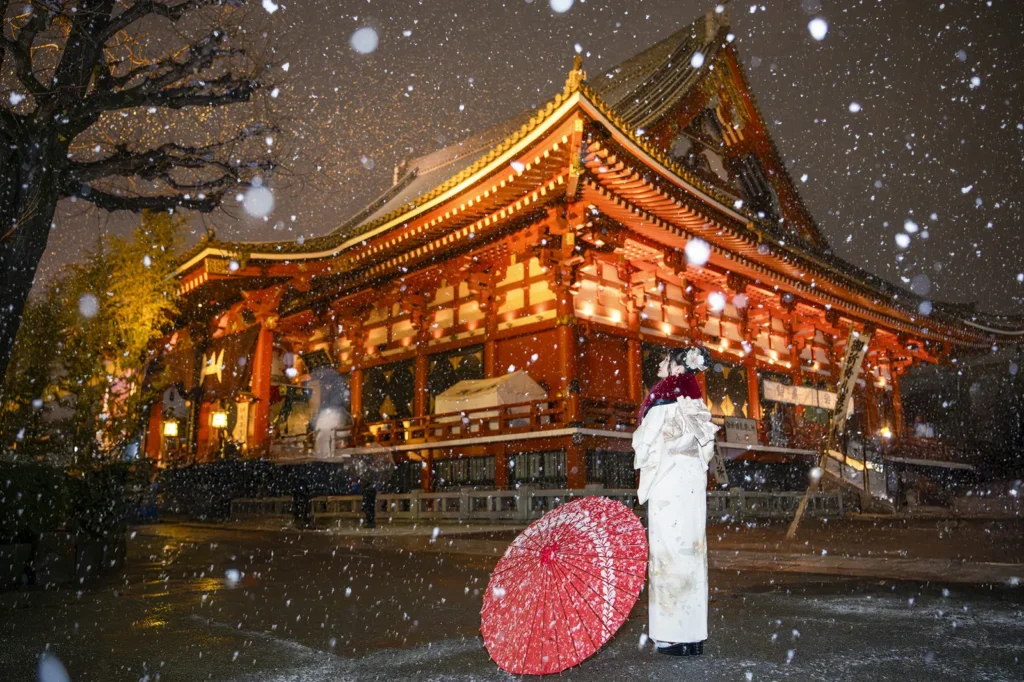
A kimono against fresh snow, with the red temple gates behind you, makes photos that most visitors never get. If snow is forecast during your trip, it is worth rearranging your plans to be in Asakusa that day. Send us a message and we will help you find a time.
FAQ
Can I wear Heattech under a kimono?
Yes. Heattech tops and leggings are ideal because they are thin and close-fitting. Choose a low or wide neckline so the back of your neck stays open.
Is a kimono warm enough in winter?
The kimono body is warm because of its layers, but your neck, hands and feet need help. Thermal wear, kairo, gloves and a winter shawl make 2–3 hours outside comfortable.
Can I wear a turtleneck under a kimono?
We do not recommend it. A kimono is worn with the nape of the neck showing, and a high neck spoils the look. Use a shawl for neck warmth instead.
Can I wear boots with a kimono?
Yes. Boots are warm, comfortable and stylish with a kimono or hakama. Short boots in black or brown work best.
Where do I leave my coat and winter clothes?
At the shop. Our changing room is spacious and has room to store your coat, bag and clothes while you are out.
What time is best for a winter kimono walk?
Midday. Go out between late morning and early afternoon, and finish outdoor photos before sunset, which is around 4:30 pm in December.
Does it rain a lot in Tokyo in winter?
No. December to February is the driest time of year in Tokyo, with mostly clear, sunny days.
What if it is too cold to go outside?
Take your photos indoors. Our photo studio is on the 3rd floor of the same building, so you can stay warm the whole time. Studio photoshoots start from ¥5,000 per person.
Book your winter kimono in Asakusa
Kimono Rental Ann is on the 4th floor of the Amoru Building, 1-36-11 Asakusa, about 1 minute from Sensoji Temple. Come dressed warm, we will take care of the rest.
See kimono plans and prices · Book your kimono now
Questions about your winter visit? Message us in any language and we will help you plan.