Most people photograph Asakusa between ten in the morning and four in the afternoon, which is exactly when it is fullest. The temple is lit until about 23:00, and by eight in the evening you can have whole corners of it to yourself.
The catch is that the place changes after dark. Locations that carry a portrait in daylight go flat and dim at night, and the few that work become obvious once you have shot them a hundred times.
The short version
The best spots to photograph at Sensoji after dark are Hozomon Gate, the five-storied pagoda, the right side of Hozomon, and three angles on the Main Hall — walked in that order, they make a loop of about an hour. Everything quieter than that, including the shrine side and the ground behind the Main Hall, is a daytime location.
| Stop | What is in frame | Roughly |
|---|---|---|
| 1. Hozomon Gate | The giant red lantern, lit from inside | 10 min |
| 2. Five-storied pagoda | The pagoda floodlit red against black sky | 10 min |
| 3. Hozomon, right side | Pagoda and gate together, fewer people | 10 min |
| 4. Main Hall, front | The whole hall and its curved roof | 10 min |
| 5. Main Hall, great lantern | The huge lantern directly behind you | 10 min |
| 6. Main Hall, left side | Pagoda small in the distance | 10 min |
When it is actually dark enough
Not at sunset. The frames that work at Sensoji are the ones where the building lighting carries the picture, and that only happens once the sky has gone properly black — roughly 25 to 30 minutes after sunset, when civil twilight ends. Start earlier and you get a flat blue sky competing with the floodlights; neither one wins.
Sunset moves by two and a half hours across the year, so the earliest useful start time moves with it.
| Month | Sunset | Start shooting from |
|---|---|---|
| January | 16:52 | 17:20 |
| February | 17:23 | 17:50 |
| March | 17:49 | 18:20 |
| April | 18:15 | 18:45 |
| May | 18:40 | 19:10 |
| June | 19:00 | 19:30 |
| July | 18:59 | 19:30 |
| August | 18:33 | 19:05 |
| September | 17:50 | 18:20 |
| October | 17:08 | 17:40 |
| November | 16:36 | 17:05 |
| December | 16:30 | 17:00 |
Tokyo times on the 15th of each month, from sunrise-sunset.org.
There is a second thing hidden in that table. The lights go off around 23:00 whatever the season, so the window is not a fixed length. In June you get about three and a half hours. In December you get six. Winter is the better season for this even before you count the thinner crowds.
The route, in order
This is the loop our photographers walk. It is not the only order that works, but it moves you through the grounds without backtracking and it puts the busiest spot first, while you still have energy for it.
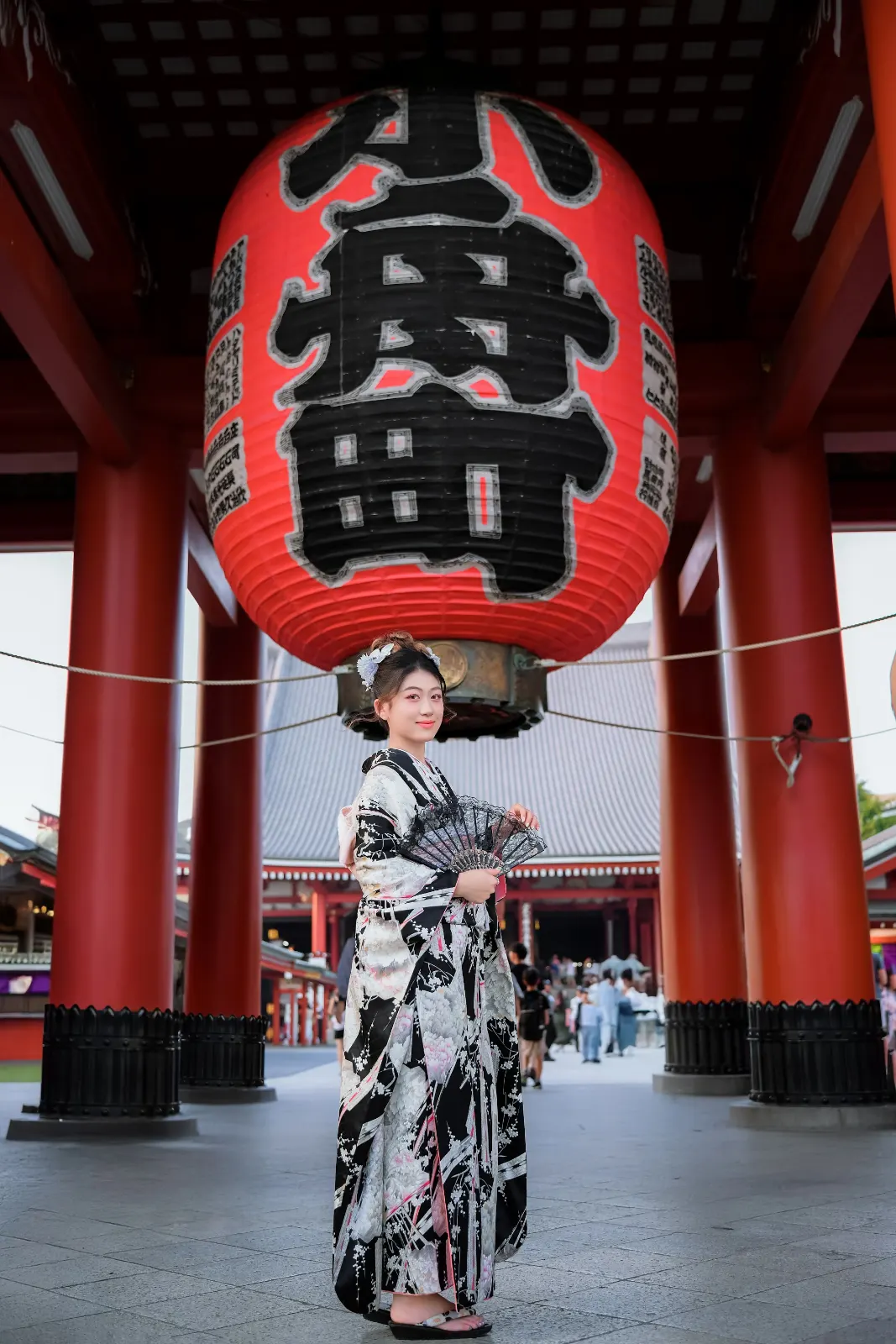
1. Hozomon Gate
The most photographed structure at Sensoji, and the one that changes most after dark. The great red lantern hanging in the gateway is lit from inside, so it becomes the light source rather than just a subject.
It is also the most crowded spot on the grounds for most of the day. The two windows where you can reliably get it clean are before 9:00 and after 18:00. That is not a small difference — it is the difference between a portrait and a crowd photograph.
2. The five-storied pagoda
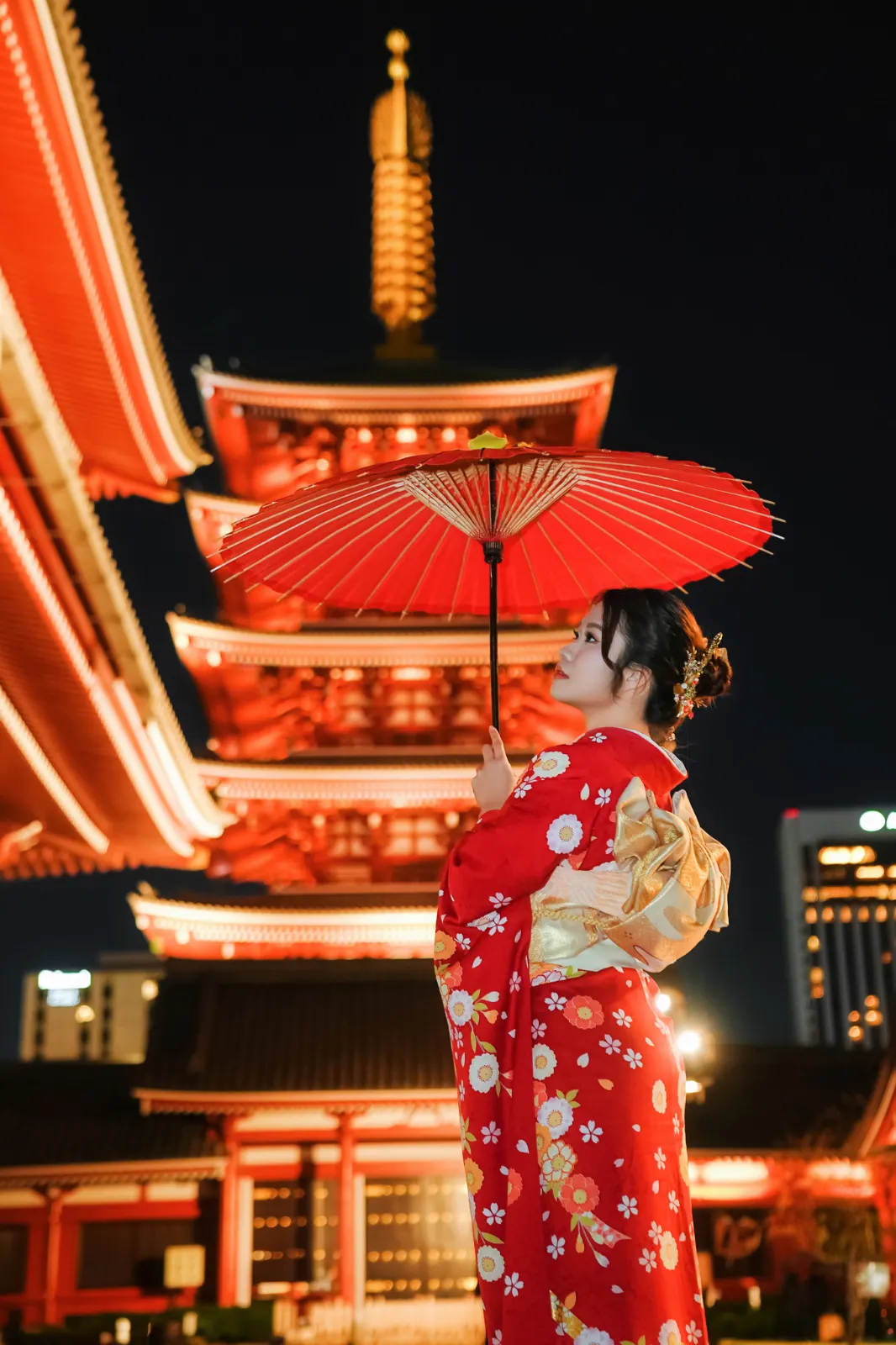
Stand with your back to the gate and face the pagoda. It is floodlit red at night, and against a black sky it reads far more strongly than it does in daylight, when it has to compete with everything else going on around it.
3. Hozomon, right side
A few metres from stop one, and much quieter. From here the gate and the pagoda line up in the same frame, which is the shot most people are trying to get from the middle of the approach while standing in a queue.
4. The Main Hall, from the front
The frame that looks most obviously Japanese: the whole hall, with the deep curve of the roof reading clearly against the dark. This is the one to shoot if you are only going to take one picture of the building itself.

5. The Main Hall, under the great lantern
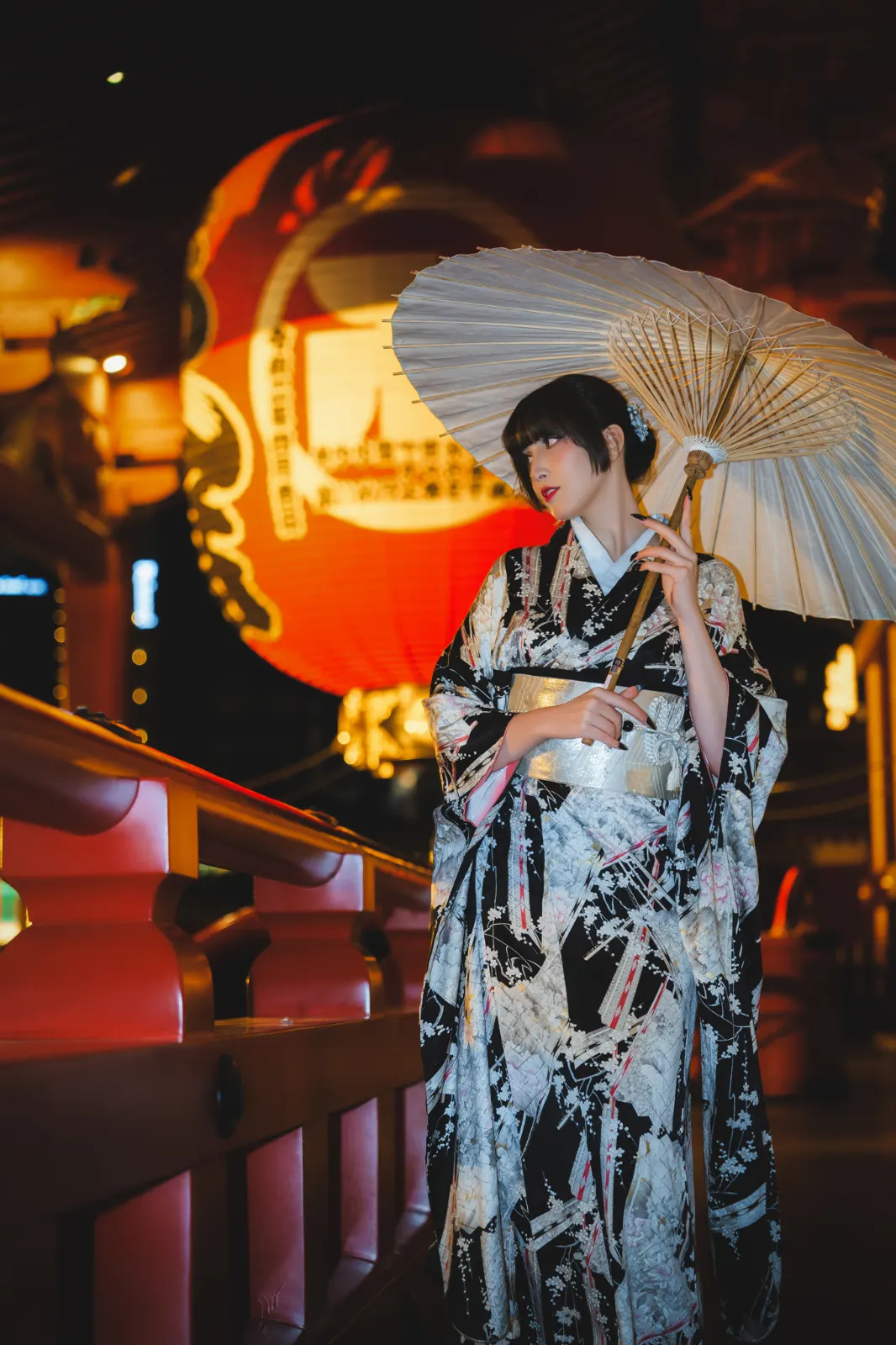
Move in closer and turn around. The enormous red lantern hangs directly behind you, filling the top of the frame, glowing. It is the single most recognisable night frame in Asakusa and it does not need anything else in it.
6. The Main Hall, left side
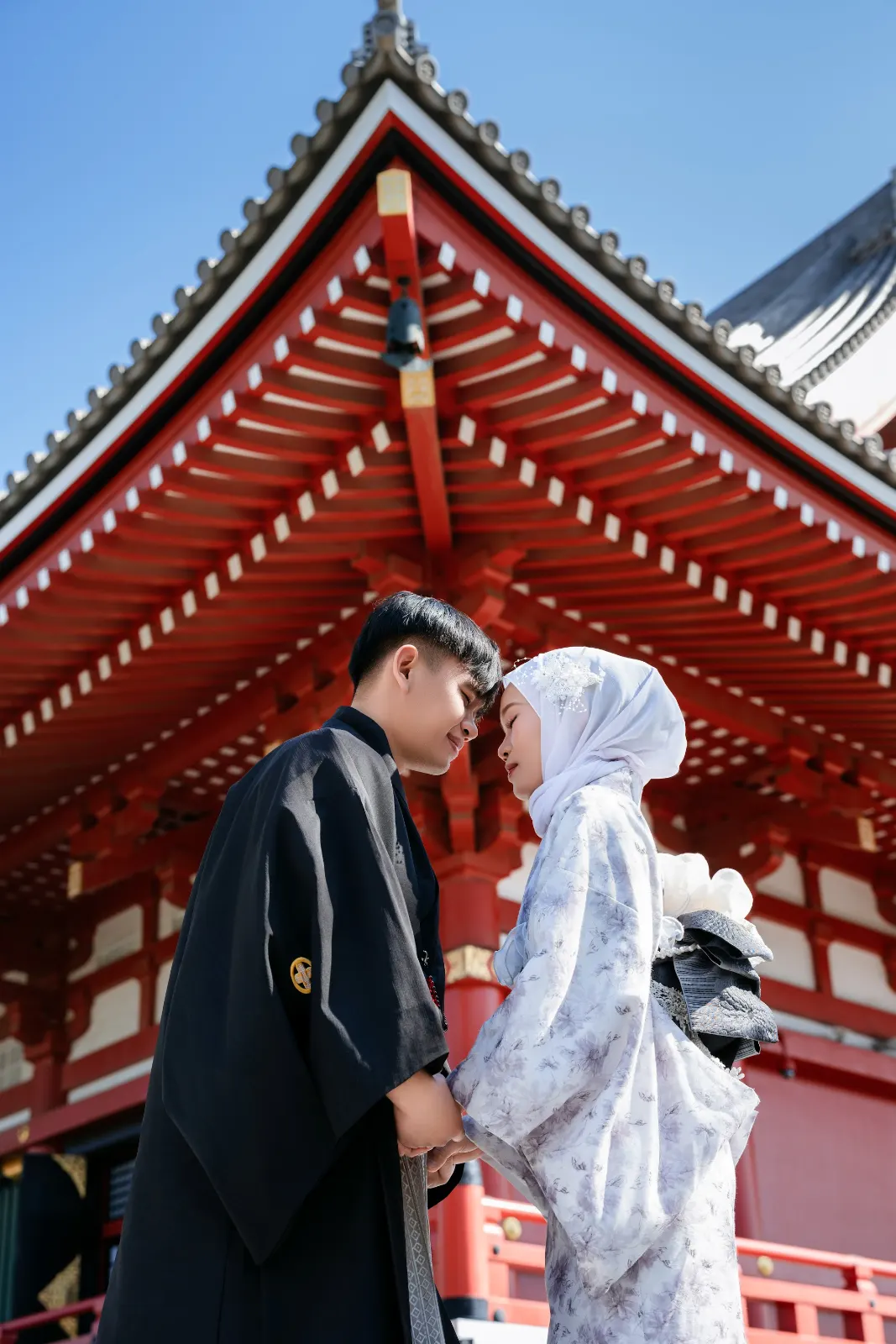
Worth knowing what this one is and is not. From the left you do not really get the Main Hall — what you get is the pagoda, small, in the distance behind your subject, with the hall's lit roofline along the edge of the frame. It is a quieter, more open composition than the four before it, and a good one to end on.
Three more, just outside the grounds
If you have longer than an hour, these three are within a few minutes' walk and each looks completely different from the temple.
Nishi-sandō shopping street
浅草西参道商店街, the covered arcade west of the temple. The shops shut in the evening but the lighting stays on, so you get a long decorated street, fully lit, with nobody in it. That combination is genuinely hard to find anywhere else in central Tokyo, and it photographs unlike anything at the temple.
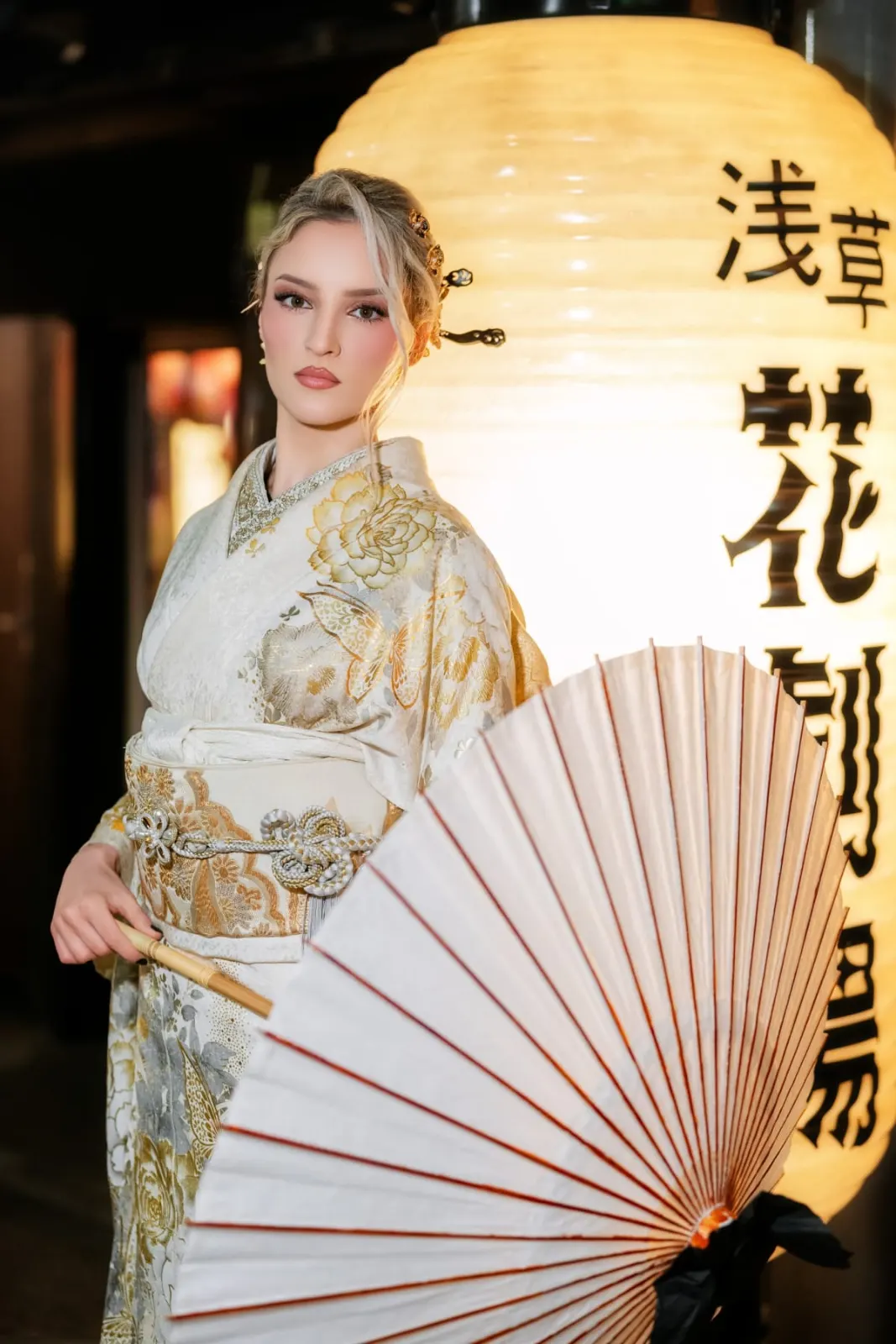
Hanayashiki Street
Big paper lanterns along the street, lit from inside, at roughly head height. They make a soft warm light on a face — closer to a studio light than to street lighting — which is why this street works after dark when most streets do not.
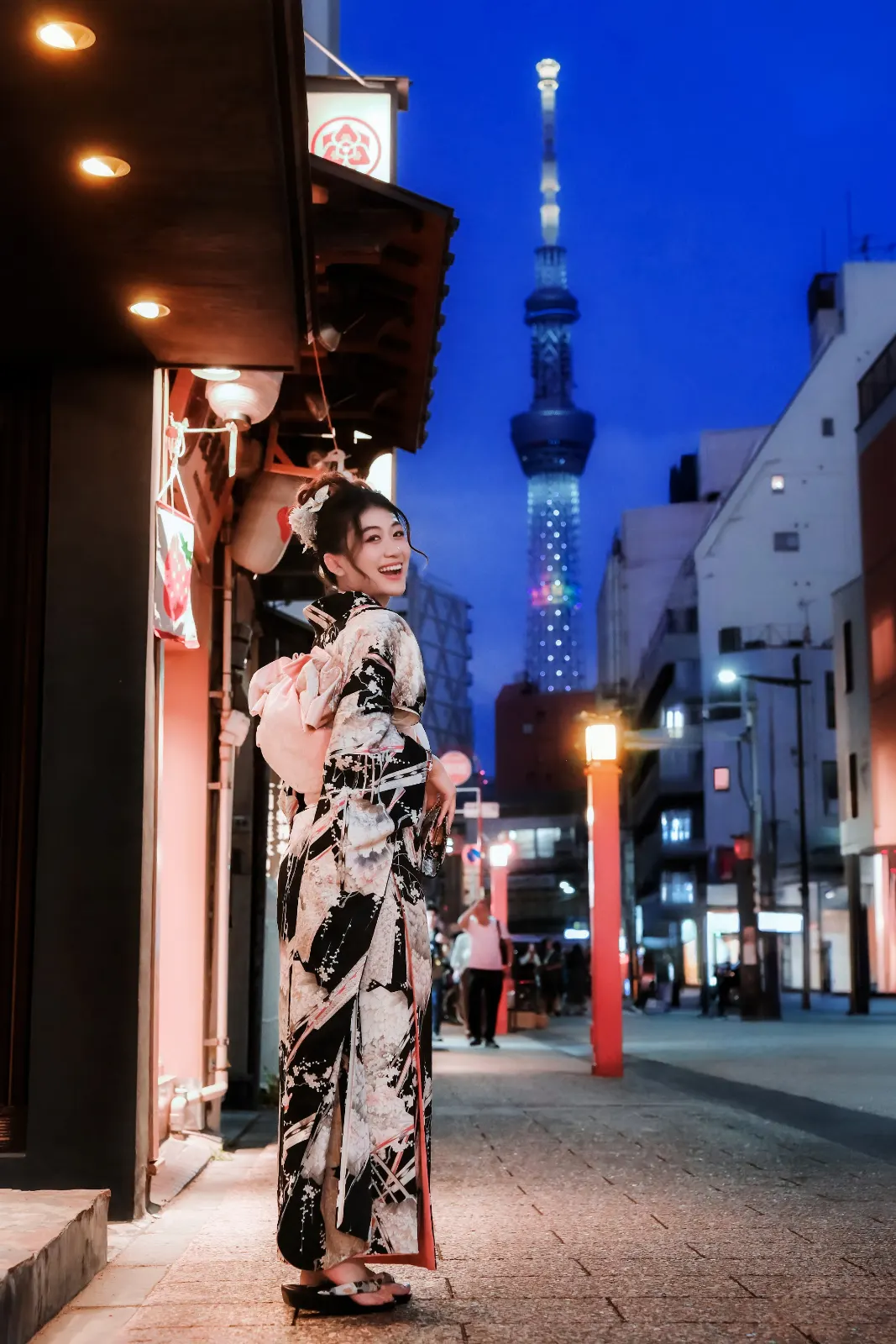
The Skytree view
Old low buildings in the foreground, Skytree lit up behind them. The tower changes colour through the evening, so this is one of the few frames in Asakusa that will not look the same on two different nights.
Where not to bother after dark
This is the part most guides leave out, and it will save you a wasted half hour.
Benten-dō, Rokkakudo, Awashimado Hall, Mitsumine Shrine, Nitenmon, Asakusa Shrine and the ground behind the Main Hall are all good daylight locations and several of them are the best spots on the grounds in autumn. After dark, none of them carry enough light on the building to hold a portrait. You end up lighting your subject against something you cannot see.
The rule is simple: if the structure itself is not floodlit, it is a daytime location.
What you need to bring
Two lights, not one.
A flash does the work on your subject. Without it you are choosing between a face that is too dark and a shutter speed slow enough to blur.
A continuous light does something the flash cannot: it lets you and your subject see what you are doing, and it lets you balance the person against the temple lighting rather than blasting them out of it. Shooting at night with flash alone is how you end up with a brightly lit person standing in front of a black rectangle.
This is not a phone shoot. Every frame in this article was taken with both.
Practical notes
- The grounds are open 24 hours. There is no gate to be locked out of.
- The Main Hall interior closes at 17:00 (17:30 from October to March), so everything here is exterior. That is no loss — the exterior is what is lit.
- The illumination runs to about 23:00. Later than that the buildings go dark and only the street lighting is left.
- Dressing and hair take 45 to 60 minutes, so work backwards from the start time in the table above.
Every spot in this article is pinned, with sample photographs, on our Asakusa photo spot map. If you want the daytime version of this question, we wrote about the best time of day to shoot in Asakusa separately.
FAQ
Is Sensoji lit up every night?
Yes. The main buildings are floodlit from sunset until roughly 23:00, every day of the year, with no ticket and no closing gate.
Can you go inside the temple at night?
No. The Main Hall interior closes at 17:00, or 17:30 between October and March. The grounds around it stay open all night, and the grounds are where the photographs are.
Do I need a tripod?
Not for portraits. A flash and a continuous light will do more for you than a tripod will, because your subject moves and the buildings do not.
Is it safe to walk around Asakusa at night in kimono?
Yes. The temple grounds and the streets around them stay lit and busy into the evening, and the walk between the spots in this article is never more than a few minutes.
How late can we start?
The lights go off around 23:00, so a shoot starting after about 21:30 is cutting it fine. In winter you could start at 17:00 and still have six hours.
What is the quietest time at Sensoji?
After about 20:00, and earlier in winter when the evening starts sooner. The grounds empty out steadily from dusk onwards.
We are one minute from Sensoji, open until 20:00, and we run night kimono shoots with the lighting setup described above.
See our photoshoot packages · Kimono rental prices · Book a slot