Guests ask us this at the counter almost every day, usually while they are picking out a kimono: what time should we actually go out and shoot?
We are one minute from Sensoji Temple and we watch the grounds fill and empty every single day. Here is what we tell them.
The short answer
The best time of day for a kimono photoshoot in Asakusa is between 6:00 and 9:30, when the grounds around Sensoji are still almost empty. The hour before sunset gives the most flattering light, and after dark the temple illumination gives the most unusual pictures. Both of those are worth booking, and both are busier and need more planning than the morning does.
| Window | Crowds | Light | Best for |
|---|---|---|---|
| 6:00 – 9:30 | Very light | Soft, clean | Relaxed shooting, close-up compositions |
| 9:30 – late afternoon | Heavy | Flat, harsh at midday | Street scenes, lively atmosphere |
| Hour before sunset | Heavy | The most beautiful of the day | Warm, cinematic portraits |
| After dark | Light again | Temple illumination | Dramatic night portraits |
If you only take one thing from this article: go early. Everything else is a trade-off. Early morning is not.
First, a note on what is actually open
There are two different things people mean by "the temple," and the hours are not the same.
- The temple grounds — Kaminarimon Gate, Nakamise Street, Hozomon Gate, the five-story pagoda, the courtyard. Open 24 hours, every day, free.
- The Main Hall — open 6:00 to 17:00 from April to September, and 6:30 to 17:00 from October to March.
For photography this distinction matters less than you would think, because we do not shoot inside the Main Hall anyway. It is an active place of worship. Every photo you have seen of a kimono at Sensoji was taken in the grounds around it, and the grounds are where all the good backdrops are.
So the Main Hall's closing time does not limit your shoot. The grounds are open all night.
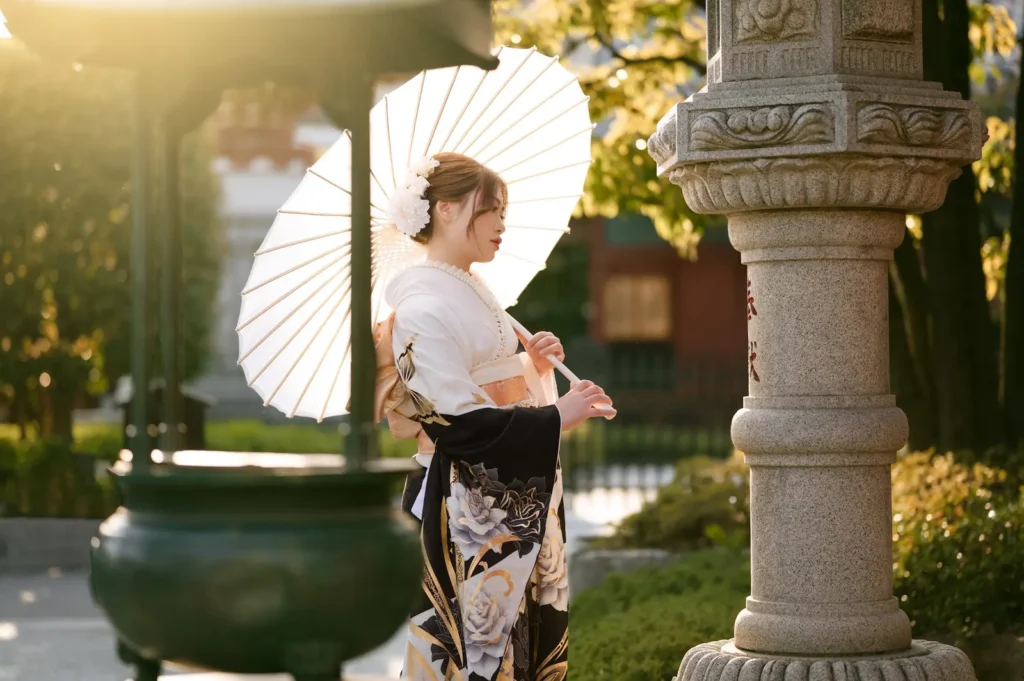
6:00 to 9:30 — the window we recommend
This is the golden window, and it has nothing to do with golden light.
Between six and about half past nine, the grounds are genuinely quiet. A few locals, a handful of early photographers, temple staff sweeping. That's it.
One caveat on that six: from December to February the sun does not rise until somewhere between 06:30 and 06:50, so in those months the window really opens at seven.
What that quiet actually buys you:
You can shoot close. Most kimono photos taken at Sensoji during the day are shot wide or tight to hide the crowd behind you. In the morning you can compose however the location wants to be composed, because there is nothing to hide.
Nothing needs retouching out. The photo you see on the back of the camera is close to the photo you will receive. No one to remove, no one walking through the frame at the moment of the shot.
You are not performing for strangers. This is the part guests mention most afterwards. Posing in kimono is unfamiliar for almost everyone, and doing it with forty people watching is a different experience from doing it with only your photographer there. People relax. Expressions get better.
It is faster. No waiting for a spot to clear. We move through more locations in less time, which means more variety in the final set.
From about 9:30 the tour groups start arriving and the character of the place changes within half an hour.
9:30 onward — busy, but not ruined
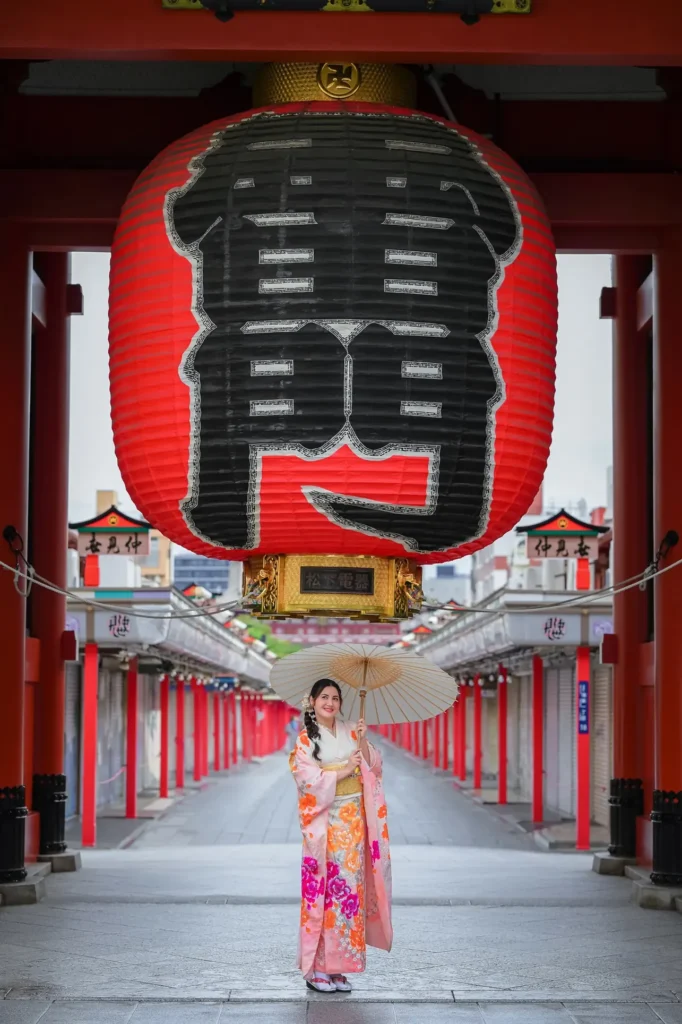
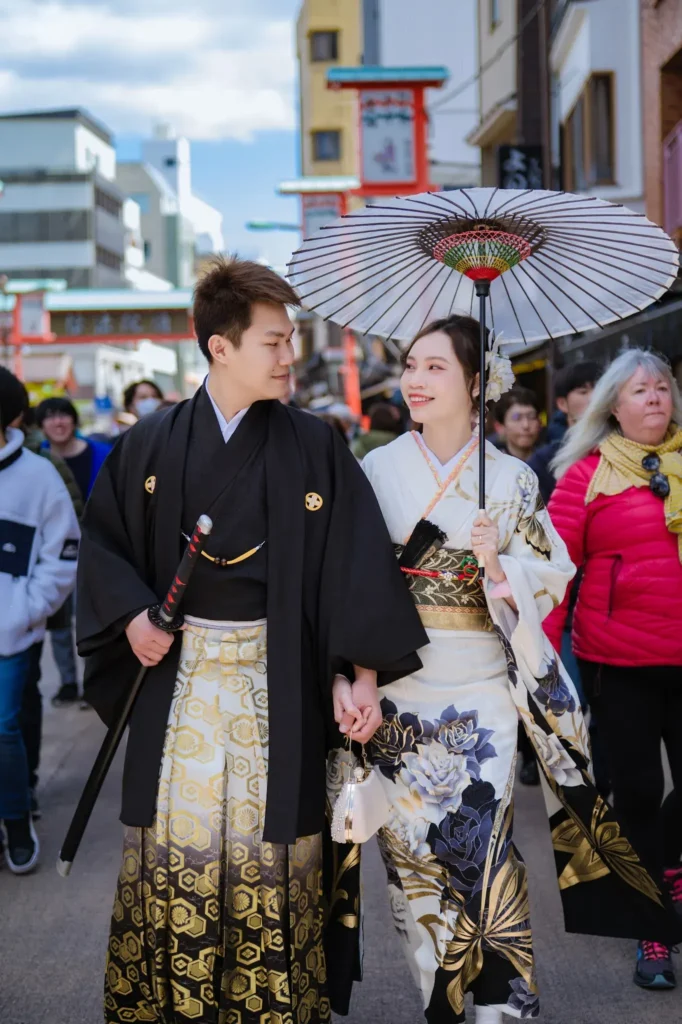
If your schedule cannot start at dawn, do not give up on the day. Plenty of our best work is shot mid-morning and afternoon. You just work differently: more street-level scenes, more of the crowd used as atmosphere rather than hidden, more of the side streets away from the main axis.
Midday sun is the real problem, not the people. Overhead light in the middle of the day is hard on faces and hard on kimono fabric, which is where a lot of the beauty lives. If you are shooting between roughly 11:00 and 15:00, shade is your friend.
The hour before sunset — best light, most competition
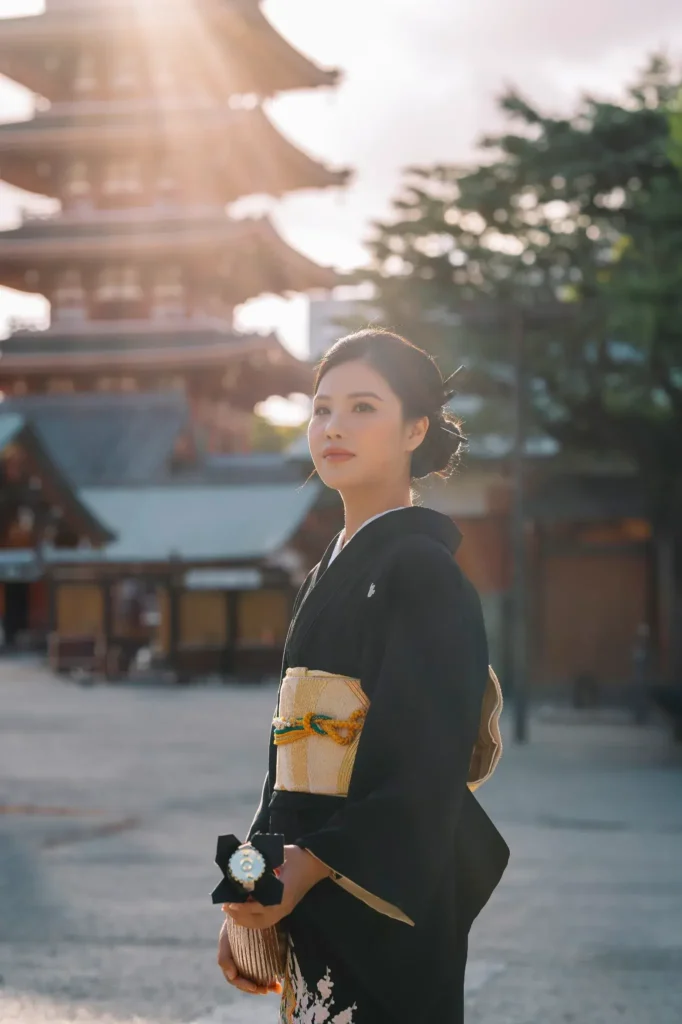
Ask any photographer and they will tell you the hour before sunset is the most flattering light of the day. They are right. Warm, low, soft. Kimono silk looks extraordinary in it. The images come off the camera already looking finished, before any editing.
When is sunset, exactly?
"The hour before sunset" moves by two and a half hours across the year, which is enough to ruin a booking made on a guess. These are Tokyo times on the 15th of each month; they shift by a few minutes from one year to the next.
| Month | Sunrise | Sunset | Golden hour starts |
|---|---|---|---|
| January | 06:49 | 16:52 | 15:50 |
| February | 06:27 | 17:23 | 16:20 |
| March | 05:51 | 17:49 | 16:50 |
| April | 05:07 | 18:15 | 17:15 |
| May | 04:35 | 18:40 | 17:40 |
| June | 04:23 | 19:00 | 18:00 |
| July | 04:35 | 18:59 | 18:00 |
| August | 04:58 | 18:33 | 17:30 |
| September | 05:22 | 17:50 | 16:50 |
| October | 05:46 | 17:08 | 16:10 |
| November | 06:15 | 16:36 | 15:35 |
| December | 06:42 | 16:30 | 15:30 |
Times from sunrise-sunset.org.
The catch is that everyone knows this. The same light that draws photographers draws every other photographer. At popular spots you will sometimes wait your turn — one group finishes, you step in, the group behind you waits for you.
Two things make this window work anyway:
- Knowing where to stand. After years here, our photographers know which angles at which times of day give you a clean background even when the grounds are full. Often it is a matter of a few metres.
- Removing people afterwards. Our retouching team does a lot of this, and they are good at it. It is included in our retouched and studio packages.
Hozomon Gate is the clearest example of what that means in practice. It is the most photographed spot at Sensoji and it is busy for most of the day; the two windows where you can reliably get it clean are before 9:00 and after 18:00.
So if sunset is the only slot you have, take it. Just know that some of the work happens after the shoot rather than during it.
After dark — the illumination
This is the window people forget about, and it is our personal favourite.
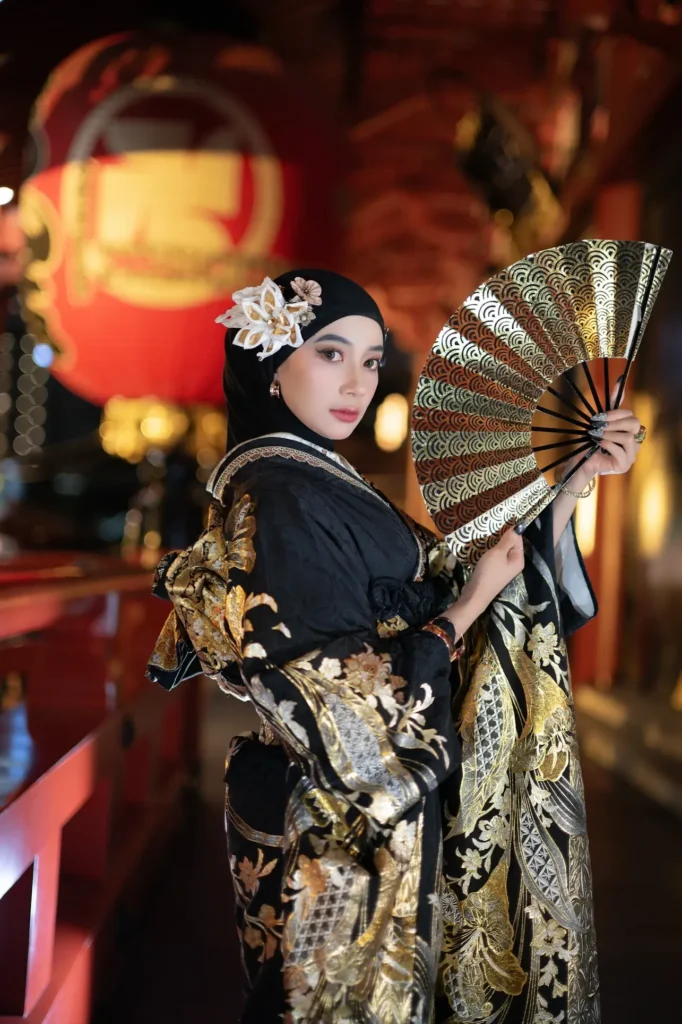
After sunset the temple buildings are lit until 23:00. The whole complex glows gold and red, the pagoda included. The crowds have thinned considerably by then. It is a completely different photograph from the daytime version of the same location — moodier, more dramatic, and far less common in other people's holiday albums.
Night shooting does have real requirements. You need proper flash and someone who knows how to use it, and the editing matters more than it does in daylight. This is not a shoot to attempt on a phone.
We photograph at night often enough to know which spots hold up after dark, and the list is shorter than people expect. Inside the temple grounds it is essentially five: Hozomon Gate, the five-storied pagoda, the front of the Main Hall, its left side, and the Main Hall itself. Just outside the grounds, the view towards Skytree and the old shopping streets work too, and they change character completely once the shopfronts light up.
What does not translate is most of the quieter half of the complex. Benten-dō, Rokkakudo, Awashimado Hall, Mitsumine Shrine, Nitenmon and the ground behind the Main Hall are all worth shooting in daylight, and after dark none of them carry enough light to hold a portrait. If someone tells you every corner of Sensoji photographs well at night, they have not tried it.
The whole list, with sample photographs from each spot, is on our Asakusa photo spot map.
What the season changes
The clock above is only half the answer. The same hour feels like a different city in April and in August.
Spring — the most beautiful weeks, and the most crowded
Tokyo's cherry blossoms open around 25 March on average and hit full bloom around 2 April, and about a week after that most of them are on the ground. Those two weeks are the busiest of the year around Sensoji. The morning window still works, but start it earlier than you would in any other season, and expect company even at seven.
One thing worth knowing before you plan around it: the blossom is not really at the temple. The trees that matter are in Sumida Park along the river, a few minutes' walk east, and that is where we take guests during those two weeks. Inside the grounds themselves, only Awashimado Hall and Asakusa Shrine put blossom in the frame.
Summer — morning is not a preference, it is the only comfortable window
July and August in Tokyo are hot and humid, and a kimono is several layers of fabric with an obi on top. By midday it stops being enjoyable, and it shows in the photographs. The one mercy is that the sun is up before five, so a six o'clock start is already in full daylight while the air is still bearable.
Autumn — the one season where both good windows fit in one booking
Late November into early December is the best trade of the year. The light is warm, the temperature is comfortable under all those layers, and sunset has moved back to around 16:35. That puts golden hour and the start of the illumination less than an hour apart, so a single late-afternoon booking can cover both. In June it cannot: sunset is at 19:00 and the lights do not come into their own until well after that.
The autumn spots are a different set from the night spots, which is worth planning around. Benten-dō, Rokkakudo, Awashimado Hall, Mitsumine Shrine and the ground behind the Main Hall all turn gold and red, and all of them are daylight locations. Benten-dō is the pick of them: a small area that yields a surprising number of angles, and it works on ordinary days too, not only in leaf season.
Winter — late sunrise, cleanest air
December and January give the clearest skies of the year and the quietest grounds. The catch is the one above: sunrise is not until about 06:45, so the early window starts at seven rather than six. The cold is more manageable than people expect, because the layers that make summer hard make winter easy.
So which one should you book?
- You want the easiest, most relaxed experience → early morning. Book the first dressing slot of the day.
- You are travelling with kids or are not a morning person → late afternoon, and let the retouching handle the crowd.
- You want something that does not look like everyone else's Asakusa photos → after dark.
- You want all three → it happens more than you would think. A full day rental covers it.
One practical note: dressing and hairstyling take about 20 to 25 minutes, and makeup adds another 40 to 50. Work backwards from the light you want. If you are chasing the 6:30 quiet, that means arriving at the studio right when we open, not at 6:30 itself.
We are on the 4th floor of the Amoru Building, one minute from Sensoji Temple, with over 500 kimono styles to choose from.
See our photoshoot packages · Kimono rental prices · Night kimono photoshoots