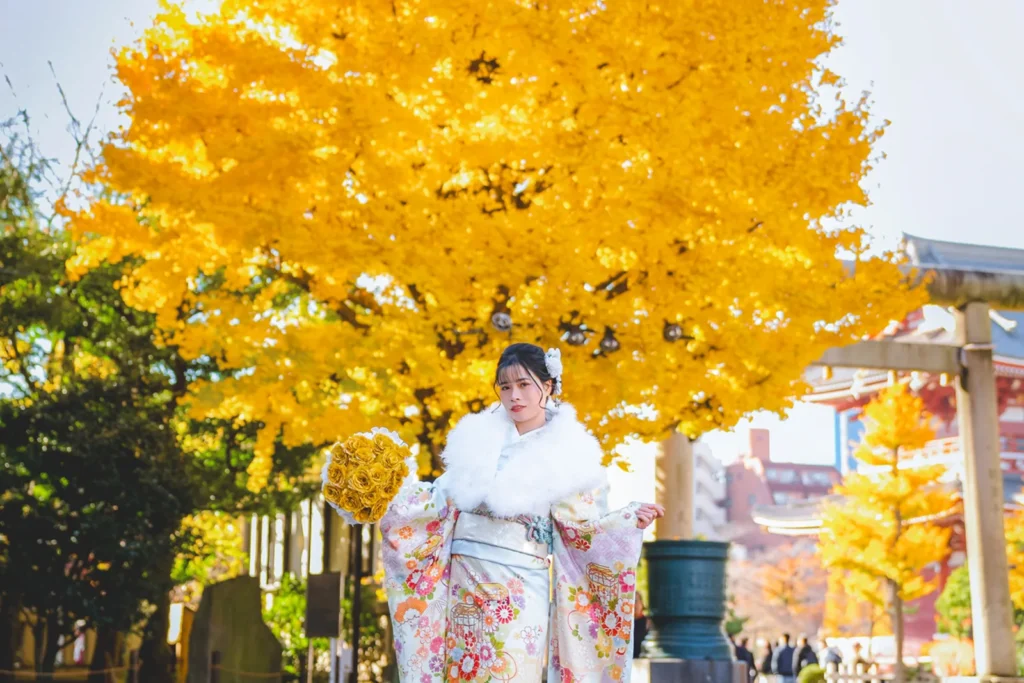
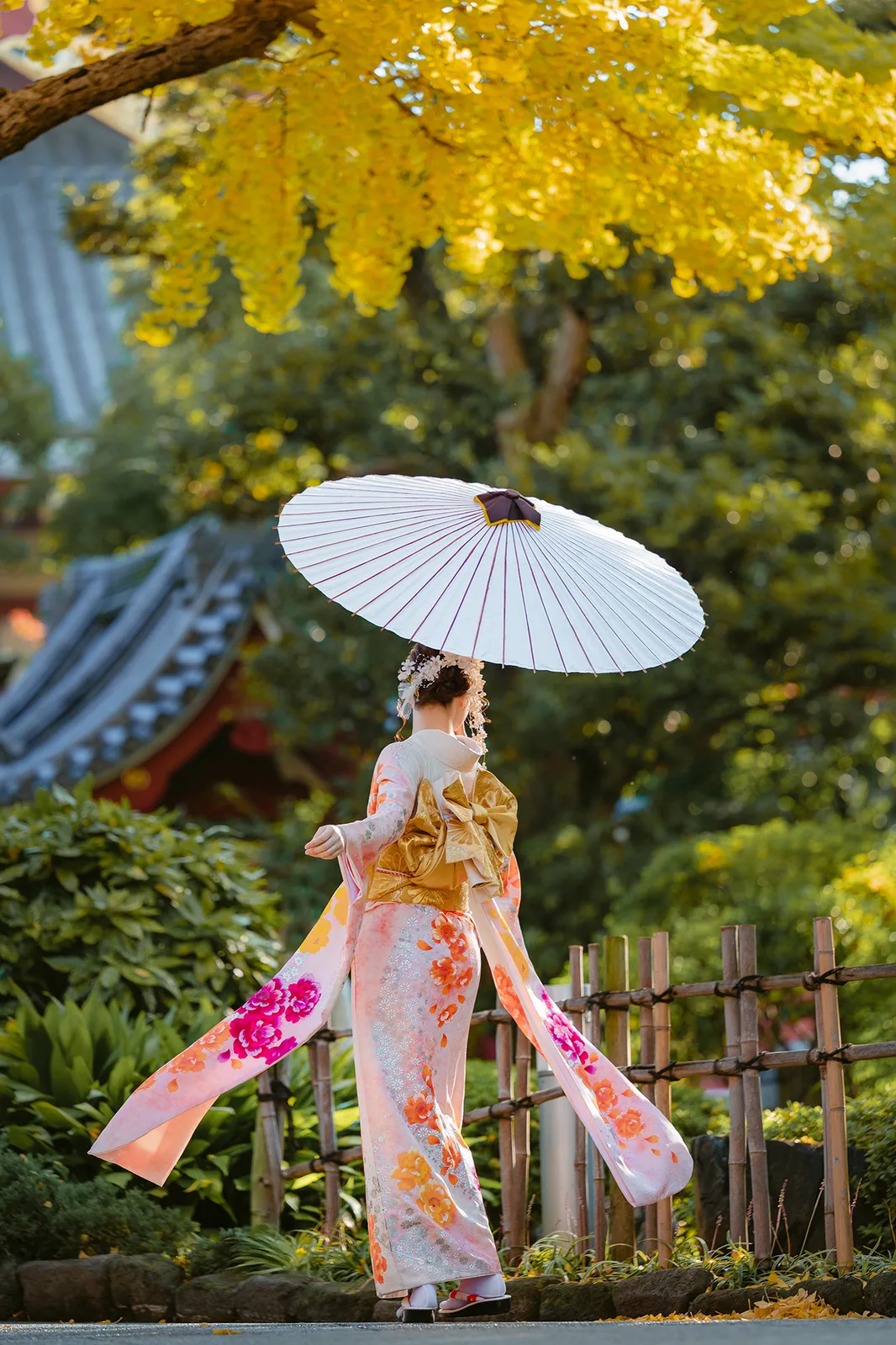
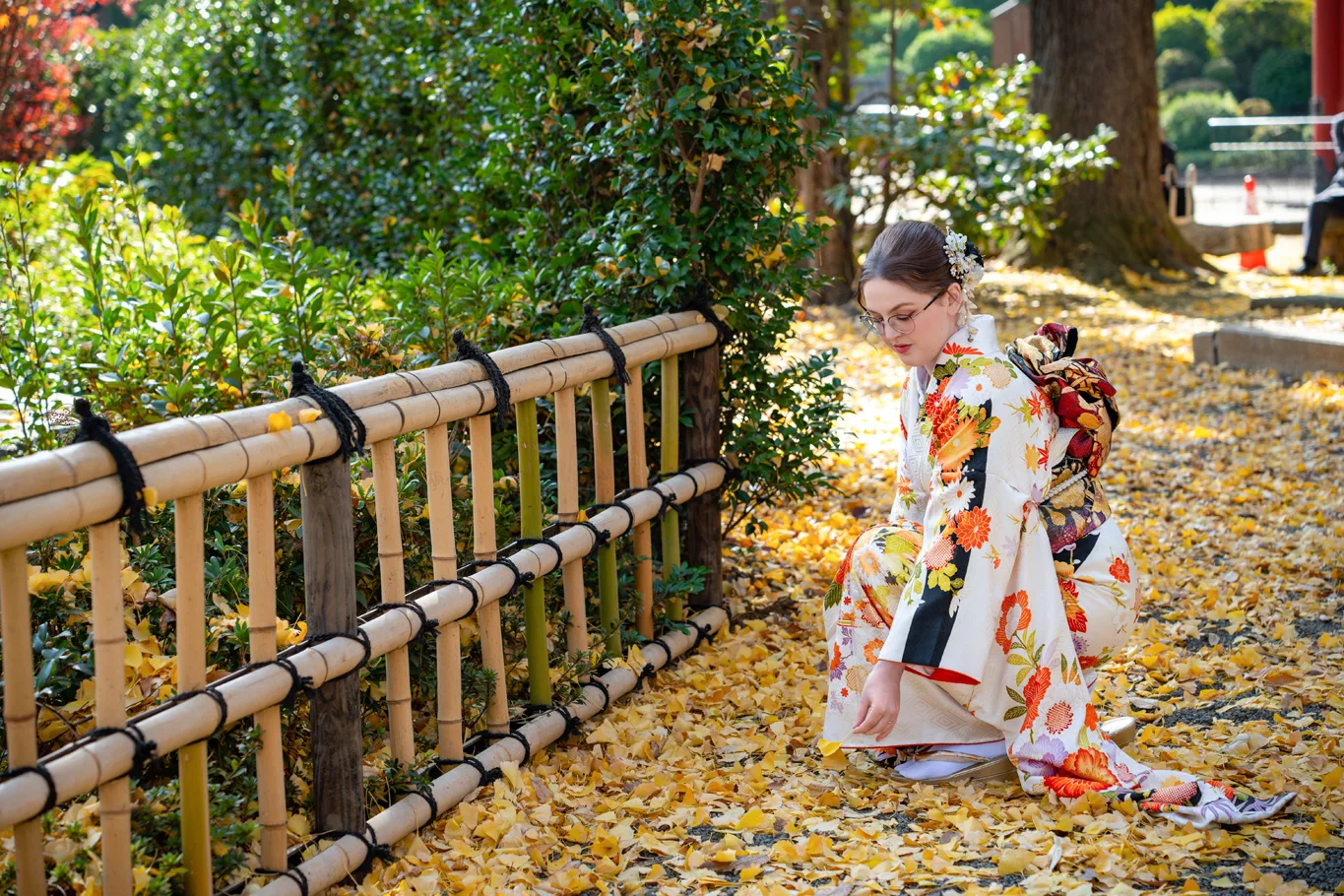
Every year from November into December, the ginkgo trees around Sensoji Temple turn bright gold. It is one of the best times of year for a kimono photoshoot in Tokyo: the light is soft, the air is cool, and a red kimono against yellow leaves looks like a painting.
The good news is that you do not need to travel for it. Our studio is on the 4th floor of the Amoru Building, about one minute from Sensoji, and the autumn leaves start right outside. This guide is based on our own shoots: where we photograph, when the leaves usually peak, and what to wear.
Quick answer: almost all of our autumn photoshoots happen in Asakusa, a short walk from the shop, at our normal photoshoot price. If you want something different, on some Saturdays and Sundays we can also take you to Matsuchiyama Shoden, Ueno Park or Nezu Shrine by taxi for an additional fee.
Autumn leaves in Asakusa: where most of our shoots happen
You walk out of the studio in your kimono, and within a few minutes you are under the ginkgo trees of Sensoji. There is no taxi, no extra fee and no time lost travelling, so more of your booking goes into the photos themselves. The shoot follows our regular photoshoot plans.
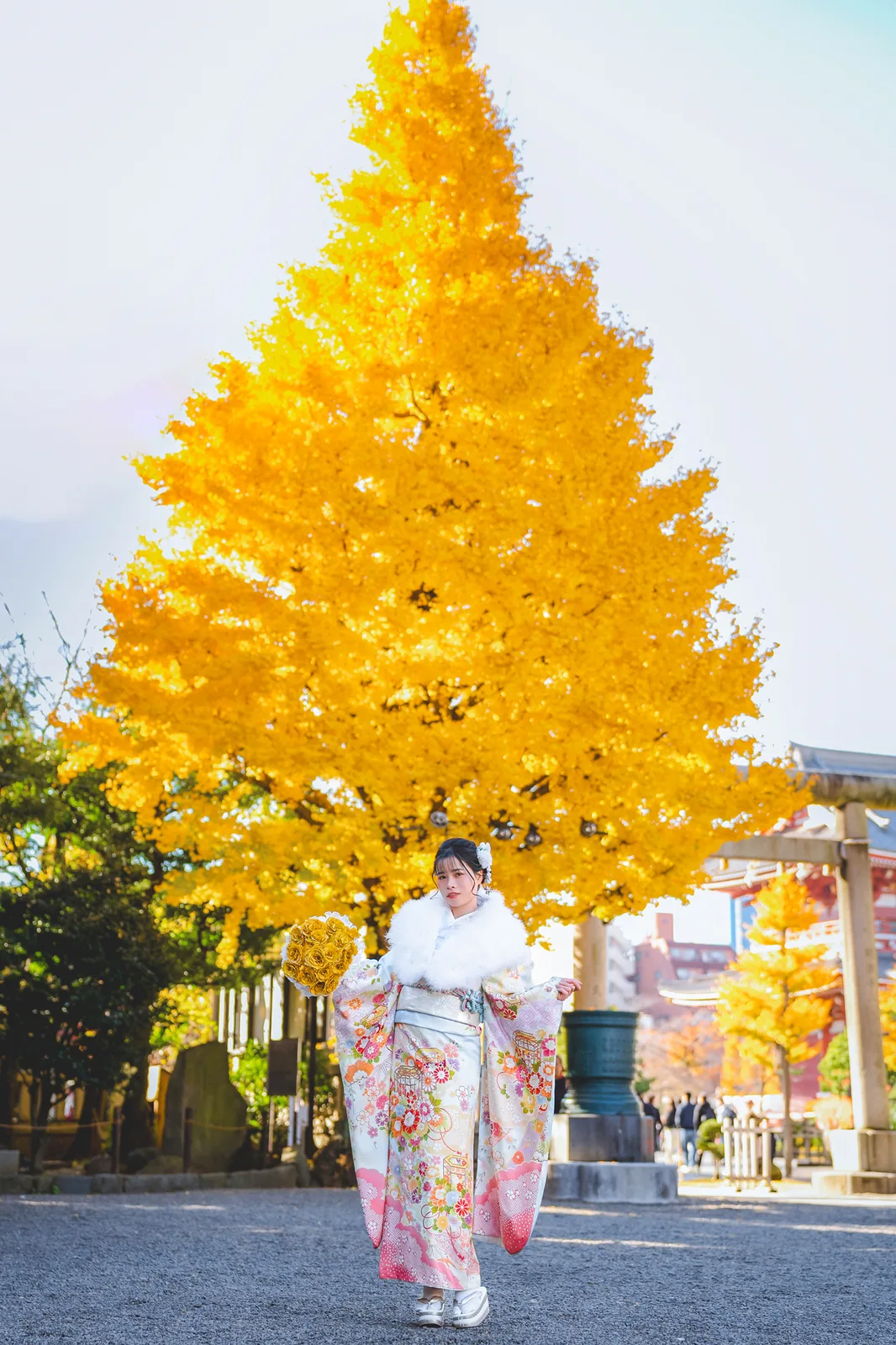
What you get in Asakusa in autumn:
- Golden ginkgo all around the temple grounds, from mid-November into December.
- A few red maples, especially near the Five-Storied Pagoda, so red leaves are possible without leaving Asakusa.
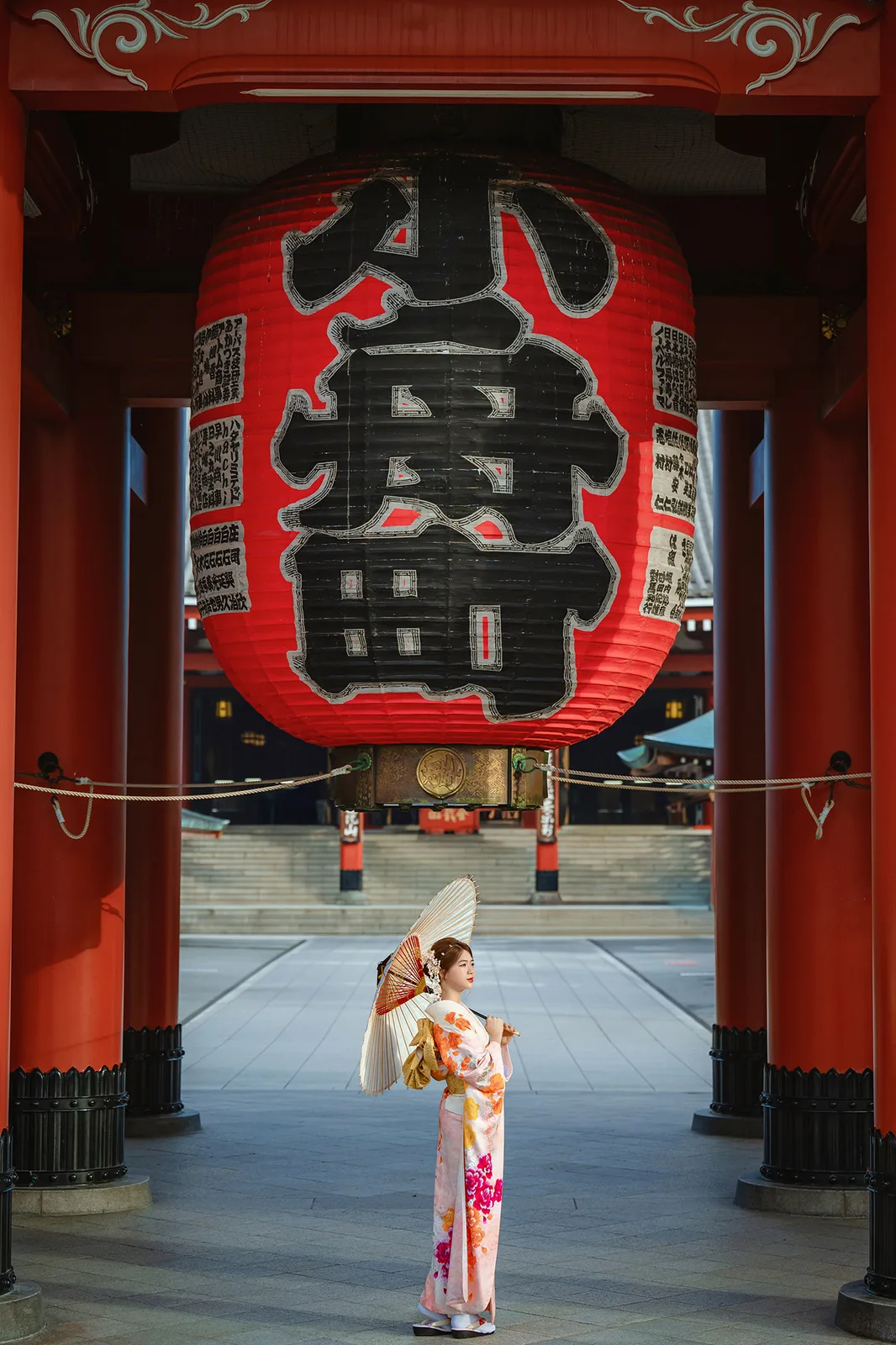
- Classic landmarks in the same frame: the red lantern of Hozomon Gate, the Five-Storied Pagoda, temple halls, and Tokyo Skytree in the distance.
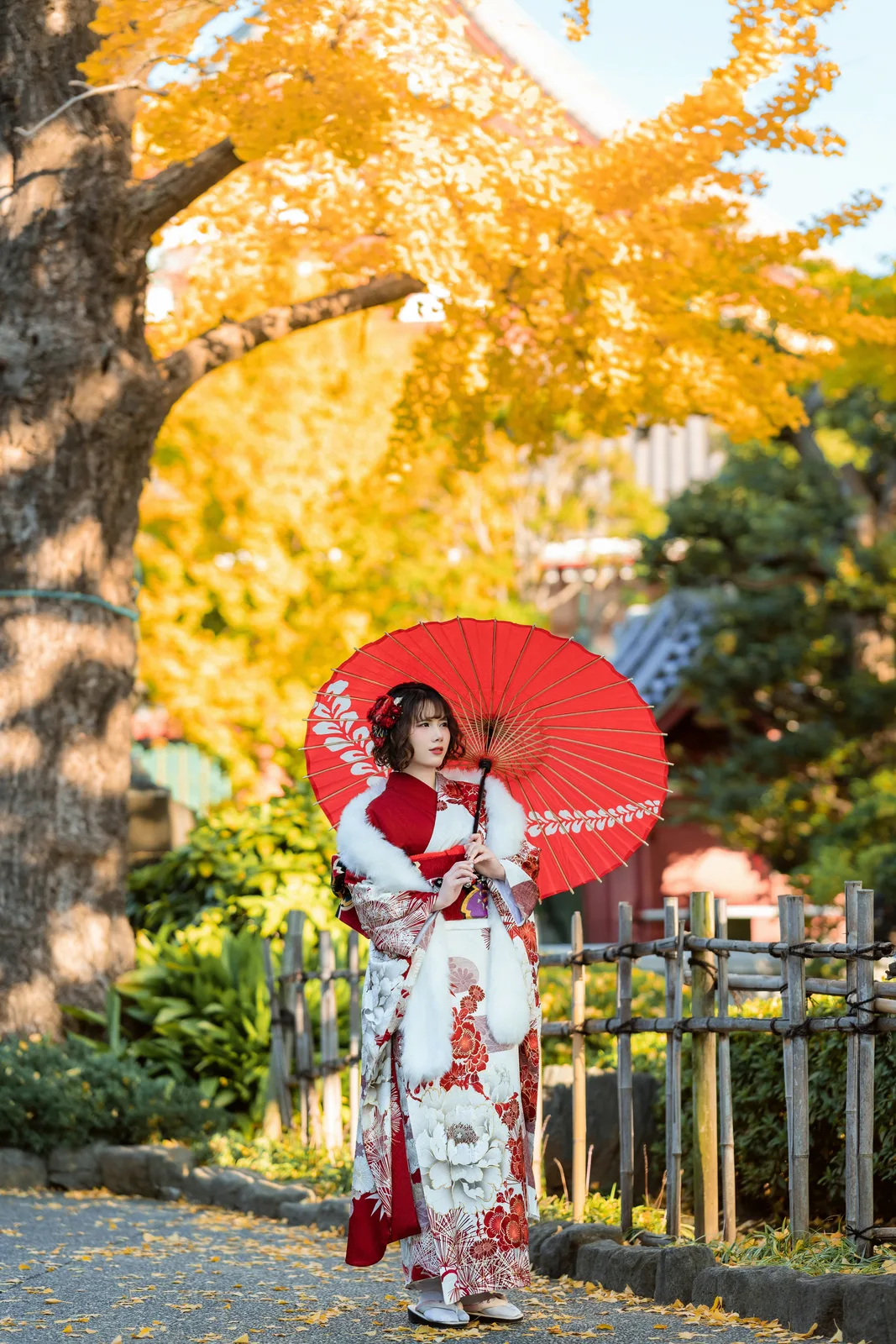
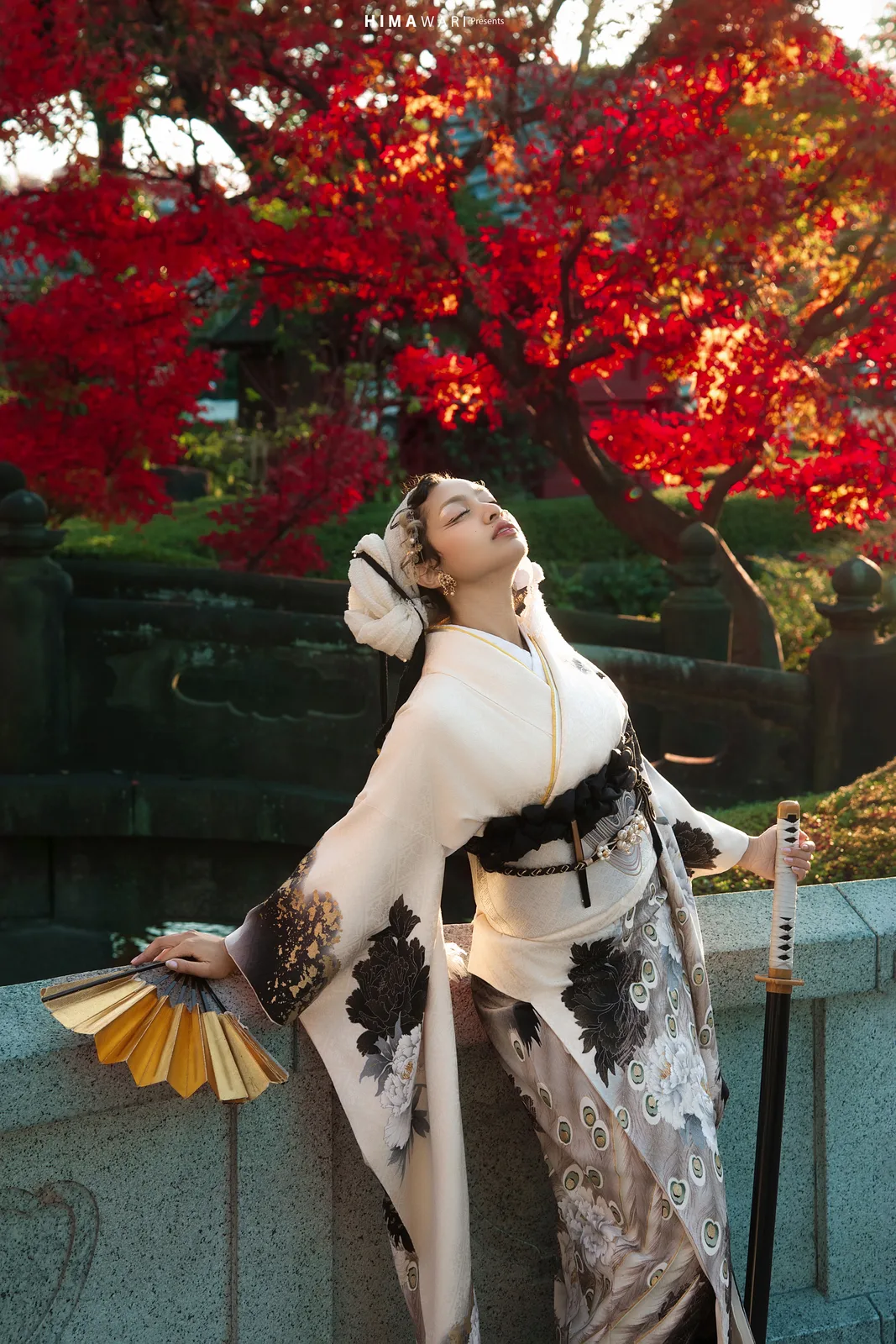
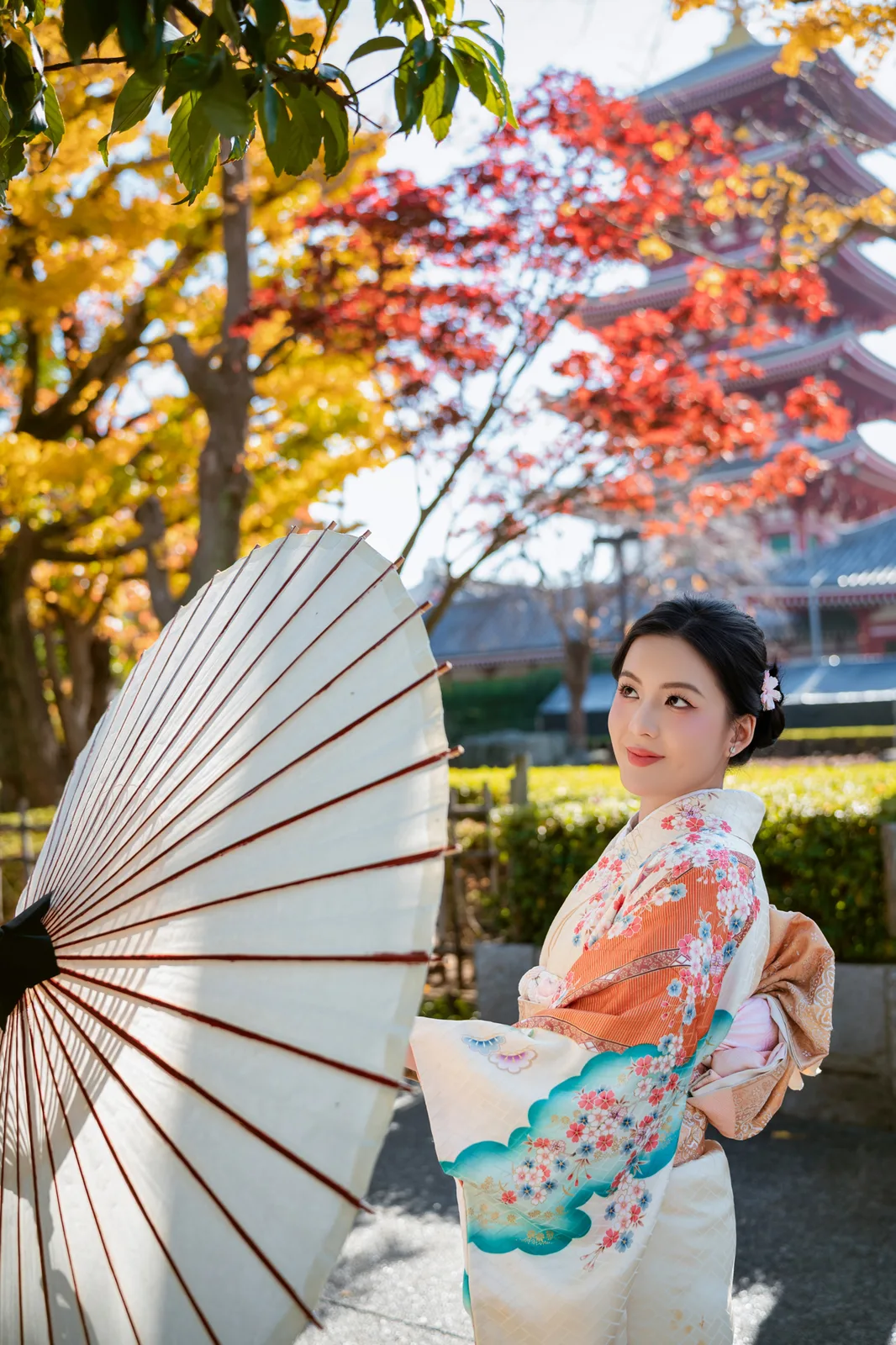
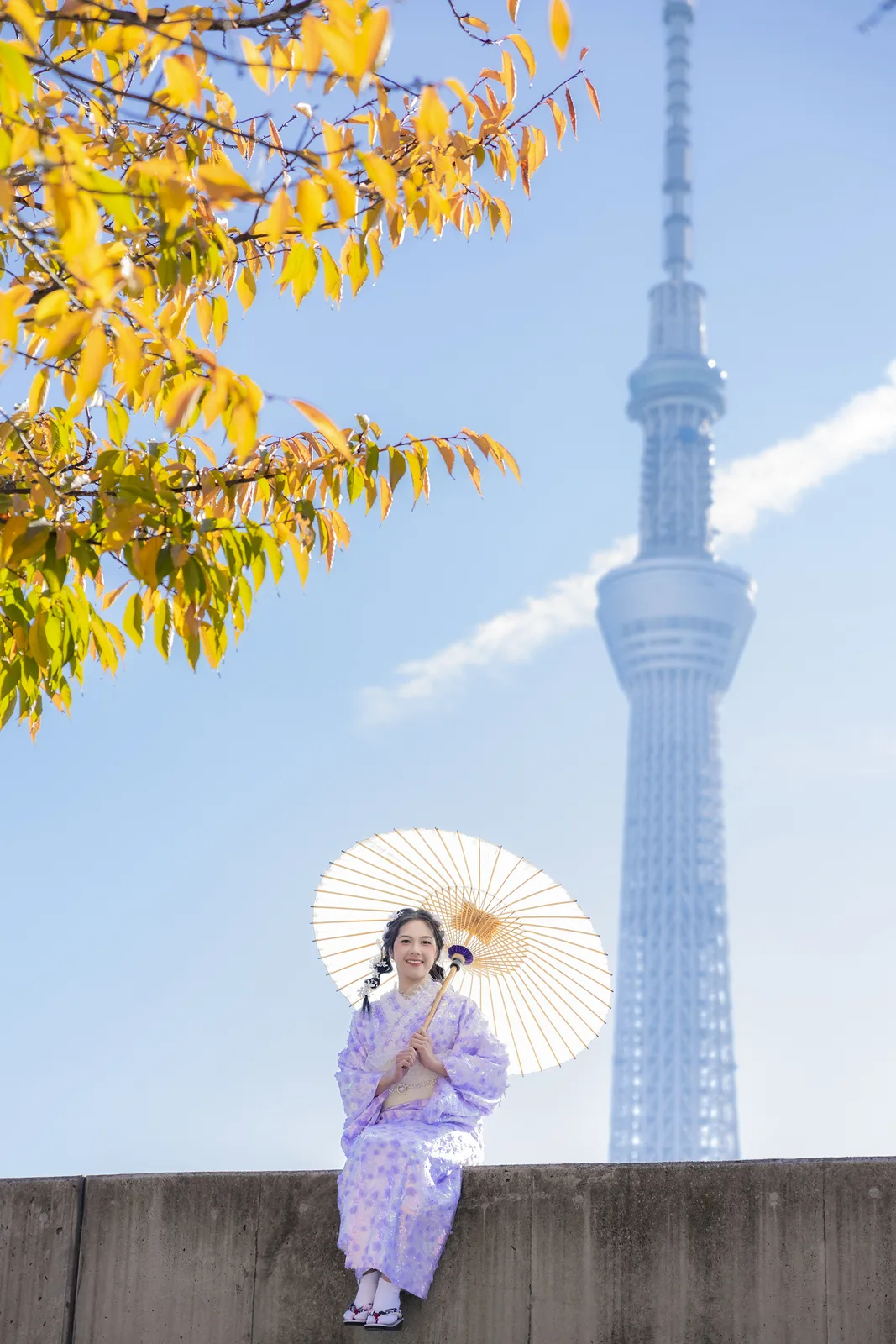
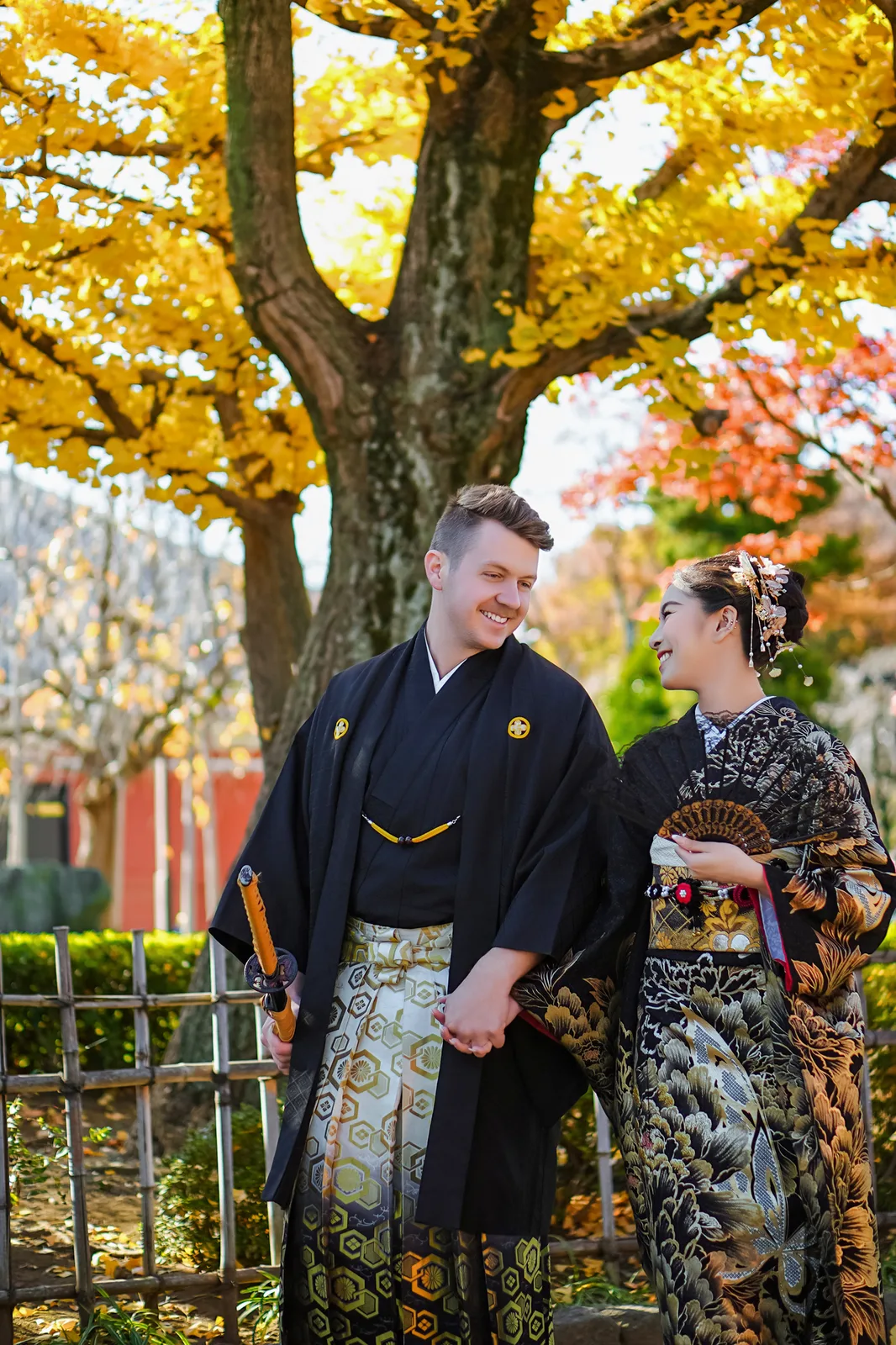
Tip: go early on weekends. Asakusa gets very busy by late morning in autumn. On Saturdays and Sundays we can sometimes open earlier than usual (for example from 7:00), so you can shoot in quiet streets with soft morning light. This must be arranged in advance, so message us before booking. For more on timing, see the best time of day for a kimono photoshoot in Asakusa.
Golden ginkgo or red momiji? What to expect
Many visitors search for “momiji” (red Japanese maple), but around Asakusa most of the autumn colour is golden ginkgo, with some red maple. Here is what each spot looks like in our experience:
| Spot | Leaf colour | How we get there | Price |
|---|---|---|---|
| Asakusa (Sensoji area) | Golden ginkgo, a few red maples | Walk from the shop | Normal photoshoot price |
| Matsuchiyama Shoden | Golden ginkgo | Taxi | Extra fee + taxi, weekends |
| Ueno Park | Mostly golden ginkgo, some red maple | Taxi | Extra fee + taxi, weekends |
| Nezu Shrine | Red maple and golden ginkgo together | Taxi | Extra fee + taxi, weekends |
Want something different? Weekend shoots further afield
Asakusa is our main autumn location and the best choice for most guests. On some Saturdays and Sundays, when we have enough photographers, we can also take you to three quieter spots nearby. These are arranged on request: we travel by taxi (the fare is paid by the guest) and there is an additional photographer fee. Message us first to check availability and get a quote.
Matsuchiyama Shoden: a quiet golden temple near Asakusa
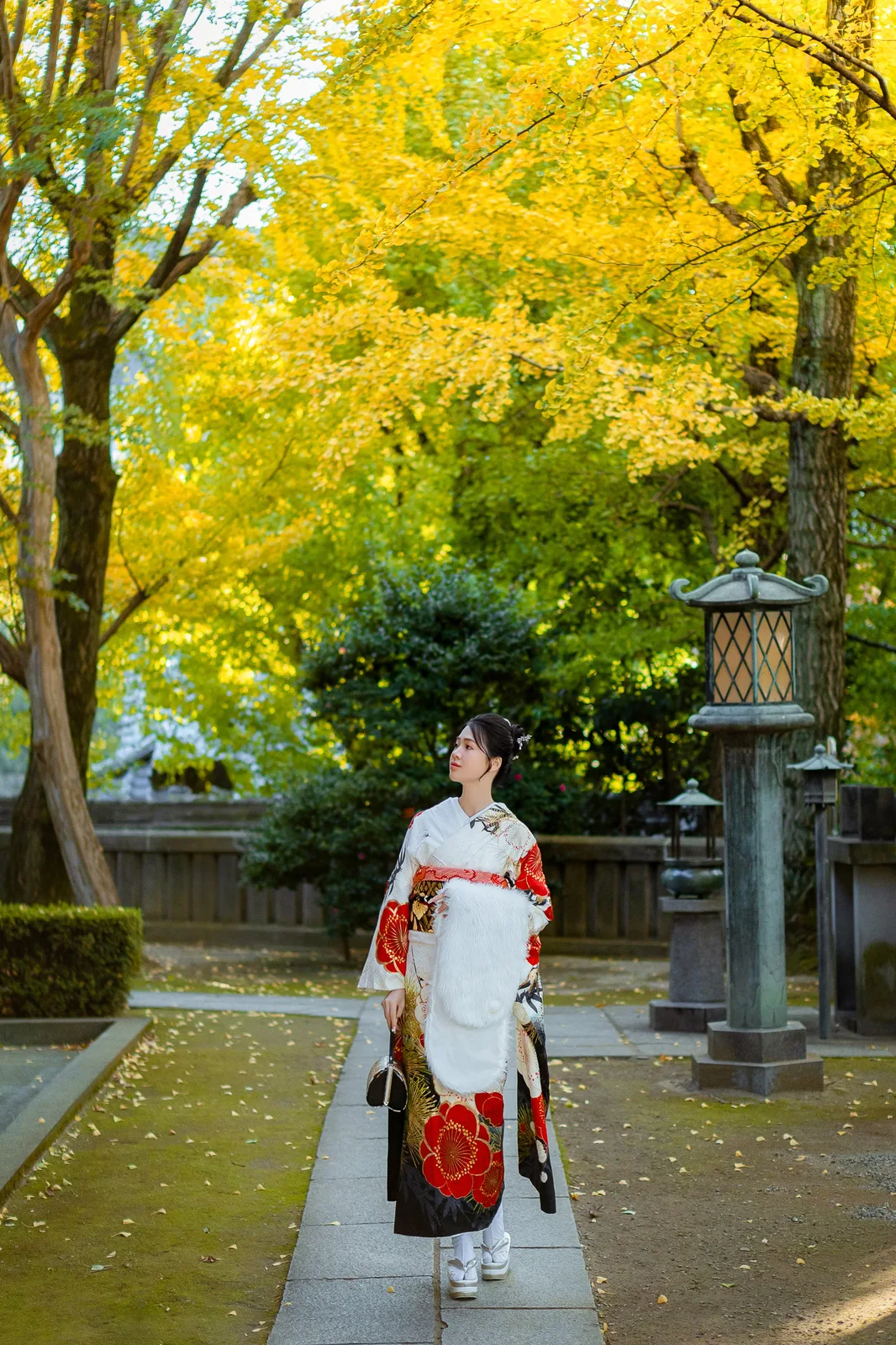
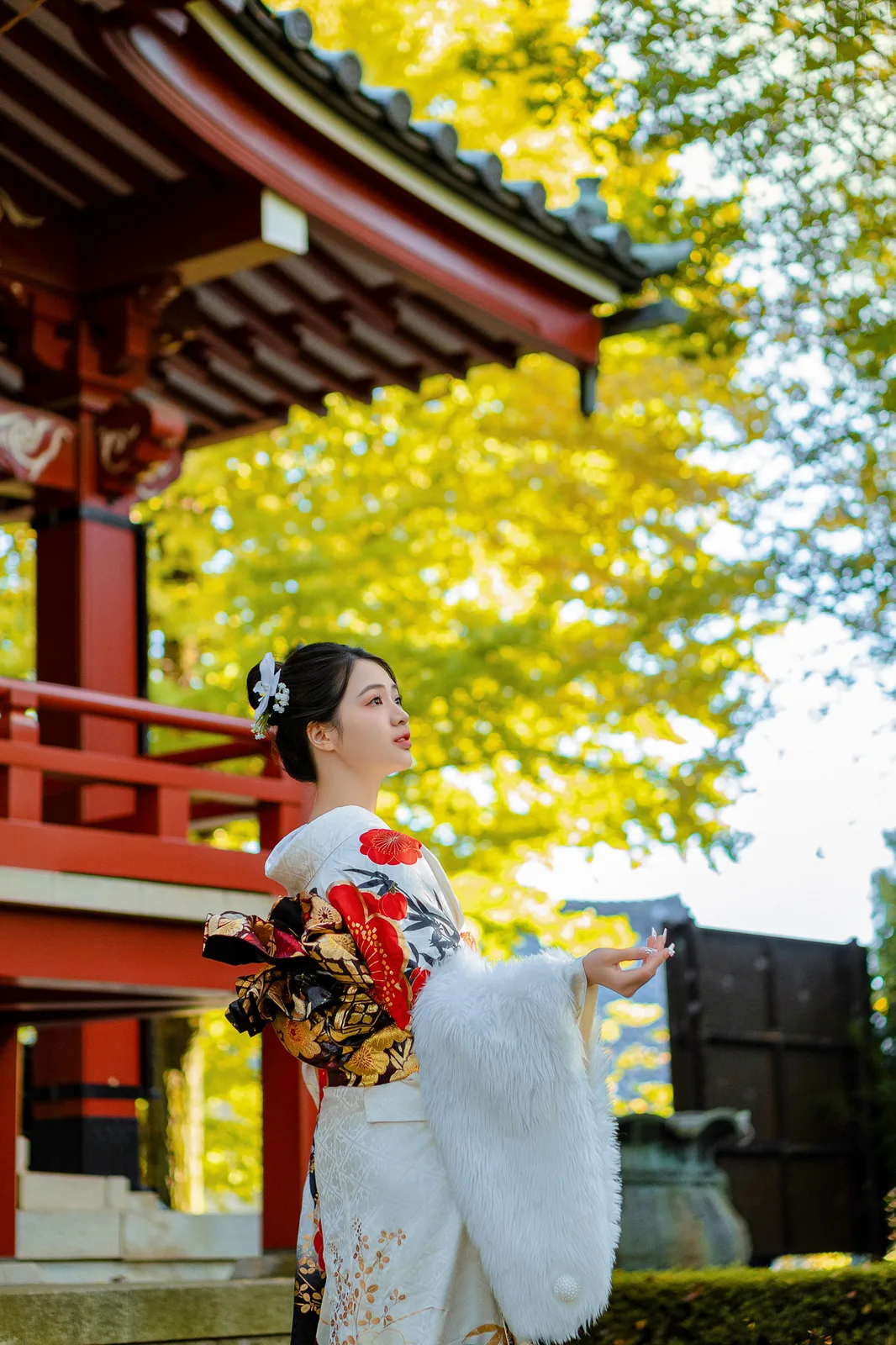
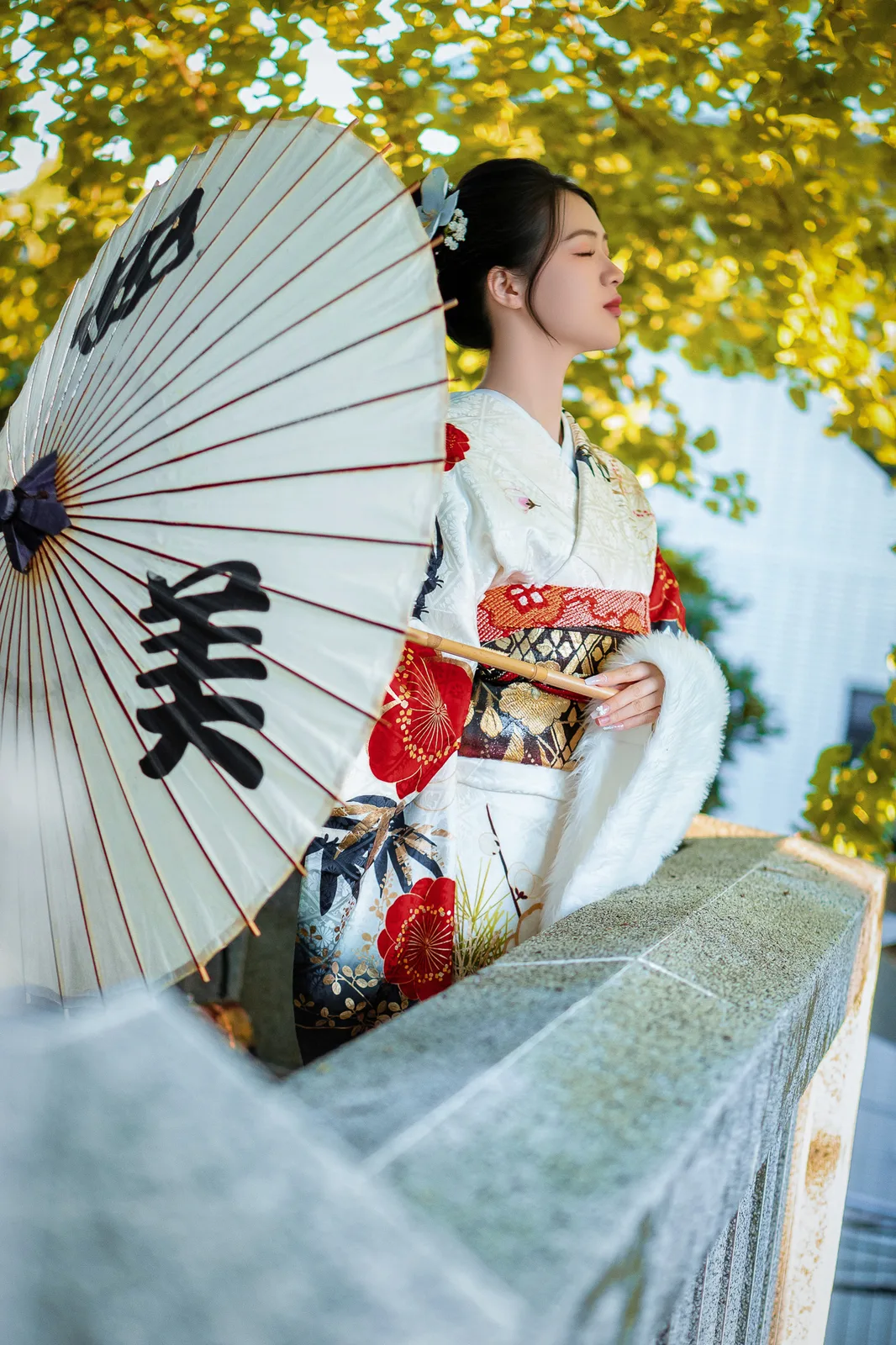
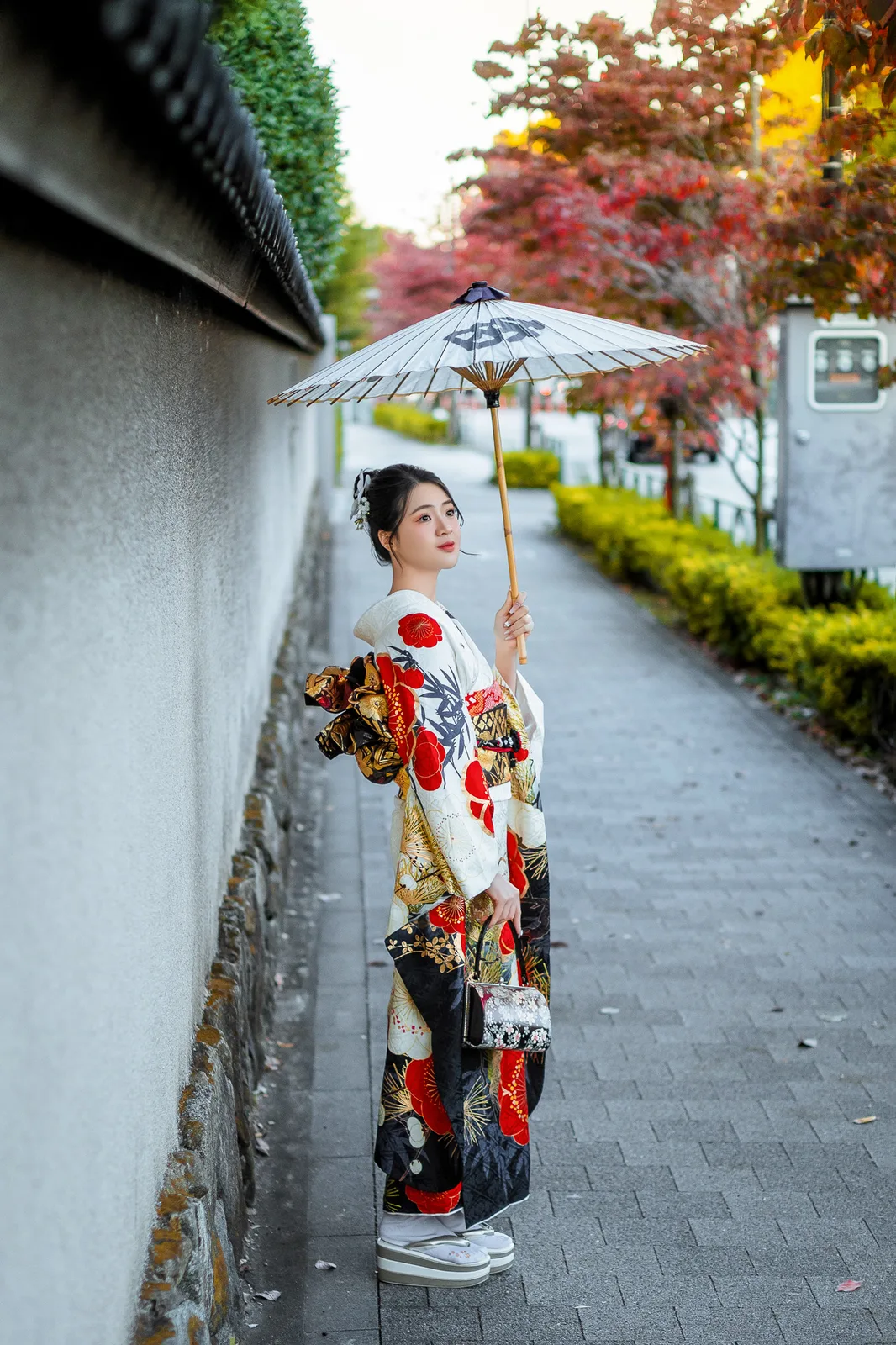
Matsuchiyama Shoden is a small temple on a hill a short distance from Sensoji, and few tourists know about it. In autumn the grounds fill with golden ginkgo, and the red temple buildings, stone lanterns and torii gate make a beautiful frame for kimono photos.
Good to know:
- We go by taxi. The taxi fare is paid by the guest, and there is an additional photographer fee.
- Available mainly on Saturdays and Sundays, when we have enough photographers.
- This is an active temple. When it gets very crowded in peak season, photographers may be asked to stop or move on. We cannot guarantee shooting there on any given day.
Ueno Park: huge ginkgo trees and shrine gates
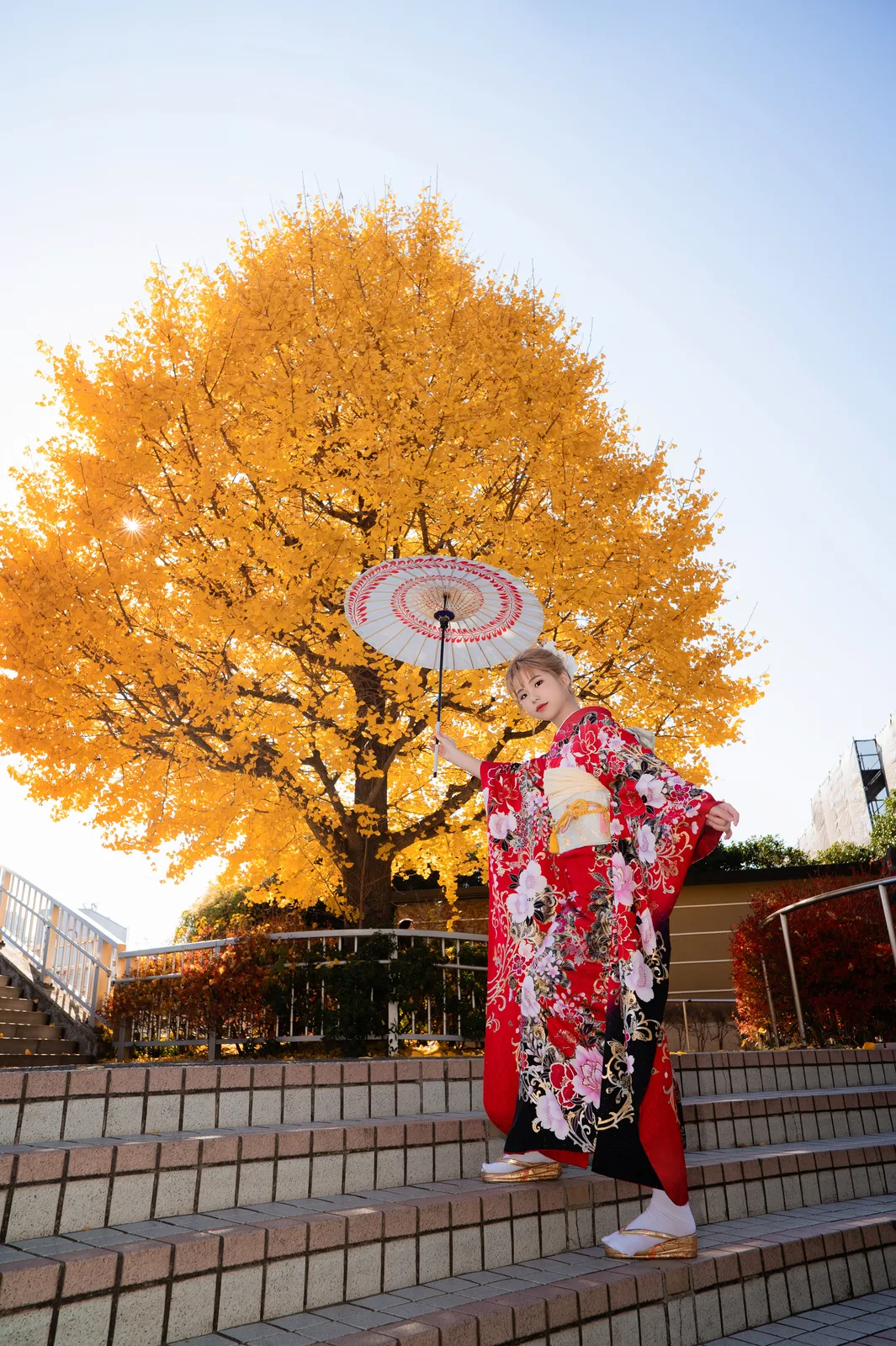
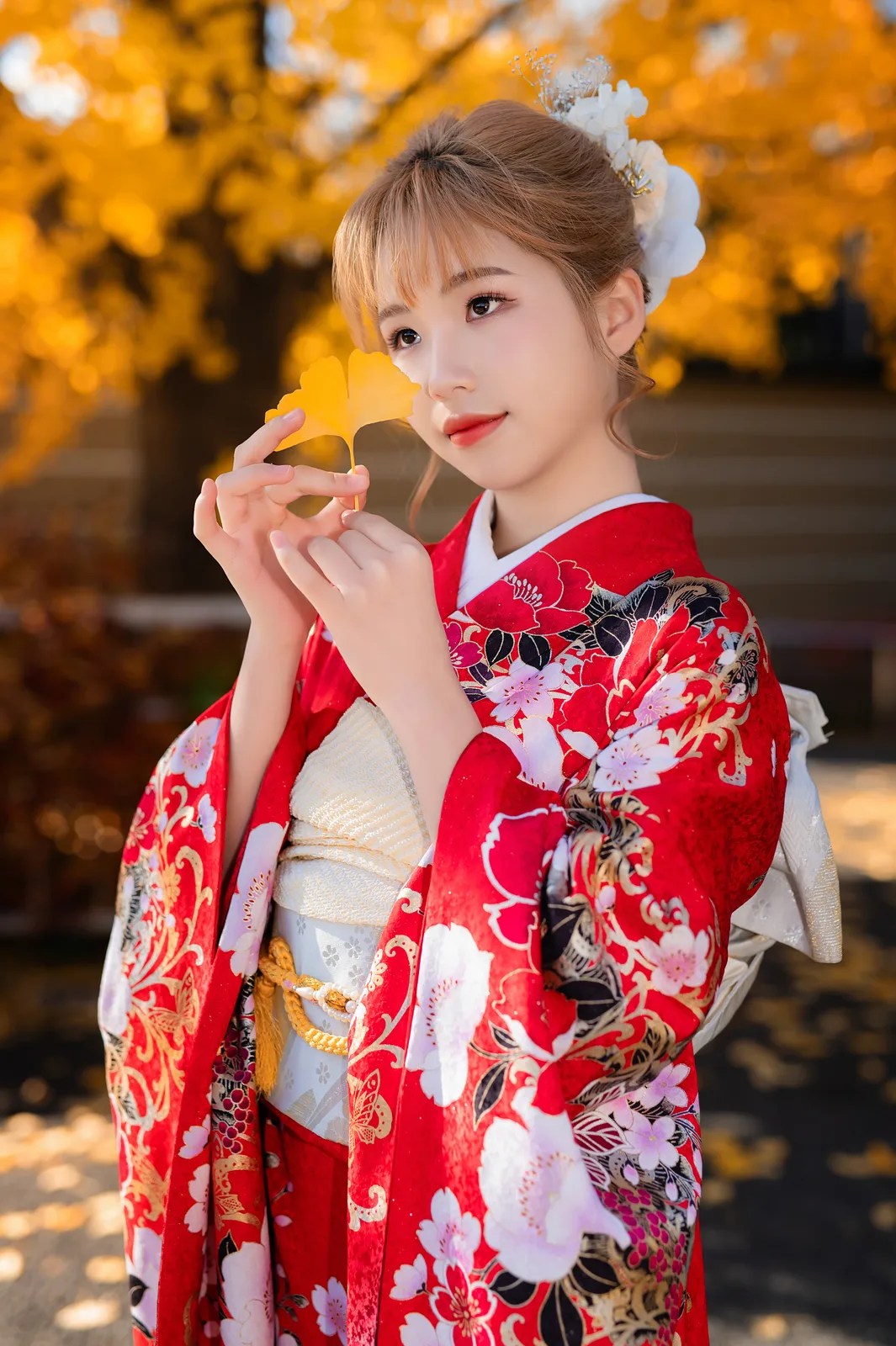
Ueno Park is one of Tokyo’s classic autumn spots, and its colour is mostly gold. Its large ginkgo trees turn a deep gold, and around the shrines in the park you will also find red torii gates and a small number of red maples (far fewer than at Nezu Shrine). Photography is allowed in the park.
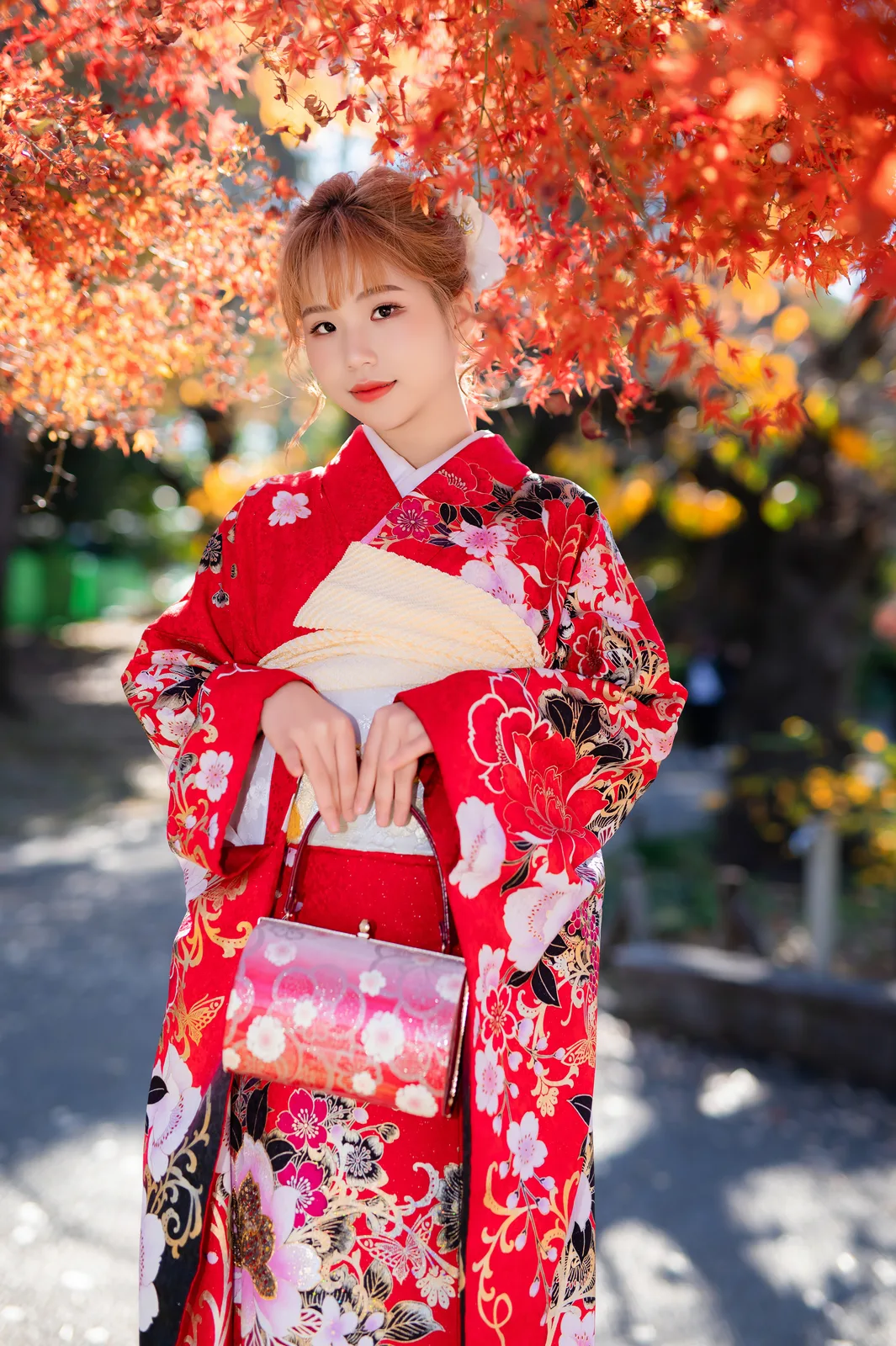
Good to know: we go by taxi (fare paid by the guest), with an additional fee. Available mainly on weekends.
Nezu Shrine: red and gold together
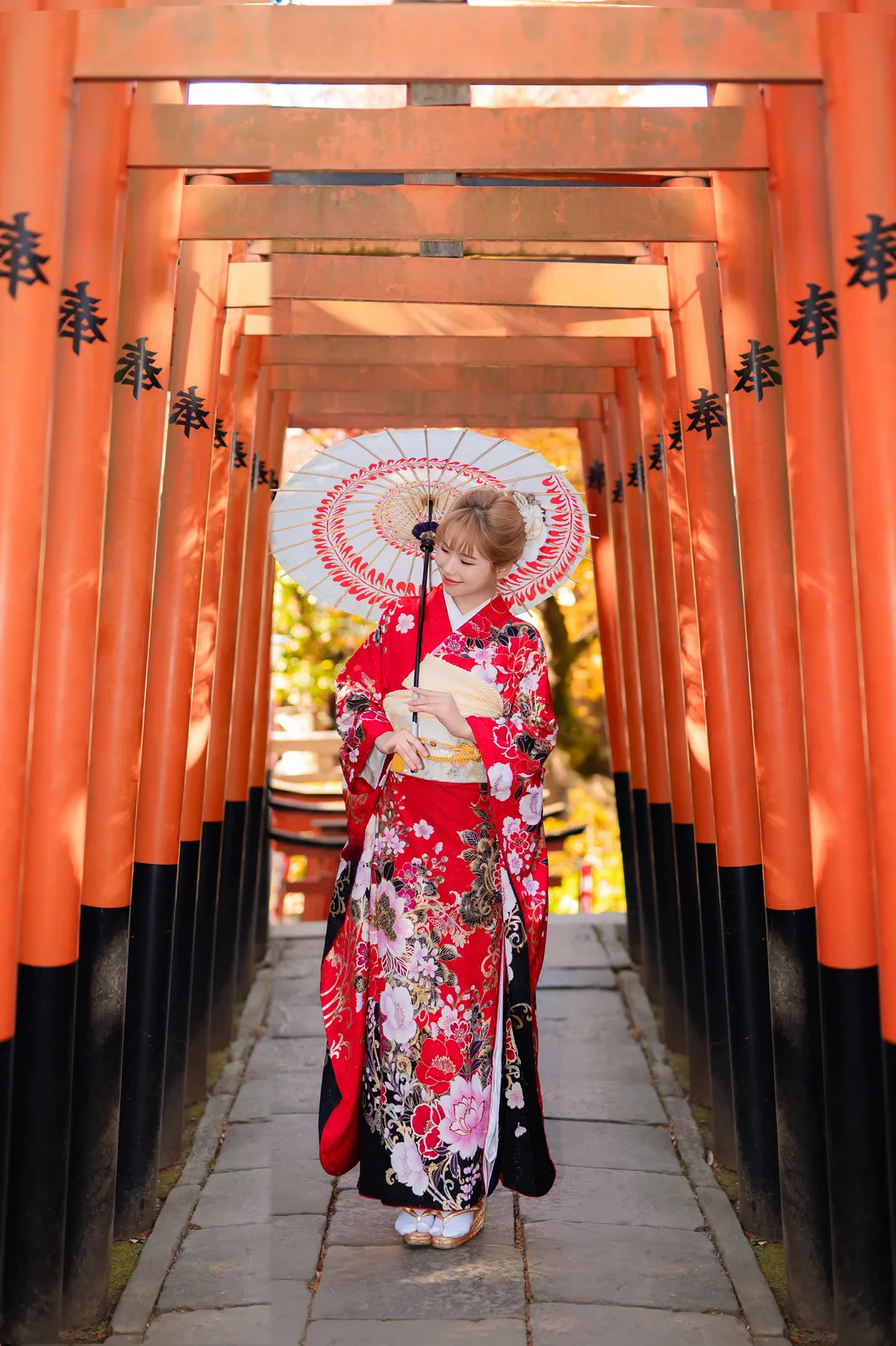
Nezu Shrine is the only one of our autumn spots where you get red maple and golden ginkgo side by side. The shrine also has a tunnel of bright vermilion torii gates, a red hall above a pond, and stone paths covered in fallen leaves. It is our favourite for couples.
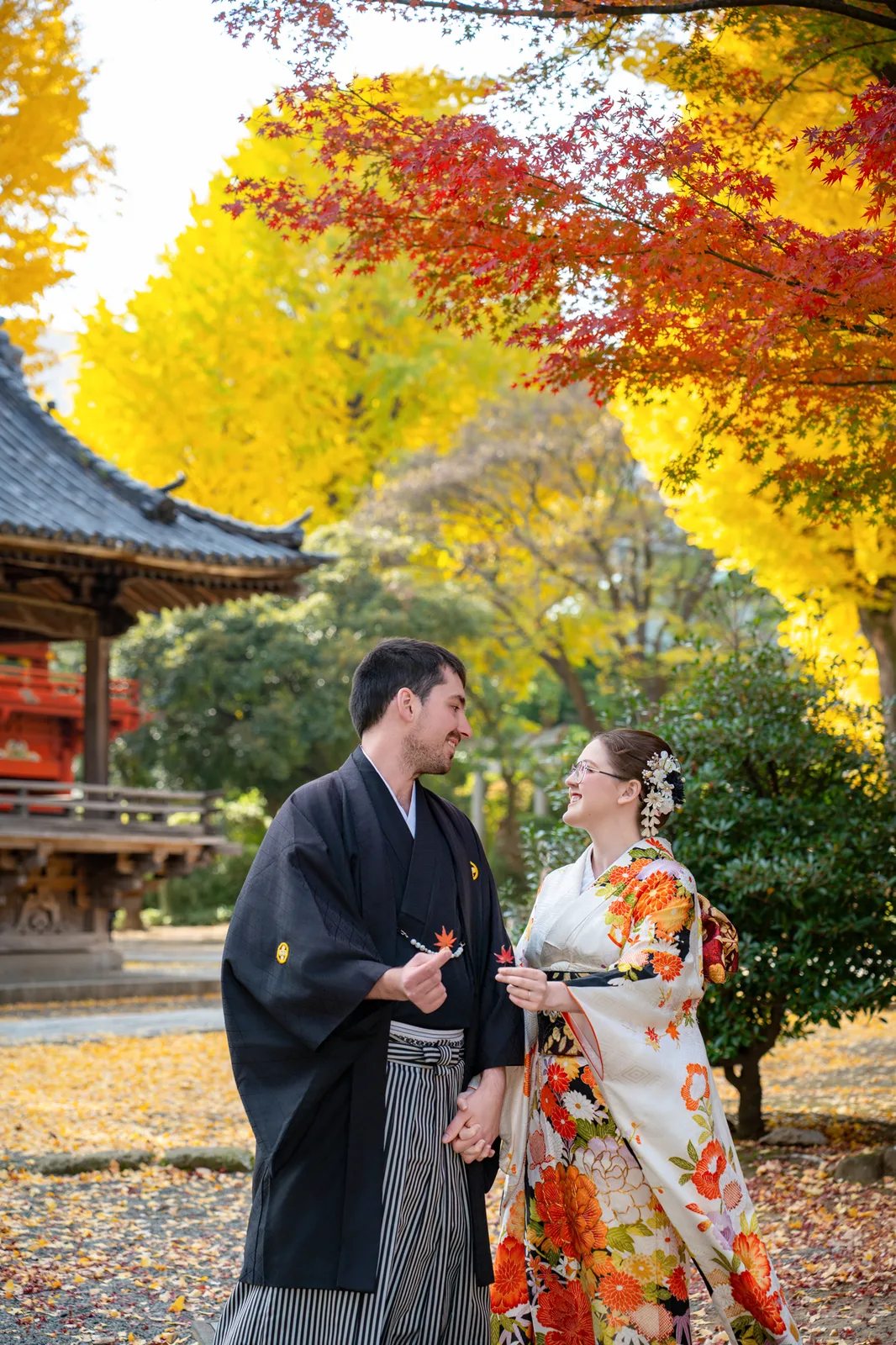
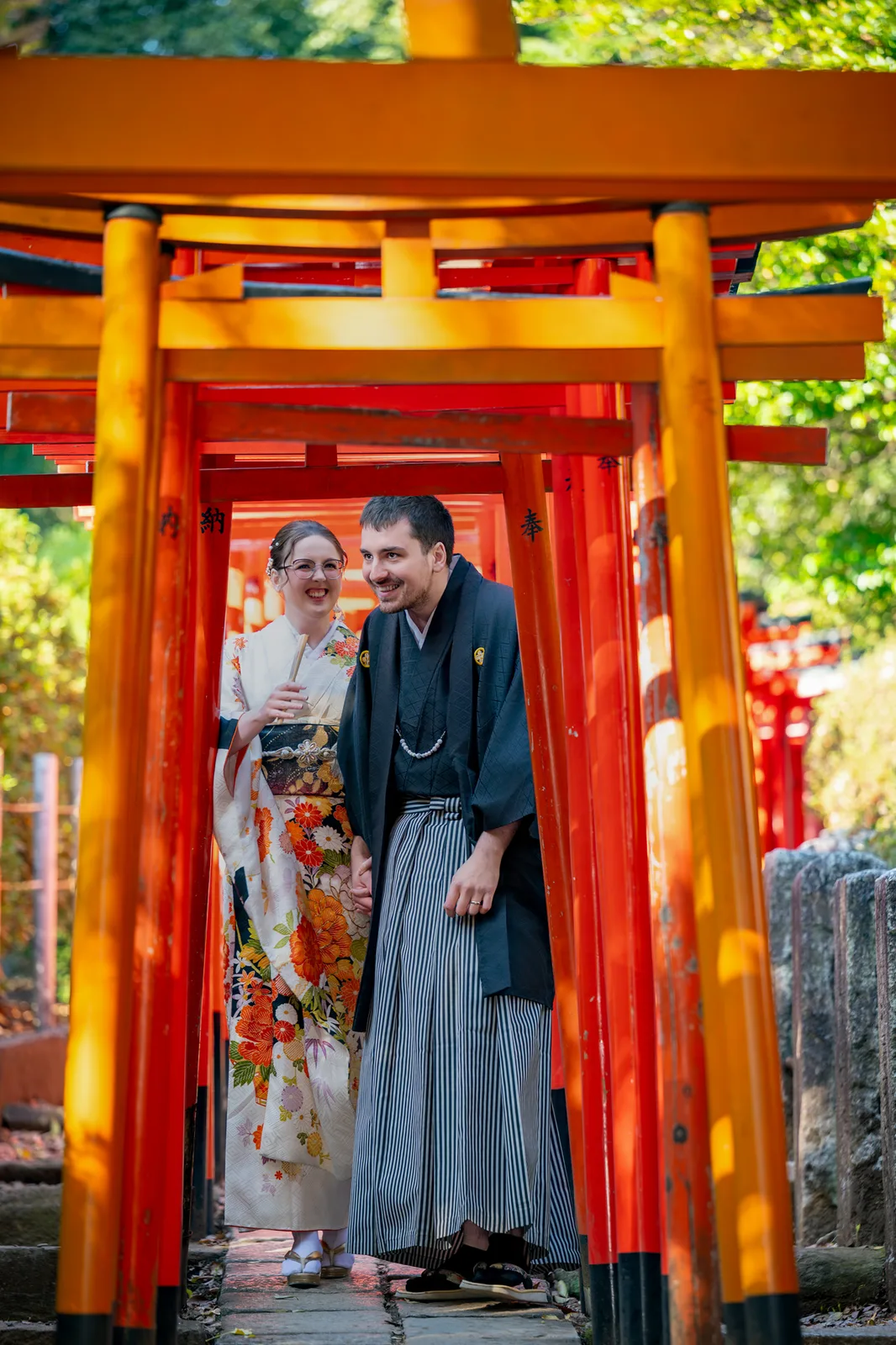
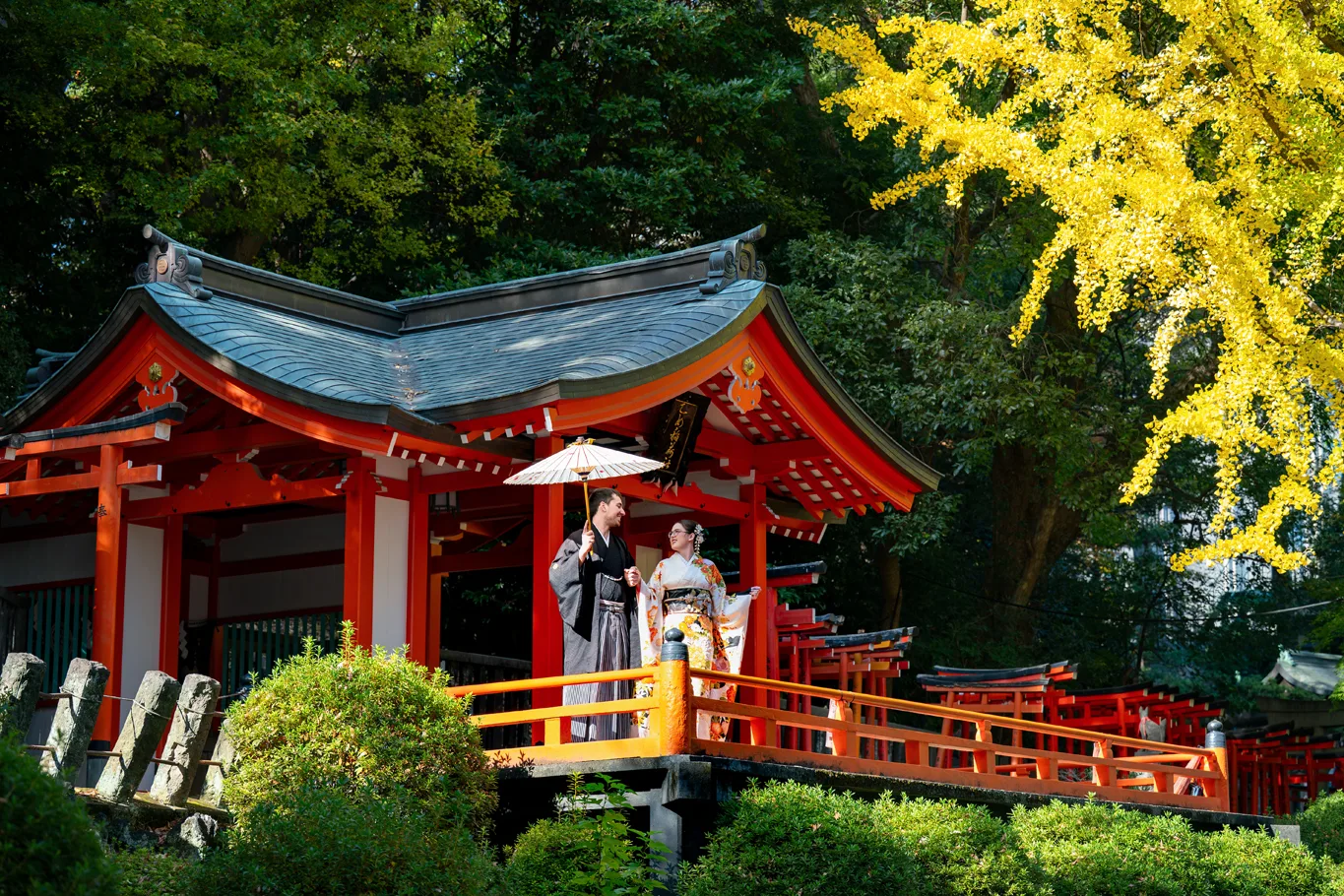
Good to know:
- Come in the morning. The shrine has many tall trees, so from around 2 to 3pm it gets dark quickly and the light is no longer good for photos.
- We go by taxi (fare paid by the guest), with an additional fee. Available mainly on weekends.
When do the leaves change colour around Asakusa?
In our experience, the best colour around Asakusa runs from mid-November to mid-December. The exact peak moves a little each year depending on the weather.
For reference, here are the dates of the shoots in this guide:
- Asakusa: 10 November 2025 (early-morning shoot, ginkgo turning gold), 1 to 12 December 2025 (gold ginkgo and red maple near the pagoda)
- Matsuchiyama Shoden: 7 November 2024 (ginkgo already gold)
- Nezu Shrine: 27 November 2025 (red maple and gold ginkgo at the same time)
- Ueno Park: 15 to 17 December 2023 (still full colour)
Visiting in winter instead? Read what to wear under a kimono in winter.
What kimono to wear for autumn photos
Our first recommendation is simple: choose red. A red kimono stands out beautifully against golden ginkgo, and most of the autumn colour around Asakusa is gold. White kimono with red patterns also works very well, as you can see in the Matsuchiyama photos above.
With 500+ kimono styles, our staff can help you pick a colour that suits the spot you are shooting at.
FAQ
Does an autumn leaves photoshoot cost more than a normal photoshoot?
No. In Asakusa, autumn shoots use our normal photoshoot plans and prices. Only shoots at Matsuchiyama Shoden, Ueno Park or Nezu Shrine have an additional fee, plus the taxi fare.
Can I book a photoshoot at Ueno Park or Nezu Shrine?
Usually yes, on Saturdays and Sundays when we have enough photographers. These shoots are arranged on request, so please message us before booking and we will confirm availability and the price.
How much is the extra fee for Ueno, Nezu or Matsuchiyama Shoden?
It depends on the date, the spot and the shooting time. Message us on WhatsApp, Instagram or Facebook and we will send you a quote. The taxi fare is paid separately by the guest.
Where can I see red momiji near Asakusa?
Around Sensoji there are a few red maples, especially near the Five-Storied Pagoda, so you can get red leaves in Asakusa without travelling. Most of the colour in Asakusa, Matsuchiyama Shoden and Ueno Park is golden ginkgo, though. For the most red maple, ask us about Nezu Shrine.
When is the best time for autumn kimono photos in Tokyo?
In our experience, from mid-November to mid-December. Mornings are best: fewer people and softer light.
Can the shop open early for a morning photoshoot?
On weekends we can sometimes open earlier than usual, for example from 7:00. This must be arranged in advance, so please contact us first.
Is photography allowed at Matsuchiyama Shoden?
Usually yes, but it is an active temple. On very crowded autumn days, photographers may be asked to stop, and we cannot guarantee shooting there.
Book your autumn kimono photoshoot in Asakusa
For a shoot in Asakusa, book online here. For Matsuchiyama Shoden, Ueno Park, Nezu Shrine or an early-morning weekend start, message us first on WhatsApp, Instagram or Facebook. We reply in many languages.